How much to charter a private jet in 2026? For most trips, the answer is somewhere between $5,000 and $30,000 one way for the whole aircraft. A short hop in a turboprop can come in under $5,000, a two-hour regional flight in a light jet usually lands between $10,000 and $20,000 all-in, and a coast-to-coast flight in a super-midsize jet typically runs $25,000 to $35,000. At the top end, an ultra-long-range jet on an intercontinental route starts around $90,000.
The hourly rate is the number everyone quotes first, but it is only ever 65 to 75 percent of the final invoice. Positioning, landing fees, crew costs and tax add 25 to 35 percent on a US domestic trip. This guide gives you the real numbers: hourly rates by aircraft class, what popular routes actually cost, the factors that move your quote up or down, the fees that surprise first-time charterers, and how empty legs can cut the price by more than half.
What Does Chartering a Private Jet Mean?
Chartering a private jet means renting a whole aircraft, with crew, for one specific trip. You pick the departure time, the airports and the aircraft, and the operator handles the flying. The price is for the entire aircraft, not per seat, so a full cabin can cost less per person than a last-minute first-class ticket.
There are four main ways to fly private, and the cost difference between them is large.
| Way to fly private | How it works | Typical cost |
|---|---|---|
| On-demand charter | Book one trip at a time, pay per flight | $2,000 to $20,000+ per hour |
| Empty leg | Buy a repositioning flight the jet has to fly anyway | 30 to 75% off a normal charter |
| Jet card | Prepay 25 to 50 hours at a fixed hourly rate | $150,000 to $500,000+ upfront |
| Fractional ownership | Buy a share of a jet, pay monthly + hourly | $500,000+ upfront, then monthly fees |
On-demand charter is the most flexible option and the one this guide prices. A jet card suits people who fly 25 hours or more a year and want fixed rates. Fractional ownership only makes sense above roughly 50 hours a year. An empty leg is the cheapest way into a private jet, but only if your plans can bend to the jet’s schedule.
How Much to Charter a Private Jet per Hour
The single biggest cost driver is the size of the aircraft. Everything else — route, positioning, dates — comes second. The table below gives the hourly ranges the charter market actually quoted in 2026, taken across several independent published rate sheets.
| Aircraft class | Example models | Passengers | Range | Typical hourly rate (2026) |
|---|---|---|---|---|
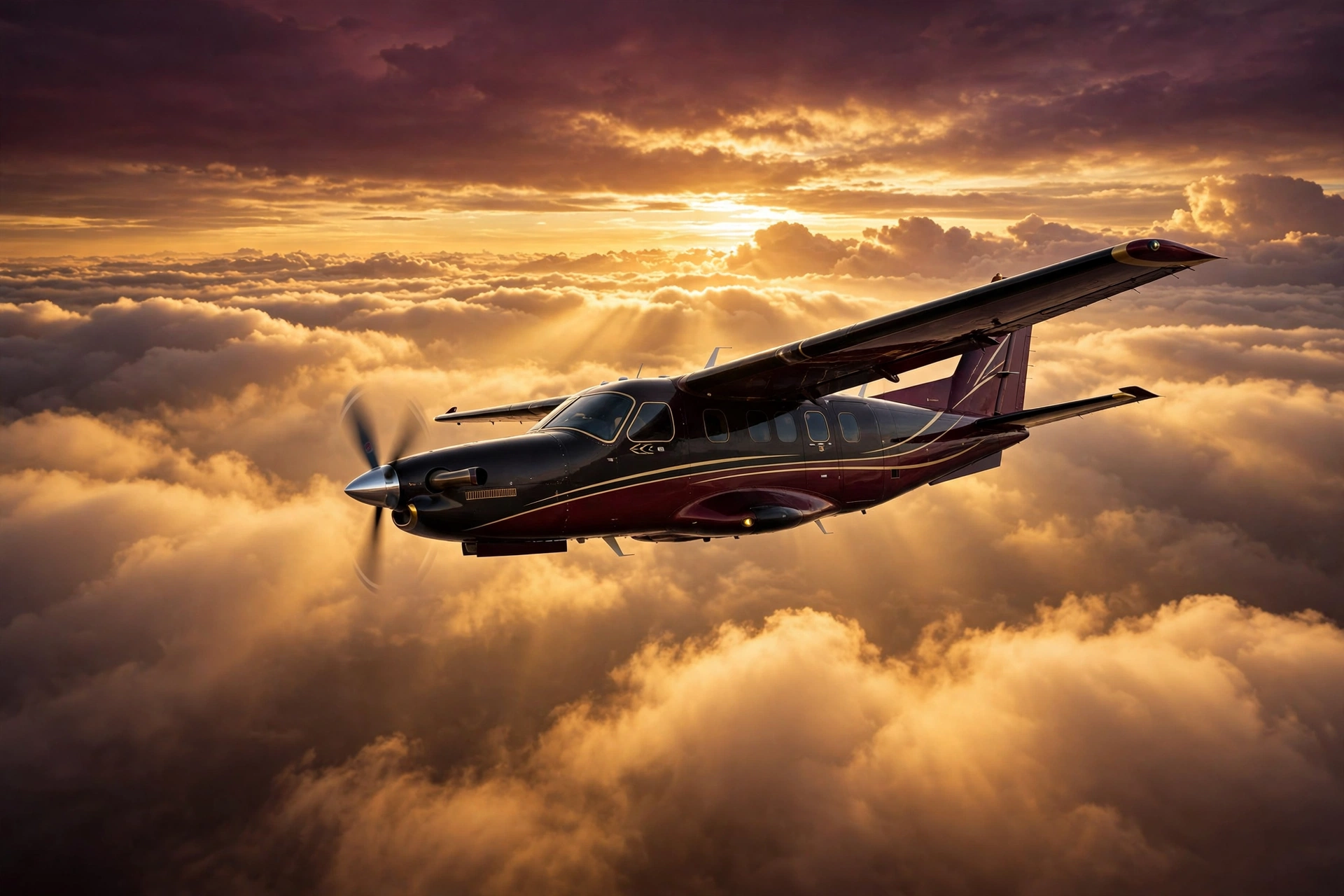
| Turboprop | Pilatus PC-12, King Air 350 | 4–8 | Up to ~1,800 nm | $2,000–$3,500 |
| Very light jet | Citation Mustang, Phenom 100 | 4–5 | Up to ~1,200 nm | $2,500–$4,000 |
| Light jet | Citation CJ3+, Phenom 300, Learjet 75 | 6–8 | 1,500–2,000 nm | $3,500–$5,200 |
| Midsize jet | Hawker 800XP, Citation XLS+ | 7–9 | 2,000–3,000 nm | $4,700–$8,000 |
| Super-midsize jet | Challenger 350, Citation Latitude | 8–10 | 2,700–3,600 nm | $6,000–$10,500 |
| Heavy jet | Gulfstream G450, Falcon 900 | 10–16 | 4,000–6,000 nm | $8,000–$15,000 |
| Ultra-long-range jet | Gulfstream G650ER, Global 7500 | 12–19 | 6,000–8,000+ nm | $11,000–$20,000+ |
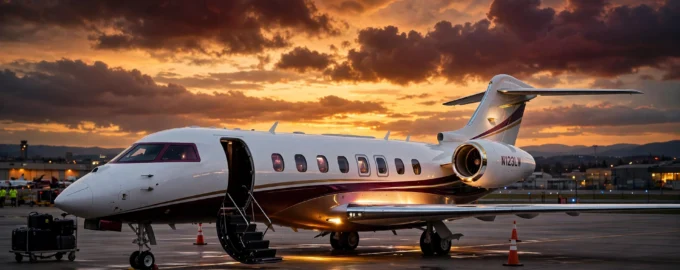
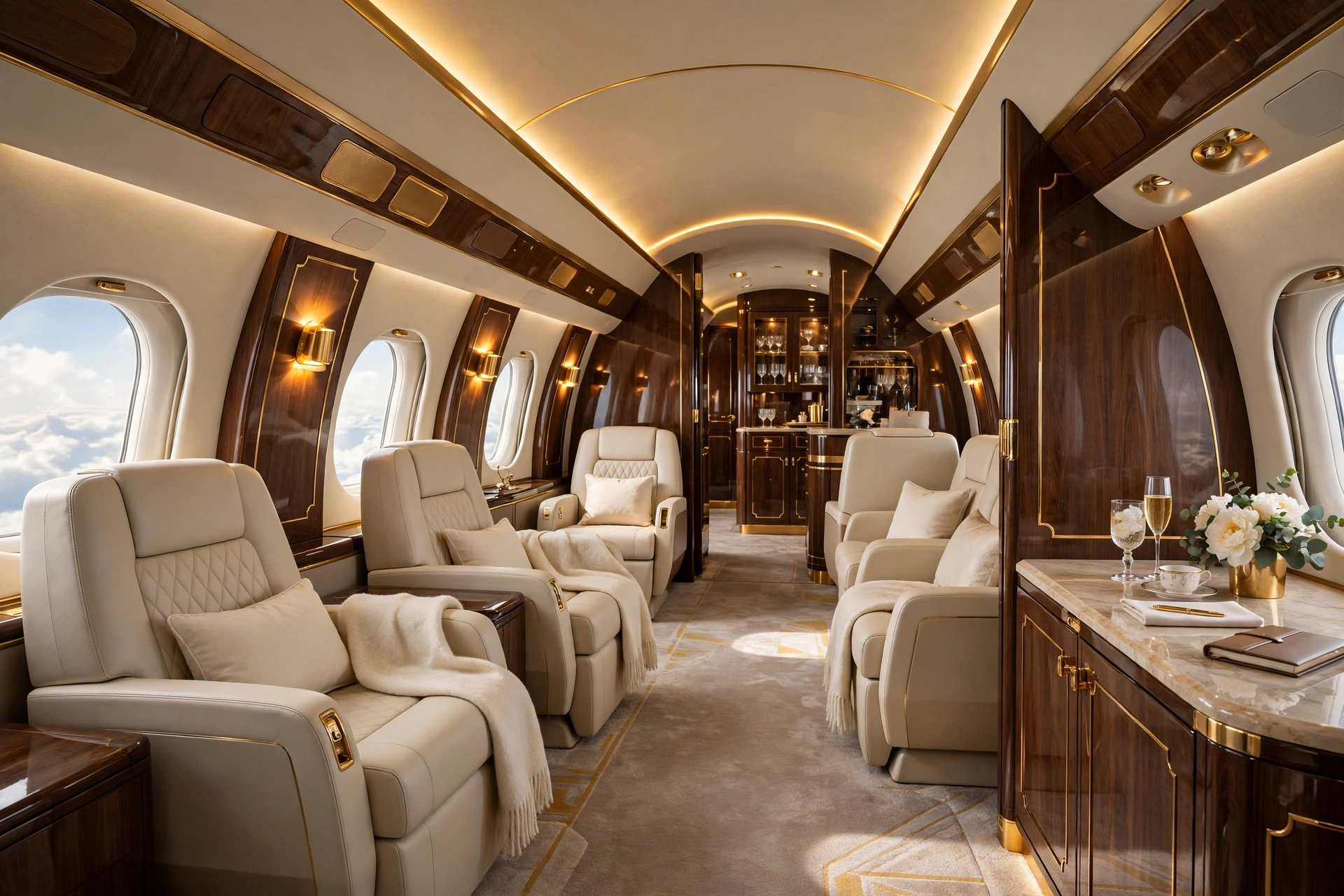
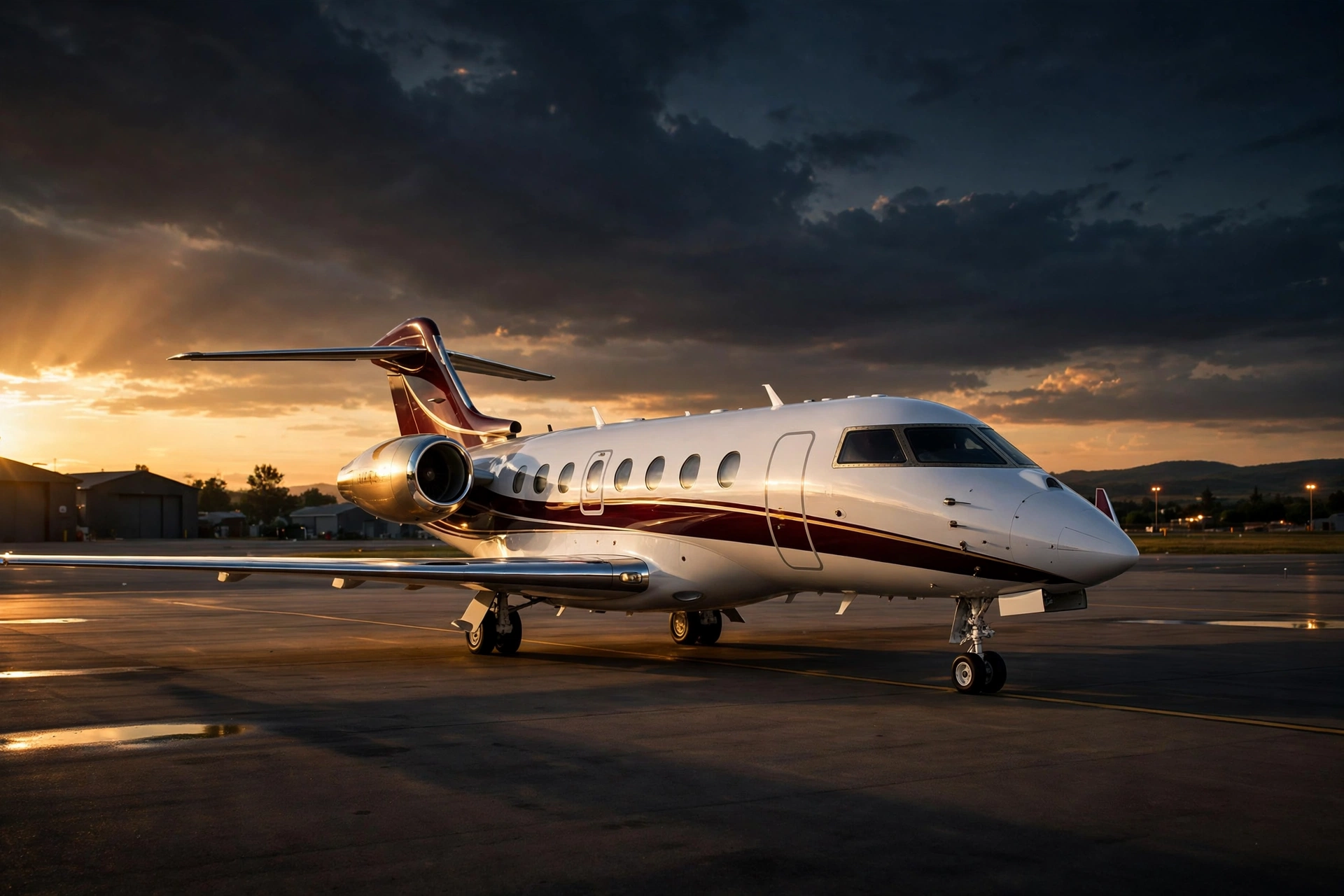
These rates are for flight time only. They do not include positioning, landing fees, taxes or crew costs, which is why a quote always comes in higher than rate times hours. A turboprop is the cheapest way to charter: a Pilatus PC-12 carries up to eight people into small airports that jets cannot use, at roughly half the hourly cost of a light jet. A light jet like the Phenom 300 is the workhorse of the charter market, fast enough for two-to-three-hour regional trips with six to eight passengers. Step up to a super-midsize jet like the Challenger 350 and you get a stand-up cabin and coast-to-coast range, at roughly double the light-jet rate. Heavy jets and ultra-long-range aircraft such as the Gulfstream G650ER are for transatlantic and intercontinental trips, with cabins that seat up to 19 people.

How Much to Charter a Private Jet by Route
Hourly rates only make sense once you turn them into a trip price. The table below shows estimated all-in costs for one-way charters on the most-flown US city pairs, from published March and October 2026 route guides. Prices can vary 15 to 20 percent with aircraft availability and season, and they exclude positioning where the jet is not based at your departure airport.
| Route | Flight time | Light jet | Midsize jet | Heavy jet |
|---|---|---|---|---|
| New York to Miami | ~2.5 hours | $12,000–$18,000 | $16,000–$24,000 | $28,000–$40,000 |
| Los Angeles to Las Vegas | ~1 hour | $6,000–$9,000 | $8,000–$12,000 | $14,000–$20,000 |
| New York to Los Angeles | ~5.5 hours | $17,000–$25,000 | $25,000–$35,000 | $49,000–$60,000 |
| Chicago to Nashville | ~1.5 hours | $8,000–$12,000 | $11,000–$16,000 | $23,000–$30,000 |
| Miami to Nassau | ~1 hour | $7,000–$11,000 | $10,000–$14,000 | $18,000–$25,000 |
| London to Dubai | ~7 hours | — | — | $80,000–$120,000 |
Two rules of thumb fall out of these numbers. First, a light jet for a two-hour regional trip runs $6,000 to $12,000, while a super-midsize coast-to-coast flight is typically $25,000 to $35,000. Second, short flights carry a high fixed-cost share: a one-hour hop still pays for positioning, landing fees and crew, so the per-hour cost looks steep even though the total is small.
What Changes Your Quote
Two identical-looking trips can be quoted thousands of dollars apart. These are the factors that move the price.
Aircraft size. The class you choose sets the band, and it is the largest single lever. Dropping from a super-midsize to a light jet on a route both can fly nonstop can cut the hourly rate by almost half.
Positioning. If the jet is not based at your departure airport, you pay to move it there, and on a one-way trip you often pay for its return to base too. Repositioning typically adds around 20 percent to the flight cost. A round trip is usually cheaper per leg than two one-ways for exactly this reason.
Dates and timing. Peak days — holidays, major events, Friday evenings out of big cities — carry premiums, and booking with less than 48 hours’ notice narrows the choice of aircraft and pushes the price up. Booking about three weeks out is the sweet spot most route guides assume.
Airport choice. Big international airports charge higher landing and handling fees than smaller executive airports, and some charge for parking by the hour. Flying out of Teterboro instead of JFK, or Van Nuys instead of LAX, can save hundreds of dollars in fees and put you closer to the aircraft’s base.
Passengers and luggage. More passengers usually means a bigger cabin, and oversized luggage — golf clubs, skis, film equipment — can force a larger aircraft even when the headcount is small. Tell the broker exactly what you are bringing.
Catering and ground transport. Standard snacks and drinks are usually included. Hot catering, premium champagne and chauffeured cars are not, and they are billed on top.
The Hidden Costs in a Charter Quote
First-time charterers are rarely surprised by the hourly rate. They are surprised by everything around it. Budget an extra 15 to 25 percent on top of the flight cost for these.
- Federal excise tax: 7.5 percent on US domestic charters, plus a per-passenger segment fee of $5.30 per passenger per segment in 2026.
- Landing and handling fees: charged by the airport, higher at busy international airports.
- Crew overnight costs: if the crew has to stay overnight, their hotel and daily allowance are billed to you.
- Fuel surcharges: some quotes lock the fuel price, others pass through the difference.
- De-icing: in winter, a single de-icing can cost several thousand dollars, and it is almost never in the headline rate.
- Wi-Fi and catering upgrades: basic catering is included; premium food, drinks and high-speed Wi-Fi are extras.
- Overnight and parking fees: if the aircraft waits for you at the destination, parking is charged by the day.
A serious broker lists every one of these on the quote. If a quote looks far cheaper than the others, check which of these it left out.
How to Charter a Private Jet for Less
Fly an empty leg. When a charter client books a one-way flight, the aircraft must fly back to base or reposition for its next booking. Operators sell that empty return flight at a discount, typically 30 to 75 percent off the standard charter rate. A published example puts a New York to Miami light jet empty leg near $8,000 against $18,000 or more for the standard charter. The catch is that the route, date and time are set by the aircraft’s schedule, and the flight can be cancelled if the original trip changes. Empty legs are most common on high-traffic routes such as New York to Florida and Los Angeles to Las Vegas.
Be flexible on dates and airports. Shifting a departure by a day, or flying out of a smaller airport near your city, can put you on an aircraft that is already positioned nearby and cut the repositioning charge.
Fill the cabin. Charter is priced per aircraft, not per seat. Six passengers splitting a $12,000 light-jet flight pay $2,000 each, which is less than a last-minute first-class ticket on the same route.
Book a round trip. One aircraft, one positioning move, two legs. A round trip is almost always cheaper per leg than two separate one-ways.
Consider a turboprop for short hops. On flights under two hours, a Pilatus PC-12 or King Air 350 is barely slower than a light jet and costs roughly half as much per hour.

How to Book a Private Jet Charter
Booking takes about four steps, and the whole process can be done in a day for a standard trip.
- Get three quotes. Give each broker the same details: route, dates, passengers, luggage and departure-time window. Compare the all-in totals, not the hourly rates.
- Check the operator. Ask for the operator’s name and safety ratings. Reputable operators hold ARGUS Gold or better, or Wyvern Wingman status.
- Read the quote line by line. Confirm what is included: positioning, taxes, landing fees, crew costs and catering. Ask specifically about de-icing and overnight charges if they apply.
- Confirm and pay. Most brokers take a deposit on booking and the balance before departure. Get the tail number, the crew details and the FBO address in writing before you travel.
If you are still deciding which aircraft fits your trip, browse the private jet listings on Zonezi to compare cabins, ranges and passenger counts before you ask for quotes. And if you are weighing chartering against buying, our guide to private jets for sale breaks down purchase prices by class.
Frequently Asked Questions
How much does it cost to charter a private jet for one hour?
Between about $2,000 and $20,000 per flight hour in 2026, depending on the aircraft class. Turboprops start near $2,000 an hour, light jets run $3,500 to $5,200, super-midsize jets $6,000 to $10,500, and ultra-long-range jets $11,000 to $20,000 or more.
How much is a private jet charter from New York to Miami?
A one-way New York to Miami charter costs roughly $12,000 to $18,000 in a light jet, $16,000 to $24,000 in a midsize jet and $28,000 to $40,000 in a heavy jet, before positioning and taxes. An empty leg on the same route can cost around $8,000.
Is it cheaper to charter a private jet round trip or one way?
Round trip is usually cheaper per leg. On a one-way charter you often pay for the aircraft to fly empty back to base, which typically adds around 20 percent to the flight cost.
What is the cheapest way to charter a private jet?
An empty leg, at 30 to 75 percent off the standard rate, is the cheapest way in. Short of that, a turboprop on a short route, a full cabin split between passengers, and flexible dates and airports all bring the price down.
Are taxes included in a private jet charter quote?
Not always. US domestic charters carry a 7.5 percent federal excise tax plus a $5.30 segment fee per passenger in 2026. Some brokers include tax in the headline price and some add it, so always ask whether the quote is tax-inclusive.
How far in advance should I book a private jet charter?
About three weeks is ideal for the best choice of aircraft and price. Same-week bookings are common and workable, but last-minute and peak-date trips cost more and offer fewer aircraft.
The Bottom Line
How much to charter a private jet comes down to three numbers: the hourly rate for the aircraft class you need, the flight time for your route, and the extras around the flight. A short regional hop in a light jet is a $10,000 to $20,000 trip. A coast-to-coast flight in a super-midsize jet is $25,000 to $35,000. An intercontinental trip in an ultra-long-range jet starts around $90,000. Get three all-in quotes for the same trip, check that positioning, fees and tax are all listed, and if your dates can flex, look for an empty leg first — it is the single biggest discount in private aviation.