Private jet charter cost in 2026 runs from about $2,000 an hour for a small turboprop to more than $20,000 an hour for an ultra-long-range jet, and most one-way domestic trips fall between roughly $7,000 and $65,000 for the whole aircraft. The hourly rate is only the starting point: positioning, taxes and airport fees typically add 25 to 35 percent on top of it.
This guide breaks down the real private jet charter cost: hourly rates by aircraft class, what popular routes actually cost, the hidden fees that surprise first-time charterers, how empty legs can cut the price by half or more, and how to book without overpaying.
A private jet charter means renting a whole aircraft, with crew, for a specific trip, instead of buying a jet or owning a share of one. You choose the departure time, the airports, and the aircraft, and the operator handles the flying. The price is for the entire aircraft, not per seat, so a full cabin can cost less per person than a last-minute first-class ticket.
There are four main ways to fly private, and the cost difference between them is large.
| On-demand charter | Book one trip at a time, pay per flight | $2,000 to $20,000+ per hour |
| Empty leg | Buy a repositioning flight the jet has to fly anyway | 30 to 75% off a normal charter |
| Jet card | Prepay 25 to 50 hours at a fixed hourly rate | $150,000 to $500,000+ upfront |
| Fractional ownership | Buy a share of a jet, pay monthly + hourly | $500,000+ upfront, then monthly fees |
On-demand charter is the most flexible option and the one this guide prices. A jet card suits people who fly 25 hours or more a year and want fixed rates. Fractional ownership only makes sense above roughly 50 hours a year. An empty leg is the cheapest way into a private jet, but only if your plans can bend to the jet’s schedule.
The single biggest cost driver is the size of the aircraft. Everything else — route, positioning, dates — comes second. The table below gives the hourly ranges the charter market actually quoted in 2026, taken across four independent published rate sheets.
| Aircraft class | Example aircraft | Seats | Range | Hourly rate |
|---|---|---|---|---|
| Turboprop | Pilatus PC-12, King Air 350 | 4–8 | Up to ~1,800 nm | $1,800–$3,500 |
| Very light jet | Citation Mustang, Phenom 100 | 4–5 | Up to ~1,200 nm | $2,500–$4,000 |
| Light jet | Citation CJ3+, Phenom 300, Learjet 75 | 6–8 | 1,500–2,000 nm | $3,500–$5,200 |
| Midsize jet | Hawker 800XP, Citation XLS+ | 7–9 | 2,000–3,000 nm | $4,700–$8,000 |
| Super-midsize jet | Challenger 350, Citation Latitude | 8–10 | 2,700–3,600 nm | $6,000–$10,500 |
| Heavy jet | Gulfstream G450, Falcon 900 | 10–16 | 4,000–6,000 nm | $8,000–$15,000 |
| Ultra-long-range jet | Gulfstream G650ER, Global 7500 | 12–19 | 6,000–8,000+ nm | $11,000–$20,000+ |
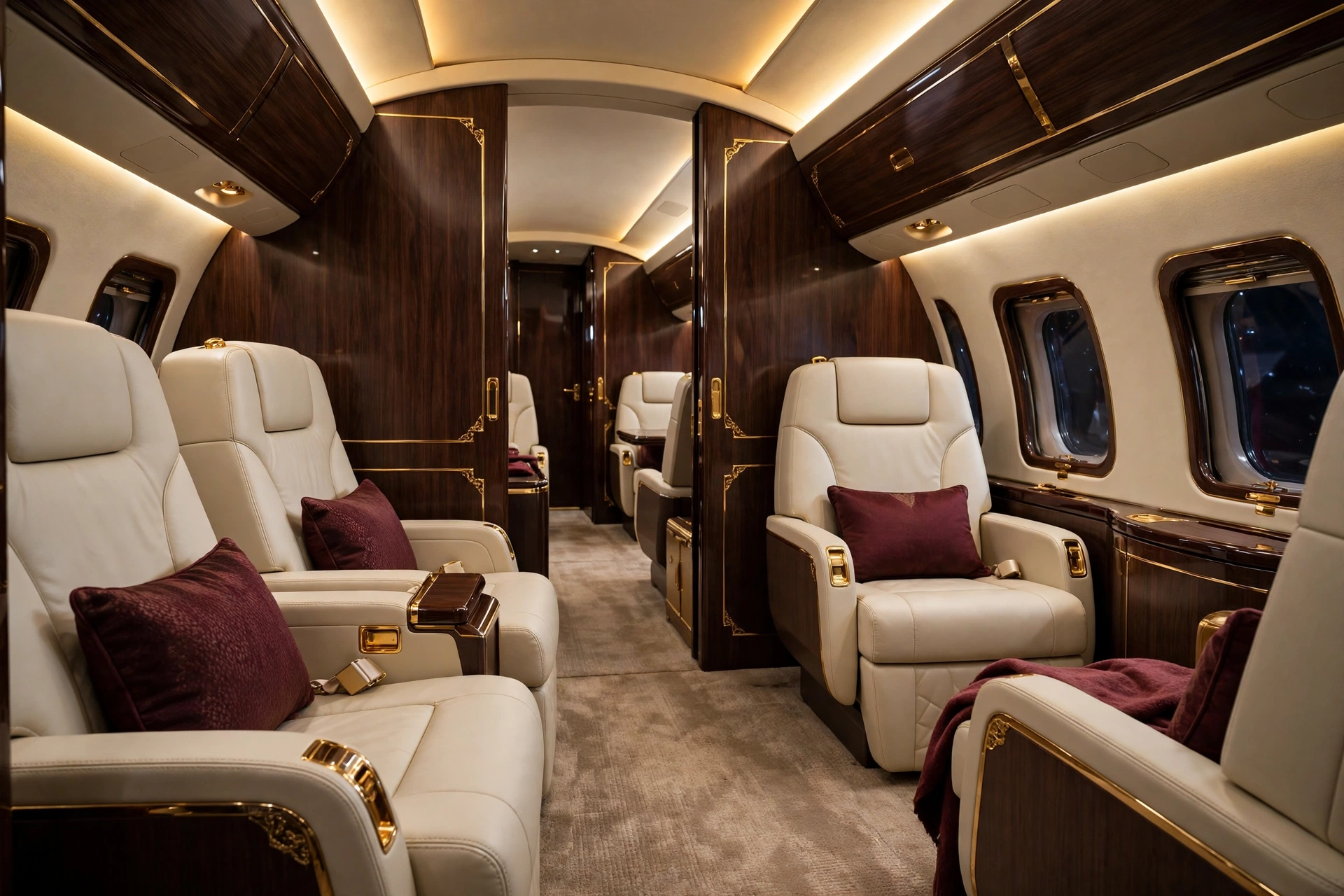
These rates are for flight time only. They do not include positioning, landing fees, taxes or crew costs, which is why a quote always comes in higher than rate times hours. A turboprop is the cheapest way to charter: a Pilatus PC-12 carries up to eight people into small airports that jets cannot use, at roughly half the hourly cost of a light jet. A light jet like the Phenom 300 is the workhorse of the charter market, fast enough for two-to-three-hour regional trips with six to eight passengers. Step up to a super-midsize jet like the Challenger 350 and you get a stand-up cabin and coast-to-coast range, at roughly double the light-jet rate. Heavy jets and ultra-long-range aircraft such as the Gulfstream G650ER are for transatlantic and intercontinental trips, with cabins that seat up to 19 people.
Hourly rates only go so far. Here is what whole trips actually cost one-way in 2026, for the full aircraft, based on published broker pricing reviewed in October and November 2026.
| Route | Aircraft | Flight time | One-way price |
|---|---|---|---|
| Los Angeles–Las Vegas | Light jet | ~1 hour | $7,000–$13,000 |
| New York–Miami | Light jet | ~2.5–3 hours | $12,000–$20,000 |
| Chicago–New York | Light jet | ~2 hours | $14,800–$20,600 |
| New York–Los Angeles | Super-midsize jet | ~5.5 hours | $38,000–$60,000 |
| New York–London | Heavy / ultra-long-range jet | ~6.5–7.5 hours | $75,000–$145,000 |
Short hops look expensive per minute because of minimums and positioning. Los Angeles to Las Vegas is under an hour in the air, yet a light jet commonly costs $7,000 to $13,000 one-way: the flight is often billed at 1.5 to 2 hours once taxi time and the daily minimum are counted. On the busiest corridor in the country, New York to Miami, a light jet runs about $12,000 to $20,000 one-way, or roughly $18,600 to $25,900 all-in, according to the Stratos Jets’ pricing page for November 2026. Coast to coast, New York to Los Angeles on a super-midsize jet is about $38,000 to $60,000 one-way, and New York to London on a heavy or ultra-long-range jet is $75,000 to $145,000.
The hourly rate is usually only 65 to 75 percent of the final invoice. The rest is a dozen separate charges, and on a simple domestic trip they add 25 to 35 percent. These are the ones to check on every quote.
Positioning (repositioning). Charter aircraft do not live at your airport. The operator flies the jet empty to collect you, and often flies it empty home again afterwards, and you pay for that time at or near the live hourly rate. This is the largest hidden cost in charter, and it is why one-way trips are disproportionately expensive. Choosing an aircraft based near your departure airport is the single best way to cut it.
Daily minimums. Most operators bill a minimum number of hours per day the aircraft is yours, whether or not you fly them: typically 1 to 1.5 hours for a turboprop, 1.5 to 2 hours for a light jet, 2 hours for a midsize or super-midsize jet, and 2.5 to 3 hours for a heavy jet. Fly 45 minutes each way over three days and you may be billed for six hours.
Federal excise tax. US domestic charter carries a 7.5 percent federal excise tax on the amount paid for transportation, set by statute and not negotiable. There is also a domestic segment fee of about $5.30 per passenger per flight segment in 2026. Not all quotes include the tax, so always ask.
Landing, ramp and handling fees. Airports charge landing fees based on aircraft weight, typically $75 to $1,200 per landing, and FBOs charge handling or ramp fees of $150 to $1,500 per movement. These are often reduced or waived if the aircraft buys fuel.
Crew overnight costs. When the crew stays overnight away from base, expect $250 to $600 per crew member per night for hotel and meals, or $400 to $1,200 per night for the crew as a whole. On a multi-day trip this adds up fast.
De-icing. In winter, frost, snow or ice must be removed before takeoff. De-icing is billed at cost, typically $400 to $4,500 per event, and it is usually charged after the flight because the need is not known in advance.
Fuel surcharge and catering. Some operators add a fuel surcharge of up to 12 percent of the flying cost when fuel prices rise above a benchmark. Catering runs from about $50 for basic snacks to several hundred dollars for a full meal service.
Put together, a New York to Miami light-jet trip quoted at $4,500 an hour for 2.8 hours is $12,600 of flying time, but positioning, landing and handling, crew costs and the 7.5 percent tax can push the real invoice toward $18,000 to $24,000. Always ask for an all-in quote in writing before you pay.
An empty leg is a private jet flight with no passengers aboard, sold at a discount because the aircraft has to make the trip regardless. After a one-way charter, the jet flies home or to its next job empty, and the operator sells that flight instead of flying it empty. Discounts commonly run 30 to 75 percent below the equivalent full charter.
| Route | Full charter, one way | Typical empty leg |
|---|---|---|
| New York–Miami | $12,000–$18,000 | $3,500–$8,500 |
| Los Angeles–Las Vegas | $7,000–$12,000 | $2,000–$5,500 |
| London–Nice | $10,000–$17,000 | $3,000–$8,000 |
| London–Dubai (heavy jet) | ~$130,000 | ~$48,000 |
The catch is flexibility. The route, date and departure time are fixed by the jet’s schedule, not yours, and roughly 10 to 15 percent of booked empty legs are cancelled when the paying trip changes. The deepest discounts appear in the final 48 to 72 hours before departure. If your dates can move and you are flying one way with a full cabin, an empty leg can cost less per person than a commercial first-class ticket. If your schedule is fixed, book a normal charter instead.
Chartering is the cheapest way to fly private occasionally. The maths changes once you fly regularly.
A jet card locks in a fixed hourly rate and guaranteed availability, but you prepay 25 to 50 hours upfront, usually $150,000 to $500,000 or more, and unused hours can expire. It suits travellers flying 25 hours or more a year who value predictable pricing over the lowest price.
Fractional ownership means buying a share of a specific aircraft type, paying monthly management fees plus an occupied hourly rate. Entry starts around $500,000, and it only beats chartering above roughly 50 hours a year.
Buying a private jet outright is a different decision entirely: a light jet costs several million dollars to buy, plus roughly $500,000 to $1 million a year to run. Chartering that same aircraft costs a fraction of that unless you fly more than 150 to 200 hours a year. For almost everyone, chartering — or an empty leg — is the cheaper way to fly private.

Booking a charter is simple once you know the steps, and following them in order avoids the common mistakes.
If you are still deciding what kind of jet fits your trip, the best next step is to look at what is actually available. Browse the current private jets on Zonezi and compare real aircraft side by side, with prices, sizes and locations.
In 2026, private jet charter cost runs from about $1,800 to $3,500 an hour for a turboprop to $11,000 to $20,000 or more an hour for an ultra-long-range jet. Most one-way domestic trips cost $7,000 to $65,000 for the whole aircraft, depending on the route and aircraft size.
A light jet from New York to Miami costs about $12,000 to $20,000 one-way, or roughly $18,600 to $25,900 all-in on published November 2026 broker pricing. The flight takes about 2.5 to 3 hours. An empty leg on the same route can cost $3,500 to $8,500.
A turboprop such as the Pilatus PC-12 is the cheapest aircraft to charter, at about $1,800 to $3,500 an hour. For short regional trips it carries up to eight passengers into small airports. An empty leg on any aircraft class is usually cheaper still, at 30 to 75 percent off a normal charter.
An empty leg is a private jet flight that has to fly without passengers, usually to return to base or to collect its next client. The operator sells the seats at a discount of 30 to 75 percent. The route and time are fixed, and about 10 to 15 percent of booked empty legs are cancelled if the paying trip changes.
Yes. The hourly rate is usually only 65 to 75 percent of the invoice. Positioning flights, daily minimums, the 7.5 percent US federal excise tax, landing and handling fees, crew overnight costs, de-icing and fuel surcharges add 25 to 35 percent on a typical domestic trip. Always ask for an all-in quote in writing.
Chartering is cheaper unless you fly more than roughly 150 to 200 hours a year. Buying a light jet costs several million dollars upfront plus around $500,000 to $1 million a year in running costs, while chartering the same aircraft costs a fraction of that for occasional trips.
Private jet charter cost in 2026 starts at about $1,800 an hour for a turboprop and rises past $20,000 an hour for an ultra-long-range jet, with most domestic one-way trips landing between $7,000 and $65,000. The hourly rate is only part of the price: positioning, daily minimums, the 7.5 percent federal excise tax and airport fees add 25 to 35 percent, so always get the all-in figure in writing.
If your dates are flexible, an empty leg is the best value in private aviation at 30 to 75 percent off. If they are not, compare two or three all-in quotes, pick an aircraft based near your departure airport to cut positioning, and book early on busy routes. If you are ready to look, start with the private jets on Zonezi and see what is available right now.