
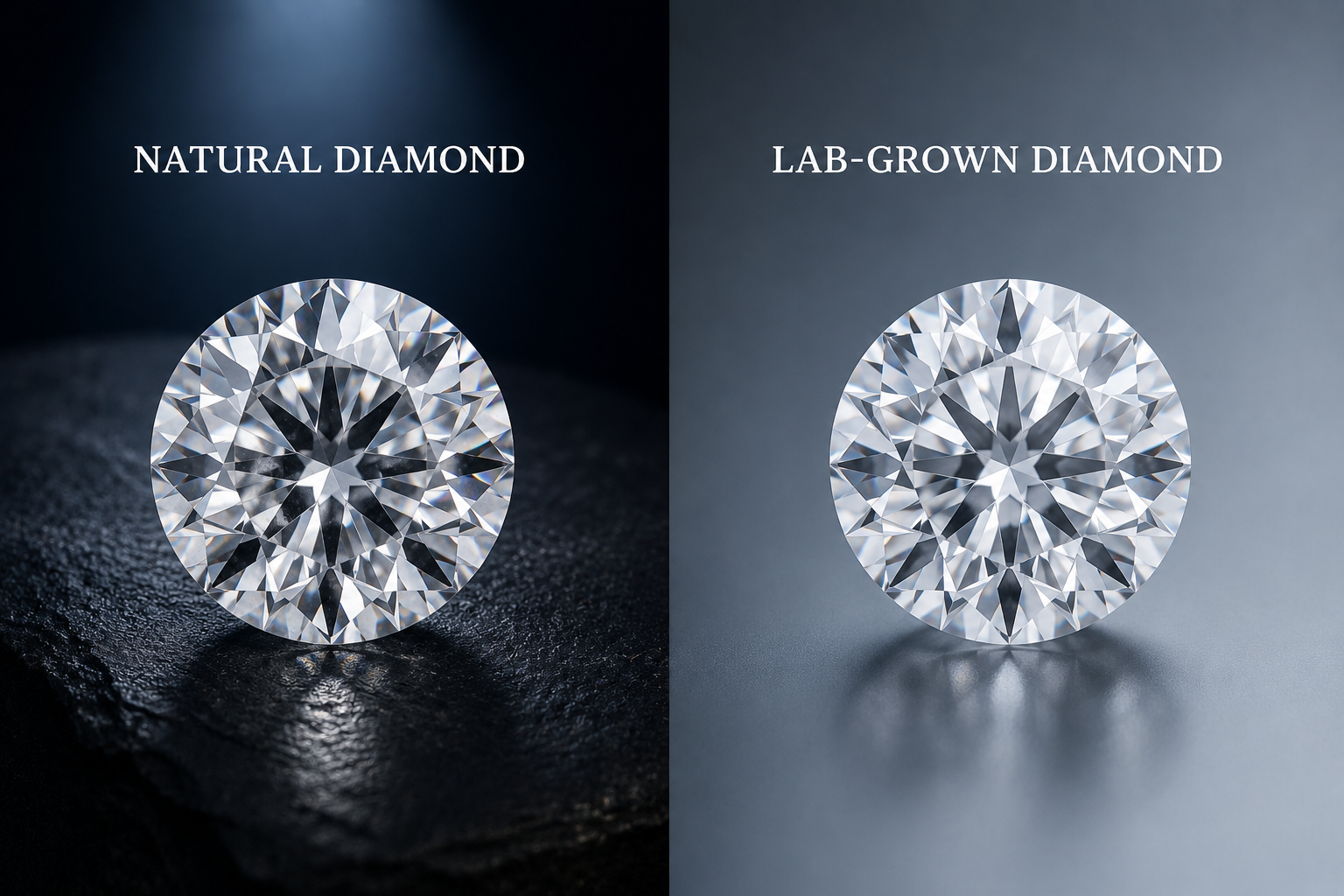
Diamonds have long symbolized love, luxury, and timeless beauty. Today, buyers have two primary options when choosing a diamond: natural diamonds formed deep within the Earth over billions of years, and lab-grown diamonds created using advanced technology that replicates the same natural process.
At first glance, the two are virtually indistinguishable. Both offer exceptional brilliance, durability, and beauty, making the decision more about personal priorities than appearance alone. Factors such as budget, rarity, sustainability, long-term value, and emotional significance all play an important role.
This complete guide compares natural and lab-grown diamonds to help you make an informed buying decision.
Natural diamonds are formed under extreme heat and pressure deep within the Earth’s mantle over billions of years before being brought closer to the surface through volcanic activity.
Their rarity and geological history contribute to their enduring value and appeal.
Natural diamonds are commonly purchased for:
Their unique origin gives each stone a one-of-a-kind story.
Lab-grown diamonds are real diamonds produced in highly controlled laboratory environments using advanced technology.
Two common production methods include:
These processes create diamonds with the same physical, chemical, and optical properties as natural diamonds.
Lab-grown diamonds are not diamond simulants such as cubic zirconia or moissanite—they are genuine diamonds.
Visually, natural and lab-grown diamonds are nearly impossible to distinguish without specialized equipment.
Both offer:
Even experienced jewelers typically rely on professional testing equipment and certification to identify a diamond’s origin.
One of the biggest differences is cost.
Generally command higher prices because of their rarity, mining costs, and long-term market demand.
Typically cost significantly less than natural diamonds of comparable size and quality.
This allows buyers to purchase:
while remaining within the same budget.
Both natural and lab-grown diamonds rank 10 on the Mohs Hardness Scale.
This means both offer:
There is no meaningful difference in hardness or durability between the two.
Regardless of origin, certification is essential.
Reputable grading laboratories include:
Certification confirms:
Always purchase certified diamonds from trusted retailers.
Investment potential differs significantly between natural and lab-grown diamonds.
Natural diamonds generally offer:
Lab-grown diamonds provide:
Buyers seeking long-term resale value often favor natural diamonds, while those focused on affordability may prefer lab-grown options.
Environmental and ethical considerations have become increasingly important.
Natural diamonds support:
Lab-grown diamonds may offer:
Both natural and lab-grown diamonds can be sourced responsibly when purchased from reputable suppliers committed to ethical practices.
The best choice depends on your priorities.
Choose a natural diamond if you value:
Choose a lab-grown diamond if you prioritize:
Both options offer genuine beauty and lasting durability.
Before making your purchase:
A thoughtful buying process helps ensure lasting satisfaction.
Natural and lab-grown diamonds each offer unique advantages. Natural diamonds provide unmatched rarity, heritage, and long-term collectability, while lab-grown diamonds deliver exceptional beauty, larger sizes, and outstanding value at a more accessible price.
Neither option is universally better—the right choice depends on your budget, personal values, and intended purpose. By understanding the differences in origin, pricing, certification, durability, and long-term value, you can confidently choose the diamond that best reflects your needs and style.
Whether formed beneath the Earth’s surface or created using advanced technology, a well-selected diamond remains a timeless symbol of elegance, celebration, and lasting beauty.
Yes. Lab-grown diamonds have the same physical, chemical, and optical properties as natural diamonds.
Not with the naked eye. Specialized equipment and certification are usually required to determine a diamond’s origin.
Natural diamonds generally cost more because of their rarity and established market demand.
Yes. Both natural and lab-grown diamonds rank 10 on the Mohs Hardness Scale, making them equally durable for everyday wear.
Natural diamonds have historically demonstrated stronger resale demand and long-term collectability, although market conditions can vary.
Choose a natural diamond if rarity and tradition are important to you. Choose a lab-grown diamond if maximizing size and quality within your budget is your priority.
Continue Reading
Investing in Luxury Assets
Luxury Watches: Iconic Timepieces
The Oldest Watch Brand in the World
Luxury Car Brands Accept Cryptocurrency
Supercars Branded Residence
At ZONEZI, brokers gain access to a curated portfolio of premium listings, while private owners enjoy unparalleled visibility within a global network of discerning buyers. We are committed to facilitating successful transactions in the world of luxury, driving growth, and creating valuable opportunities in the marketplace.