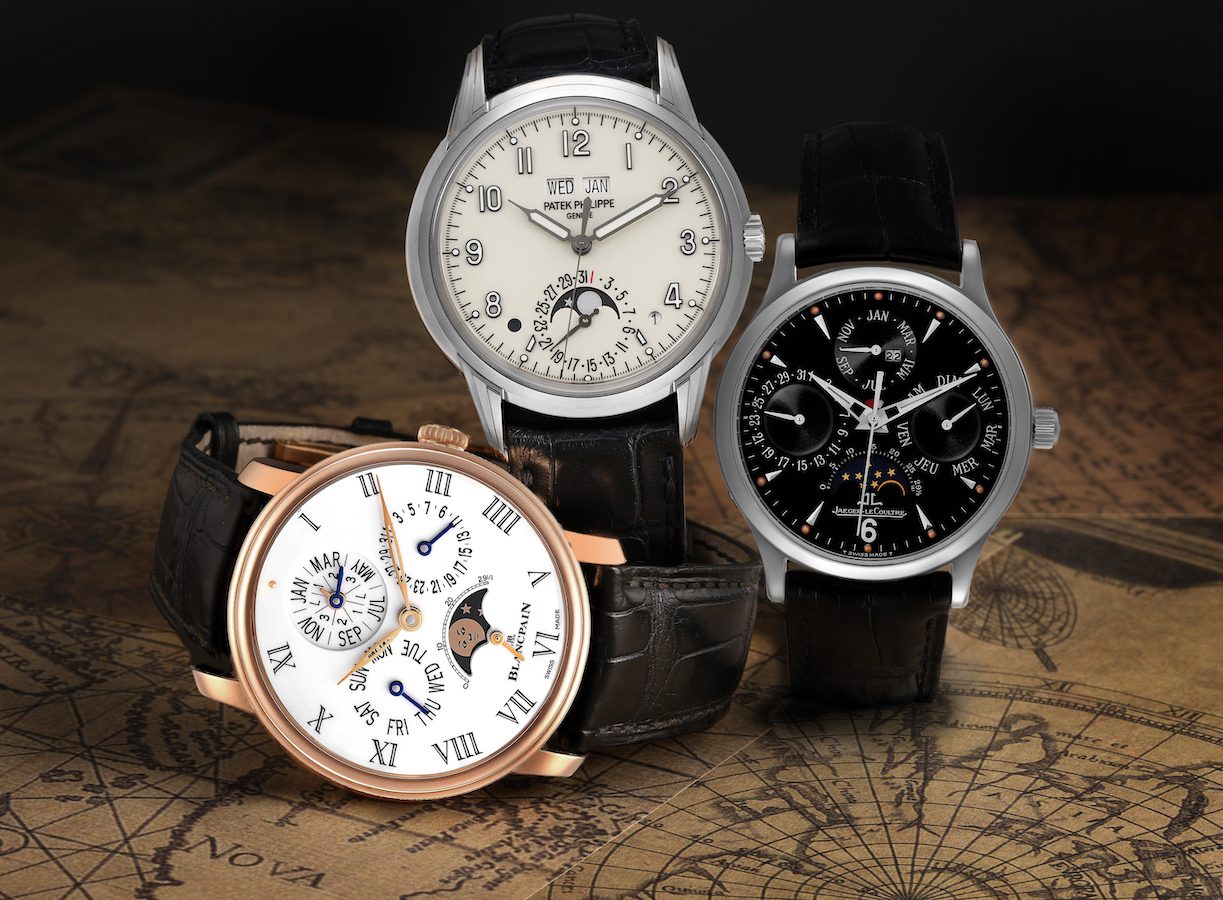
Long before luxury watches became symbols of status, investment assets, or collector obsession, watchmaking was a discipline of patience, mathematics, and survival against time itself. In the quiet Swiss village of Villeret, in 1735, a craftsman named Jehan-Jacques Blancpain established what would eventually become the oldest continuously operating watch brand in the world. Nearly three centuries later, Blancpain remains one of the purest expressions of traditional Swiss horology, a house that has survived revolutions, economic collapses, quartz disruption, changing tastes, and the digital age without abandoning its identity.
In a luxury industry increasingly dominated by marketing spectacle and celebrity campaigns, Blancpain occupies a different space entirely. It is not the loudest name in watchmaking. Nor does it attempt to be. Its prestige comes from something more difficult to manufacture: historical legitimacy. Founded decades before the United States even existed as a nation, Blancpain emerged during a period when Europe itself was still being shaped by monarchies, trade expansion, and scientific discovery. Mechanical watchmaking at the time was not fashion. It was frontier technology. Jehan-Jacques Blancpain began producing watches from the upper floor of his family home, crafting timepieces by hand in an era where precision represented both technical mastery and social advancement. Switzerland, still centuries away from becoming the undisputed capital of luxury watches, was slowly building the foundations of an industry that would eventually define the country itself.
What makes Blancpain remarkable is not simply its age, but its continuity. Many historic brands disappeared during wars, financial crises, or industrial transformations. Blancpain endured. The company remained active through generations of family ownership before evolving into one of the defining names in haute horlogerie.
Its philosophy has remained unusually disciplined. Blancpain famously declared that it has “never made a quartz watch and never will.” In an age where technology relentlessly prioritizes speed and convenience, that statement carries almost philosophical weight. It reflects a commitment to mechanical craftsmanship as an art form rather than a utility. And perhaps that is why Blancpain commands such respect among serious collectors.
Luxury watchmaking exists in an unusual psychological space. Modern smartphones tell time more accurately than any mechanical watch ever could. Yet demand for fine watches continues to grow globally, particularly among collectors, entrepreneurs, athletes, and ultra-high-net-worth individuals. The appeal has little to do with practicality.
A mechanical watch represents permanence in a disposable world. It is engineering designed not for software cycles, but for generations. The finest watches are often purchased not merely as accessories, but as heirlooms, investments, and statements of personal identity. Blancpain understood this long before luxury became dominated by hype culture.
The brand built its reputation quietly through craftsmanship, complications, and technical innovation. Its Fifty Fathoms collection, introduced in 1953, became one of the world’s first modern diving watches and helped define the category decades before luxury sports watches became mainstream global status symbols. Today, vintage Fifty Fathoms models are highly sought after by collectors, admired not only for their rarity but for their historical significance in professional diving and military use. Yet Blancpain’s deeper strength lies in restraint.
Unlike some luxury brands that thrive on scarcity marketing and celebrity saturation, Blancpain maintains an almost understated confidence. It appeals to connoisseurs rather than trend followers. Ownership often signals knowledge rather than visibility. In many ways, Blancpain represents the older philosophy of luxury itself.
True luxury was once about discretion, craftsmanship, and heritage rather than immediate recognition. The owner understood the value even if others did not. Blancpain continues to embody that sensibility in an era increasingly shaped by social media visibility and algorithmic attention. There is also something culturally important about the survival of companies like Blancpain.
The modern economy moves at extraordinary speed. Entire industries rise and collapse within decades. Technology continuously rewards disruption over continuity. Against that backdrop, a company founded in 1735 feels almost impossible. Blancpain has existed through the Enlightenment, the Industrial Revolution, two World Wars, the invention of electricity, aviation, the internet, artificial intelligence, and the digitization of nearly every aspect of modern life. And still, deep within the Swiss tradition of watchmaking, artisans continue assembling microscopic mechanical components by hand. That persistence carries meaning beyond commerce.
Luxury, at its highest level, is often misunderstood as excess. In reality, the greatest luxury brands are custodians of continuity. They preserve disciplines, aesthetics, and forms of expertise that modern speed constantly threatens to erase.
Blancpain’s story is ultimately not just about watches. It is about the survival of craftsmanship in a civilization increasingly obsessed with immediacy. And perhaps that explains why, nearly 300 years after Jehan-Jacques Blancpain began building watches in a Swiss village, the brand still commands reverence among those who understand that true luxury cannot be rushed.
At ZONEZI, brokers gain access to a curated portfolio of premium listings, while private owners enjoy unparalleled visibility within a global network of discerning buyers. We are committed to facilitating successful transactions in the world of luxury, driving growth, and creating valuable opportunities in the marketplace.