Celebrity luxury real estate trends 2027

Celebrity luxury real estate trends 2027

Inside the Most Talked-About Celebrity Real Estate Moves — And Where Stars Are Buying Next in 2027

The world of celebrity luxury homes continues to shape the global prime property market in ways few sectors can replicate. When a globally recognized actor, athlete, entrepreneur, or music icon purchases a $20 million estate—or quietly exits a legacy mansion—those transactions often influence buyer sentiment, architectural trends, and even neighborhood valuations.

In 2026, celebrity real estate activity has become more strategic than theatrical.

Rather than purchasing homes solely for status, celebrities are increasingly acquiring residences that support privacy, wealth preservation, family legacy, tax efficiency, and lifestyle flexibility.

From private countryside estates in the United Kingdom to oceanfront compounds in California and ultra-secure penthouses in New York, this year’s biggest celebrity property stories reveal where global wealth is moving—and where stars may continue buying in 2027.

Ellen DeGeneres Expands Her Countryside Estate Strategy

Few celebrities understand luxury real estate as deeply as Ellen DeGeneres.

In 2026, Ellen and Portia de Rossi remained in the spotlight after submitting development plans for their private countryside estate in the Cotswolds.

Recent planning activity includes proposals for equestrian facilities, riding infrastructure, and long-term estate improvements—clear indicators that this property is evolving into a permanent family retreat rather than a short-term investment. Industry observers believe the couple may continue expanding their European real estate footprint into 2027. (Page Six)

Official pages:
• Ellen Digital Ventures
• West Oxfordshire District Council

Kris Jenner Repositions a Family Legacy Asset

One of the most watched celebrity listings of 2026 belongs to Kris Jenner.

The matriarch of the Kardashian empire officially returned her iconic Hidden Hills mansion to the market after previously withdrawing it for sentimental reasons.

The residence, internationally recognized from reality television, has been reintroduced at approximately $13 million.

Industry analysts suggest this move may signal a portfolio restructuring ahead of future acquisitions in 2027, potentially involving newer, more private compounds with wellness-focused architecture. (The Sun)

Official pages:
• Kris Jenner Official Instagram
• City of Hidden Hills

Ben Simmons Quietly Restructures His Property Portfolio

Professional athletes continue to reshape luxury market dynamics, and Ben Simmons remains one of 2026’s most discussed celebrity sellers.

The former NBA All-Star has relisted his high-end apartment in the DUMBO district of New York City for nearly $15 million after previous marketing attempts.

The property includes custom interiors, skyline views, entertainment suites, and private terraces.

Market experts believe this move could position Simmons for acquisitions in lower-tax luxury markets such as Miami or international hubs in 2027. (New York Post)

Official pages:
• National Basketball Association
• Los Angeles Clippers

Cara Delevingne Reveals a New Reality in Celebrity Home Sales

Not every celebrity home commands automatic demand.

In 2026, Cara Delevingne’s highly personalized triplex in Manhattan struggled to secure the expected buyer interest.

Luxury brokers noted that while celebrity ownership creates publicity, today’s affluent buyers increasingly prioritize:

Neutral interior design
Move-in readiness
Long-term resale flexibility
Contemporary wellness architecture

As a result, Cara’s property faced price adjustments before being temporarily withdrawn.

This story may influence how celebrities design future homes in 2027—favoring broader market appeal over hyper-personal expression. (New York Post)

Official pages:
• Cara Delevingne Official Instagram

Mike Mizanin and Maryse Mizanin Complete One of 2026’s Fastest Celebrity Sales

Among the year’s most successful celebrity exits, The Miz and Maryse sold their Los Angeles estate in just days.

The property featured:

Private cinema
Wine cellar
Designer kitchen
Resort-style outdoor entertaining
Guest accommodations

The rapid sale reinforces what today’s luxury buyers want most:

Functionality, privacy, and turnkey design.

Insiders suggest the couple may target larger family compounds in more exclusive gated communities during 2027. (People.com)

Official pages:
• WWE

Where Celebrities Are Likely Buying in 2027

Based on 2026 acquisition trends, luxury analysts believe celebrities will continue targeting several key global markets.

Montecito : Montecito continues attracting entertainers, executives, and public figures seeking coastal privacy, security, and proximity to Los Angeles.

Miami:  Tax efficiency, waterfront compounds, and international accessibility make Miami one of the most attractive celebrity destinations heading into 2027.

Dubai : With no personal income tax, elite branded residences, and increasing global prestige, Dubai is attracting younger celebrities and entrepreneurs.

London : London remains a preferred market for legacy ownership, discreet wealth preservation, and global family offices.

Phuket : Phuket continues gaining attention among global entrepreneurs, athletes, and entertainers seeking oceanfront wellness residences, resort-style privacy, and long-term lifestyle flexibility.

Luxury Design Trends Celebrities Are Prioritizing

Celebrity buyers in 2026 are focusing on properties featuring:

Private wellness spas
Cold plunge pools
Indoor gyms
Smart-home automation
Panic rooms and advanced security
Helicopter access
Oceanfront privacy
Sustainable architecture

Luxury homes are no longer just symbols of status.

They are becoming private ecosystems.

The celebrity luxury homes market in 2026 offers a revealing glimpse into where the world’s most influential individuals are allocating capital.

From Ellen DeGeneres expanding her European estate strategy to Kris Jenner repositioning legacy family assets and Ben Simmons preparing for his next move, celebrity property decisions increasingly reflect disciplined wealth strategy rather than impulsive glamour.

As 2027 approaches, one thing is becoming increasingly clear: Celebrities are no longer simply buying mansions. They are buying privacy, optionality, legacy, and strategic global positioning.

04/05/2026No comments, 2027 housing market | Celebrity Homes | celebrity property purchases | Celebrity Real Estate | Dubai property market | global real estate trends | high-end property investment | London luxury real estate | luxury housing market | Luxury Lifestyle | luxury property trends | Miami luxury homes | Montecito real estate | Phuket luxury villas | ultra high net worth individuals
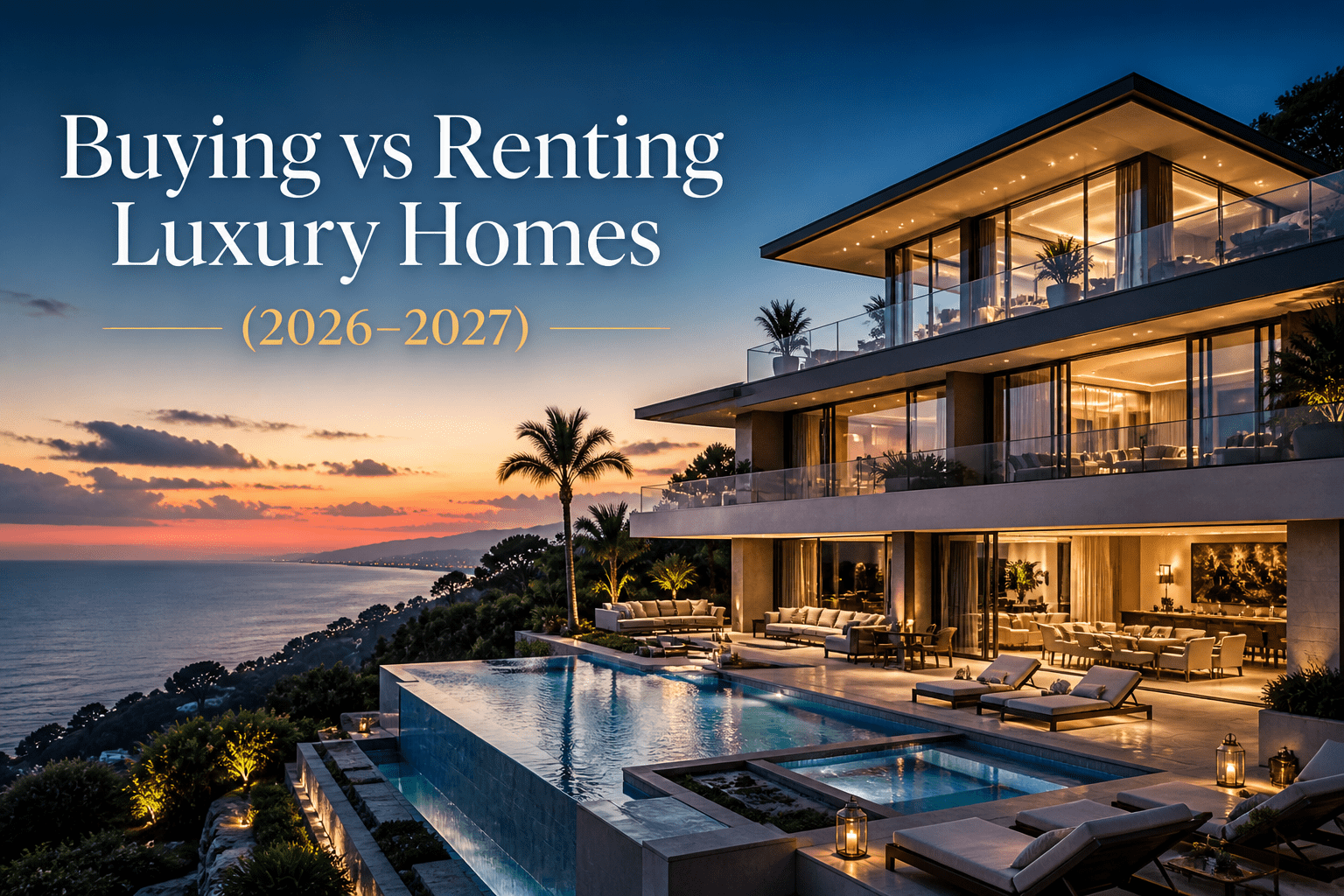
Buying vs Renting Luxury Homes (2026–2027)

Buying vs Renting Luxury Homes (2026–2027)

A Strategic Wealth Decision for Modern Luxury Property Investors

In 2026 and moving into 2027, affluent individuals, global investors, entrepreneurs, and second-home buyers are approaching real estate with a far more strategic mindset. The conversation is no longer centered solely on location, architecture, or prestige. Instead, a more profound question dominates the luxury market:

Is it wiser to buy a luxury home, or does renting create greater financial flexibility and long-term advantage?

Across elite destinations such as Dubai, London, Miami, Phuket, and Singapore, the luxury residential sector continues to attract international capital. Yet the motivations behind acquisitions have evolved. High-net-worth individuals are increasingly analyzing tax efficiency, jurisdictional stability, long-term liquidity, wealth preservation, and lifestyle alignment before committing substantial capital.

According to official research from Knight Frank and Savills, prime residential markets remain resilient, supported by wealth migration, constrained inventory, and continued demand from globally mobile investors.

For those considering luxury real estate in 2026–2027, understanding the advantages and limitations of both buying and renting has never been more essential.

Why Buying Luxury Property Still Appeals to Wealth Builders

Luxury real estate ownership has historically served as one of the most effective methods of preserving wealth while enjoying lifestyle benefits.

When purchasing a premium residence, buyers are not merely acquiring a home. They are often securing a tangible asset in a market where land scarcity, exclusivity, and global desirability continue to support long-term value.

Prime residential districts remain attractive because they offer something financial markets cannot always provide: physical scarcity.

Whether it is a beachfront villa in Phuket, a penthouse overlooking the skyline of Dubai, or a branded residence in Miami, ownership creates a sense of permanence and portfolio diversification.

According to official market intelligence from Knight Frank, prime residential values in leading global luxury destinations remained stable to positive throughout recent market cycles, supported by continued demand from international wealth migration.

One of the greatest advantages of buying is equity accumulation.

Each payment made toward a financed luxury property contributes toward ownership rather than being treated as a pure expense. Over time, owners may benefit from:

Capital appreciation
Asset-backed borrowing opportunities
Estate and succession planning
Portfolio diversification
Currency and inflation protection

For ultra-high-net-worth individuals, luxury real estate increasingly functions as a strategic balance-sheet asset rather than simply a personal residence.

Another factor supporting ownership in 2026–2027 is limited supply.

In many global prime locations, development opportunities remain restricted due to zoning regulations, environmental limitations, and waterfront scarcity. This creates a structural imbalance between supply and demand, helping support long-term valuations.

The Financial Challenges of Buying

Despite the prestige and wealth-building potential, buying luxury real estate is not without its challenges.

Luxury acquisitions typically involve significant upfront capital requirements.

Beyond the purchase price itself, buyers often face:

Legal due diligence
Transfer taxes
Stamp duties
Registration fees
Property structuring costs
Insurance expenses
Maintenance and staffing costs

In some jurisdictions, acquisition costs alone can reach hundreds of thousands of dollars.

Liquidity is another important consideration.

Unlike publicly traded securities, luxury homes cannot always be sold quickly. Even in highly desirable markets, a multimillion-dollar residence may require patience, negotiation, and proper timing to secure the right buyer.

This becomes especially relevant during periods of regulatory change, currency volatility, or shifts in international investment flows.

Why Renting Has Become Increasingly Attractive

For many successful entrepreneurs, investors, and international executives, renting luxury property is no longer viewed as a compromise.

In fact, in 2026, renting has become a deliberate wealth strategy.

One of the most significant advantages is capital preservation.

Rather than allocating millions toward a single real estate acquisition, renters retain liquidity that can be deployed into:

Private equity
Operating businesses
Stock markets
Technology investments
Alternative assets

For individuals who prioritize growth, flexibility, or business expansion, maintaining access to liquid capital may create stronger financial outcomes than tying up funds in a residential asset.

Another major advantage is geographic freedom.

Today’s wealth creators are increasingly global.

Many split their time between Dubai, Singapore, London, Bangkok, and other financial centers throughout the year.

Renting allows them to maintain premium living standards without becoming tied to a single jurisdiction.

It also eliminates many ownership responsibilities, such as:

Major structural repairs
Capital upgrades
Long-term building maintenance
Administrative property management

For second-home users, digital entrepreneurs, or international executives, this convenience carries enormous value.

The Hidden Costs of Renting

Despite its flexibility, renting also presents limitations.

The most obvious is the absence of equity.

Monthly rental payments create lifestyle access, but they do not generate ownership or long-term capital accumulation.

In appreciating markets, renters may also face rising lease renewals, reduced negotiating power, and the possibility of being priced out of elite neighborhoods over time.

Customization can also be restricted.

Luxury tenants often have limited freedom to make permanent architectural or design changes, which may reduce the emotional connection many affluent buyers seek from their residences.

For those who value legacy, personalization, or long-term family planning, renting may feel transactional rather than meaningful.

Market Trends Defining 2026–2027

Several macroeconomic and lifestyle trends are shaping luxury housing decisions.

Wealth migration continues to influence global property demand, with buyers relocating toward tax-efficient and internationally connected destinations such as Dubai, Singapore, Portugal, and Thailand.

Lifestyle priorities have also shifted dramatically.

Today’s luxury buyers increasingly prioritize:

Wellness amenities
Private security
Marina access
Smart-home integration
Branded residences
Multi-generational living spaces

These preferences are reshaping the luxury market across both urban and resort destinations.

Which Strategy Is Better?

Buying luxury property may be the superior choice if your goals include:

Long-term wealth preservation
Building equity
Creating a family legacy
Diversifying your portfolio
Securing residency or relocation opportunities

Renting luxury property may be the smarter decision if your priorities include:

Global mobility
Business expansion
Maintaining liquidity
Reducing operational responsibilities
Testing new markets before purchasing

Final Verdict

The most sophisticated investors in 2026–2027 are no longer asking whether they can afford luxury real estate.

They are asking a far more intelligent question:

Does this decision strengthen my wealth, improve my lifestyle, and enhance my long-term optionality?

In the right market, buying can create extraordinary generational value.

In the right circumstances, renting can preserve agility and unlock superior financial opportunities.

Ultimately, the correct decision is not emotional. It is strategic.

04/05/2026No comments, 2027 property trends | buying vs renting homes | Dubai luxury homes | global luxury market | high net worth real estate | London property market | Luxury Property Investment | Luxury Real Estate | Miami real estate | Phuket villas | property investment trends | real estate decision making | Singapore luxury housing | wealth strategy real estate
Most Expensive Cars in the World 2026

The Ultimate Guide to the World’s Most Extraordinary Automotive Masterpieces

In the rarefied world of ultra-luxury automobiles, there exists a class of machines so exclusive, so meticulously engineered, and so artistically executed that they transcend transportation altogether. These are not merely cars. They are rolling sculptures, investment-grade collector assets, and declarations of legacy.

As we enter 2026, the competition for the title of “most expensive cars in the world” has reached astonishing heights. With bespoke commissions surpassing $30 million, these automotive creations represent the pinnacle of craftsmanship, exclusivity, engineering, and heritage.

From coach built masterpieces by Rolls-Royce Motor Cars to hyper-performance legends from Bugatti and artisanal engineering from Pagani Automobile, this elite category continues to redefine automotive luxury.

Below is the definitive list of the most expensive cars in the world in 2026.

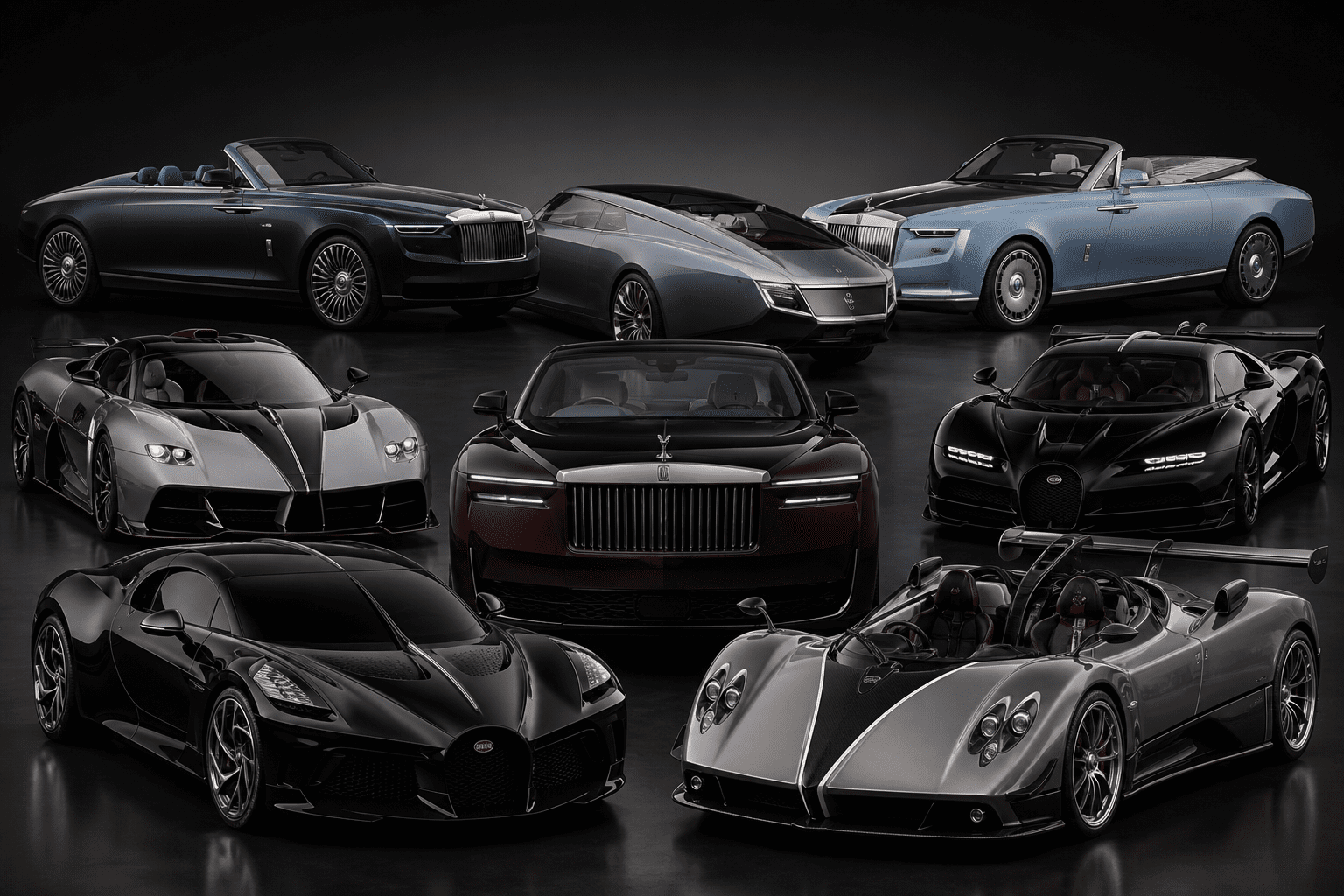
1. Rolls-Royce La Rose Noire Drop tail

Estimated Value: $30–32 Million

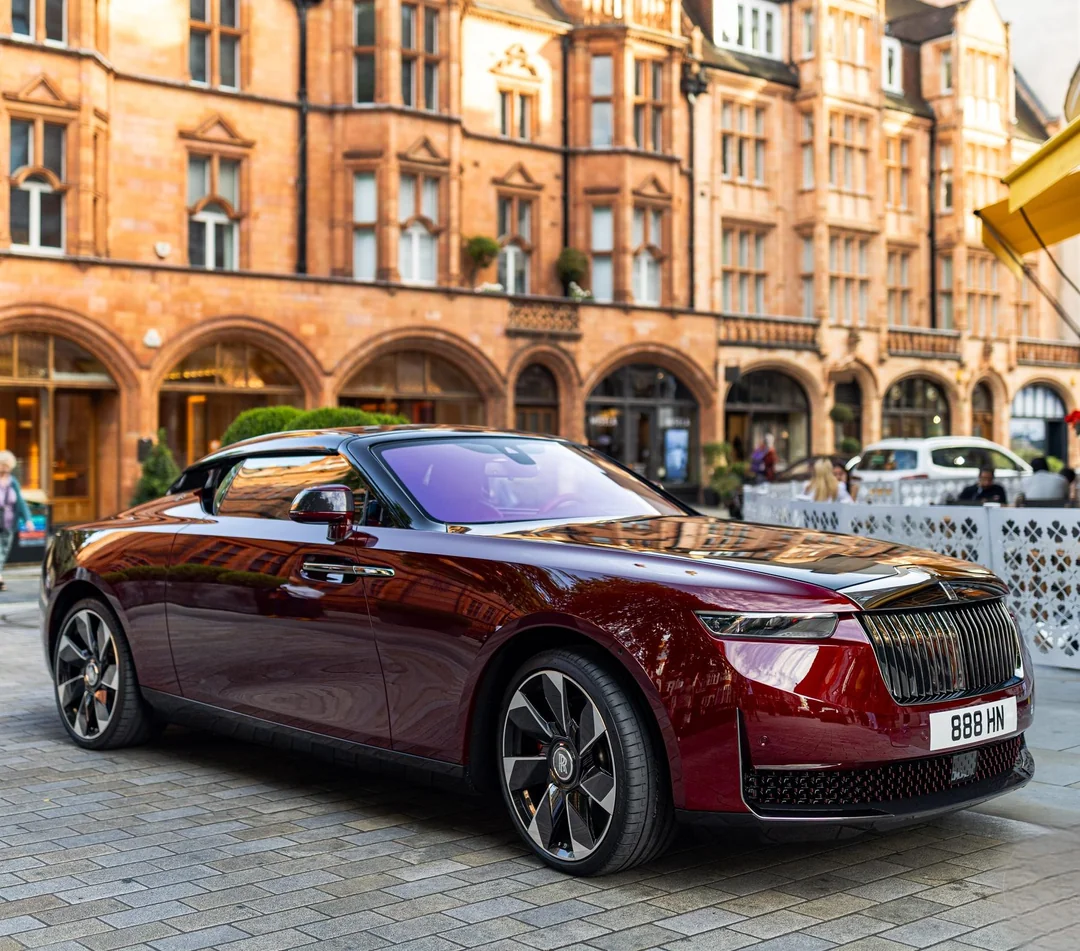
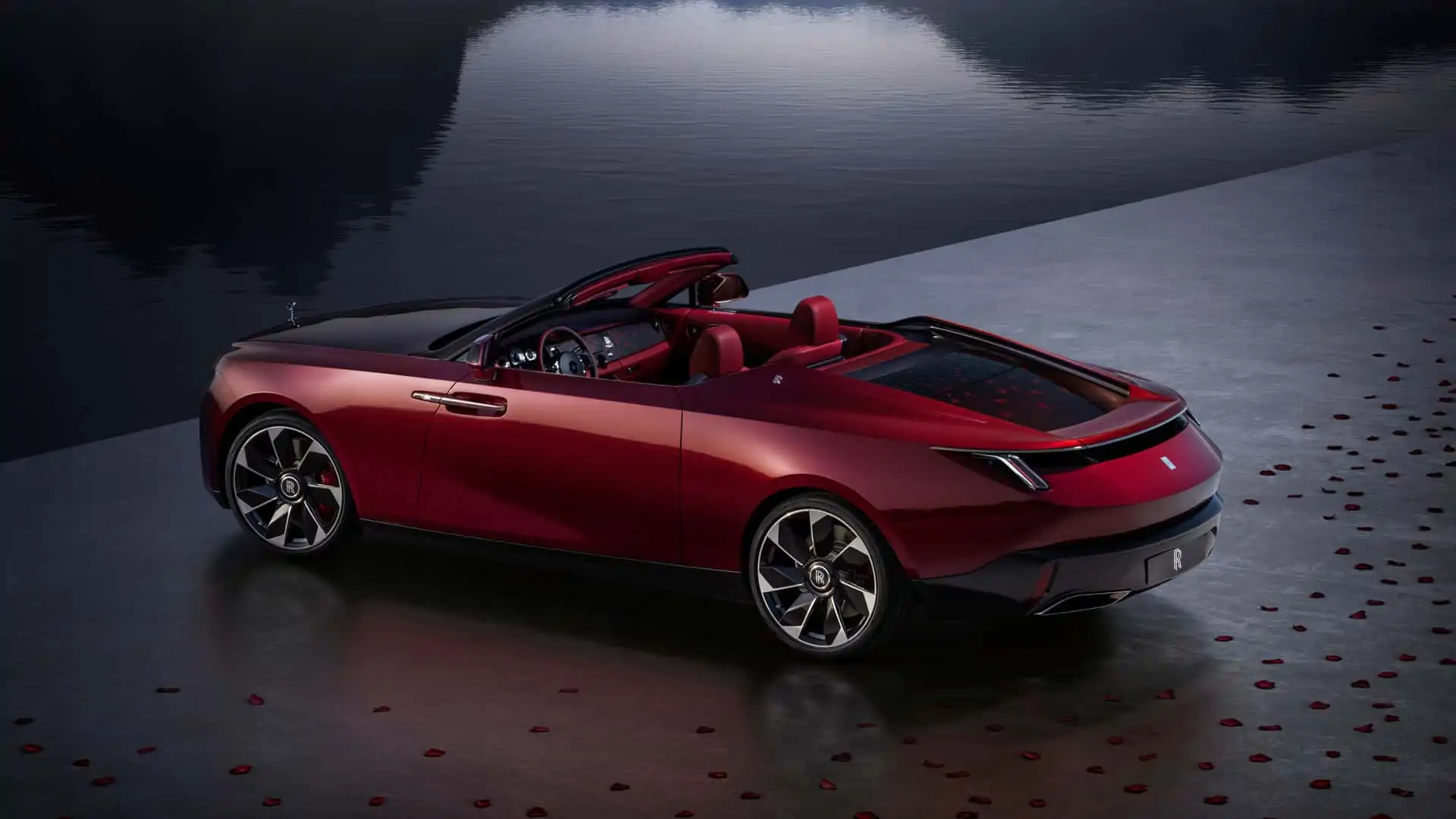
At the summit of automotive exclusivity sits the Rolls-Royce La Rose Noire Droptail, currently recognized as the most expensive new car in the world in 2026.

Inspired by the Black Baccara rose, this two-seat masterpiece is part of Rolls-Royce’s highly exclusive Droptail collection, limited to only four commissions worldwide. Each example is individually designed for its owner, with thousands of hours invested in handcrafted detailing.

Powered by a twin-turbocharged 6.75-liter V12 engine, the Droptail prioritizes elegance over outright aggression. Its presence is architectural, sculptural, and utterly singular.

Rolls-Royce describes the project as an expression of “contemporary coachbuilding,” bringing pre-war craftsmanship into the modern era. The interior features an intricate wood marquetry process requiring over 1,600 individual pieces.

Photos taken by @rostyslavgordon on IG.

2. Rolls-Royce Boat Tail

Estimated Value: $28 Million

The Boat Tail remains one of the most iconic symbols of ultra-luxury motoring.

Limited to just three examples globally, this extraordinary creation draws inspiration from classic yachts of the 1920s and 1930s. Every panel, curve, and surface was individually crafted according to each client’s lifestyle and preferences.

Perhaps its most talked-about feature is its rear “hosting suite”—a butterfly-opening compartment containing custom dining equipment, champagne refrigeration, and bespoke accessories.

The Boat Tail is not simply expensive because of performance. It commands its value because it is, in essence, wearable art on wheels. Community collectors frequently describe it as one of the most aspirational coachbuilt vehicles ever created. (The Times of India)

Official information:
Rolls-Royce Official Website

3. Bugatti La Voiture Noire

Estimated Value: $18.7 Million

Few names in automotive history command as much reverence as Bugatti, and the La Voiture Noire is perhaps its boldest modern statement.

Translated as “The Black Car,” this singular hypercar was created as a tribute to Jean Bugatti’s legendary Type 57 SC Atlantic.

Beneath its sculpted carbon fiber body sits an 8.0-liter quad-turbocharged W16 engine producing approximately 1,500 horsepower.

Performance is ferocious:

  • 0–100 km/h in around 2.4 seconds
  • Top speed exceeding 420 km/h

Official information:
Bugatti Official Website

4. Pagani Zonda HP Barchetta

Estimated Value: $17–18 Million

Horacio Pagani’s vision has always blurred the boundary between engineering and art.

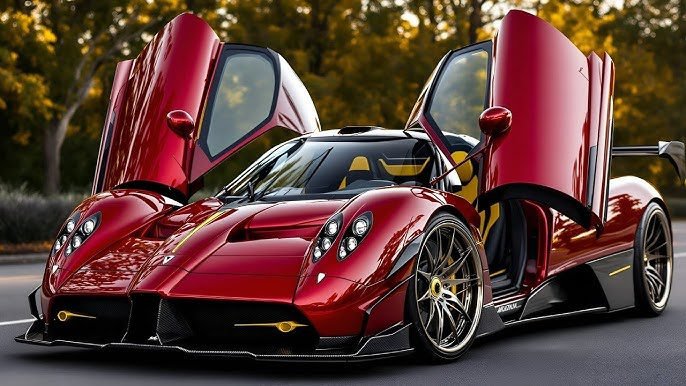
The Zonda HP Barchetta represents the ultimate expression of the legendary Zonda platform. Limited to only three units worldwide, it remains one of the rarest hypercars ever created.

Its open-top body, carbon-titanium chassis, and naturally aspirated AMG-sourced V12 create an experience that collectors often describe as mechanical poetry.

Unlike many modern hypercars that prioritize digital systems, the Zonda HP Barchetta embraces analog purity—raw, emotional, and timeless. Pagani officially showcased the model again during its 2026 collector exhibitions, reaffirming its iconic status. (Pagani)

Official information:
Pagani Official Website

5. Rolls-Royce Sweptail

Estimated Value: $13 Million

Before the Droptail era, the Sweptail held the crown as the world’s most expensive new car.

Commissioned by a private collector, this one-off grand tourer took nearly four years to develop.

Its design draws inspiration from:

  • Luxury yachts
  • Private aircraft
  • Classic Rolls-Royce models from the 1920s

Its panoramic glass roof and flowing rear profile make it one of the most recognizable coachbuilt vehicles in existence.

Even in 2026, the Sweptail remains a benchmark for bespoke automotive design.

Official information:
Rolls-Royce Motor Cars

6. Bugatti Centodieci

Estimated Value: $9 Million

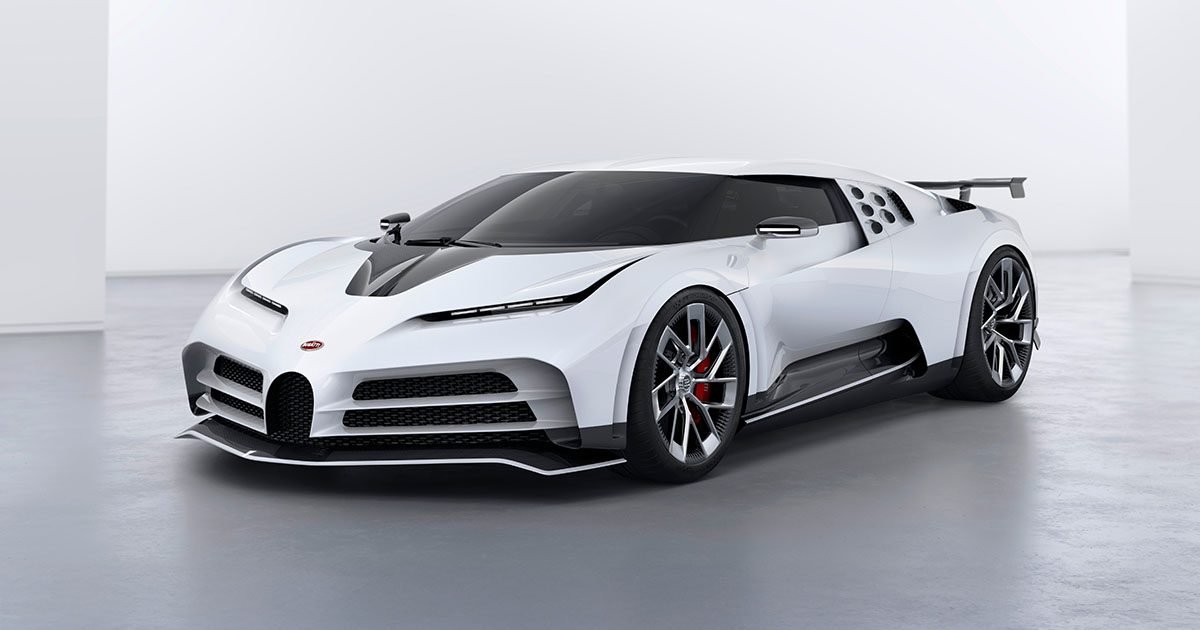
Created to celebrate Bugatti’s 110th anniversary, the Centodieci pays tribute to the legendary EB110.

Limited to only ten units, it combines retro-inspired styling with modern hypercar performance.

Key specifications include:

  • 8.0-liter W16 engine
  • 1,600 horsepower
  • Top speed over 380 km/h

Collectors value the Centodieci not just for speed, but for its direct connection to Bugatti’s heritage.

Official information:
Bugatti Hyper Sports

7. Mercedes-Maybach Exelero

Estimated Value: $8 Million

The Exelero remains an enigma in automotive history.

Commissioned originally as a tire testing prototype, it evolved into one of the most extravagant concept vehicles ever built.

Its dramatic proportions, aggressive styling, and twin-turbo V12 powerplant make it a collector legend.

Even decades after its debut, the Exelero continues to rank among the most expensive cars in the world due to its singular existence and cultural significance.

Official information:
Mercedes-Maybach Official Website

Why Are These Cars So Expensive?

The value of these vehicles extends far beyond horsepower.

The real price drivers include:

1. Ultra-Limited Production: Many of these vehicles exist in quantities of one to four units globally.

2. Bespoke Coachbuilding: Manufacturers collaborate directly with billionaire clients to create entirely unique specifications.

3. Heritage and Legacy: Brands such as Rolls-Royce, Bugatti, and Pagani carry decades—sometimes over a century—of prestige.

4. Investment Potential:  Ultra-rare automobiles increasingly function as alternative investment assets, similar to fine art and rare watches.

5. Engineering Mastery: Carbon fiber monocoques, aerospace-grade materials, and handcrafted interiors elevate these vehicles beyond mass production.

The most expensive cars in the world in 2026 represent something far greater than mobility. They embody identity, status, legacy, and artistic ambition.

Whether it is the poetic elegance of the Rolls-Royce Droptail, the aggressive mystique of the Bugatti La Voiture Noire, or the handcrafted brilliance of the Pagani Zonda HP Barchetta, these machines occupy a realm few will ever experience—but millions will admire.

In an age of electrification and digital transformation, these vehicles remind us that true luxury remains profoundly human: crafted by hand, commissioned with purpose, and built to outlive generations.

Listen to this article : https://bit.ly/4u519bC

04/05/2026No comments, 2026 supercars | automotive luxury | Bugatti La Voiture Noire | collector cars | exotic cars 2026 | expensive cars list | hypercar collection | luxury hypercars | most expensive cars | Pagani Zonda HP Barchetta | rare hypercars | Rolls-Royce Boat Tail | Rolls-Royce Droptail | supercar investment | ultra luxury cars