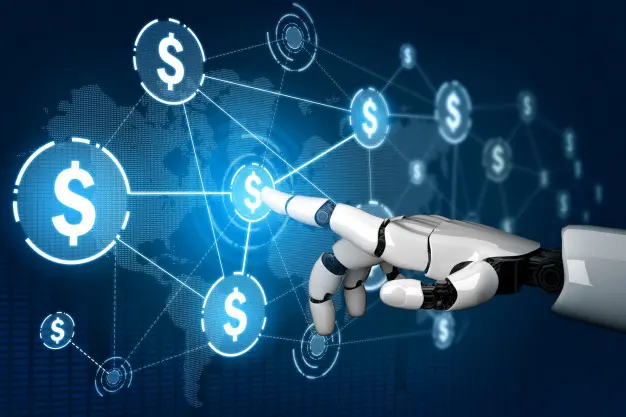
For years, artificial intelligence lived comfortably in the realm of speculation, a favorite topic of futurists, technologists, and science fiction writers eager to predict the next great disruption. Today, that conversation has moved from theory into infrastructure. AI is no longer arriving. It is already embedded in the architecture of modern life: financial systems, logistics, media, healthcare, warfare, real estate, and increasingly, the psychology of consumption itself. What makes this technological moment different is not simply speed. It is scale. Previous industrial revolutions mechanized labor. AI is beginning to mechanize cognition. That distinction changes everything.
The global economy is entering a period where intelligence, once limited by human capacity, geography, and time, becomes infinitely scalable. A single AI system can simultaneously operate as analyst, strategist, assistant, designer, translator, researcher, and salesperson. Businesses that once required hundreds of employees can suddenly operate with a fraction of the workforce while moving faster than corporations ten times their size.
The implications for productivity are staggering. So are the implications for inequality. The countries and corporations that dominate artificial intelligence will not merely become richer. They will become structurally more powerful. AI is rapidly becoming the new oil, electricity, and internet combined, a foundational layer beneath every major industry. The race is no longer about who owns factories, but who controls computation, data, and distribution. This is why governments are treating AI less like software and more like geopolitics.
The United States and China understand this clearly. Europe, meanwhile, finds itself attempting to regulate a future it risks not fully controlling. The Gulf states are investing aggressively, not simply to diversify beyond oil, but to position themselves as intelligent economies before the next global order solidifies. Singapore is doing the same quietly, efficiently, almost predictably. And then there is luxury, an industry often misunderstood as superficial, when in reality it functions as one of the world’s clearest mirrors of wealth, aspiration, and cultural change.
Luxury has always evolved alongside power. Aristocrats commissioned portraits. Industrialists built grand hotels. Tech billionaires bought islands, rockets, and football clubs. Every era expresses status differently, but the psychology remains remarkably consistent: luxury is ultimately about distinction. Artificial intelligence is about to redefine how that distinction is created.
At first glance, AI appears almost incompatible with luxury. The essence of luxury has historically relied on rarity, craftsmanship, and human touch, qualities seemingly threatened by automation. Yet luxury does not resist technology when technology enhances exclusivity. It absorbs it. The luxury sector is already shifting from product-based prestige to experience-based intelligence.
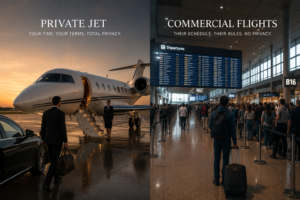
The future luxury client will not merely expect beautiful hotels, private jets, or waterfront residences. They will expect environments that anticipate them. AI concierge systems will know dietary preferences before arrival, curate travel itineraries dynamically, recommend investments based on behavioral patterns, and personalize experiences with almost unsettling precision. The next generation of elite service will feel less transactional and more intuitive.
In many ways, AI is making luxury invisible. The most sophisticated systems will not announce themselves. They will quietly remove friction from life itself. No waiting. No repetition. No unnecessary effort. The highest form of luxury has never been excess. It has always been ease. Yet beneath the elegance of this transformation lies a more uncomfortable question: what happens to human value in a world increasingly optimized by machines?
As AI-generated imagery floods fashion campaigns, as virtual influencers gain audiences larger than real celebrities, and as algorithms begin producing music, films, architecture, and even journalism, society may enter an era of aesthetic abundance but emotional scarcity. When everything can be generated instantly, authenticity becomes exponentially more valuable. This is where the luxury world may experience its most fascinating paradox. AI will elevate the premium placed on what feels unmistakably human. Handmade watches, artisan craftsmanship, bespoke tailoring, architectural individuality, intimate hospitality, these may become even more desirable precisely because they resist scale.
In a fully automated future, imperfection itself becomes a luxury good. There is another paradox emerging as well. AI democratizes capability while concentrating wealth. A talented individual with AI tools can now compete with companies that once possessed overwhelming advantages. Small firms can produce world-class branding, marketing, analytics, and customer experiences at unprecedented speed. Entire industries are becoming more accessible.
But at the same time, the owners of the most powerful AI infrastructure, chips, data centers, models, cloud systems, are accumulating extraordinary influence. The result may be a world where entrepreneurship flourishes while economic power centralizes. This tension will define the next decade. And culturally, society has not yet decided how it feels about any of it.
There is excitement, certainly. AI promises medical breakthroughs, scientific acceleration, operational efficiency, and new forms of creativity. But beneath the optimism sits a growing unease that is difficult to articulate. People sense the shift intuitively. The speed feels unnatural. Entire professions are beginning to question their future relevance. The anxiety is not simply about jobs. It is about identity.
For centuries, human beings derived meaning from expertise. What happens when expertise itself becomes automated? The answer may ultimately reshape education, business, politics, and luxury alike. Because in the end, AI will not merely change what we buy or how economies function. It will force society to reconsider what remains uniquely valuable when intelligence is no longer scarce. And perhaps that is the real story unfolding beneath the headlines.
The age of artificial intelligence is not just an economic transformation. It is a philosophical one.
Listen to this article : https://bit.ly/42lkFUY
At ZONEZI, brokers gain access to a curated portfolio of premium listings, while private owners enjoy unparalleled visibility within a global network of discerning buyers. We are committed to facilitating successful transactions in the world of luxury, driving growth, and creating valuable opportunities in the marketplace.