Making an impact, Giving Children Hope and a Future

Asia Center Foundation (ACF) is a christian charity registered as a Non Government Organization (NGO) on Phuket, Thailand in operation since 2002. Ourย missionย is to help disadvantaged children and children-at-risk by providing care, training and education so that they will fulfill their God-given potential.

The ACFโ€™sย visionย is to restore children to God, transform and develop them into leaders influencing their world.

ACF employs local Thai staff and also makes use of the help of local and international volunteers to engage and work with underprivileged, impoverished children and children-at-risk on Phuket.

Read more

16/02/2019No comments
Central commits to B1bn Phuket lifestyle mall

BANGKOK: The Central Group of Companies, Thailandโ€™s biggest retail conglomerate, plans to spend B1 billion to build its first outdoor lifestyle mall in the Bang Tao area of Phuket next year.

Lertvit Pumipitak, the groupโ€™s senior executive vice-president of corporate business development, said the company will start to develop Porto de Phuket on 50 rai in Bang Tao in 2019, with construction to be complete by the end the year.

The construction is divided into two phases. The first phase is on 20 rai, focusing on the development of an outdoor lifestyle mall covering 40,000 square metres.

The lifestyle mall will consist of seven features, including a Phuketian Mercado and a Food Hall with eateries, cafes, bars and beverage stores.

Central Food Hall, a restaurant and cafe zone, a multi-design house offering various creative products from top designers around the world, as well as new formats of Supersports, Power Buy, B2S and FamilyMart convenience store are all planned for the mall.

Nick Reitmeier, executive vice-president of Food Hall and international buying for Central Food Retail Co (CFR), the operator of Tops Supermarket and Food Hall, said the company plans to invest B120-150 million to build a new Food Hall at the Porto de Phuket project covering 3,000 square metres.

The group already operates Central Festival, Central Floresta and Robinson department stores and lifestyle centres in Phuket. In addition to Porto de Phuket, the group is building a Zen Department Store in Patong Beach slated to open before the yearโ€™s end.

Read more

16/02/2019No comments,
Phuket light-rail up open to public by 2023, assures official

PHUKET: Local residents will be able to get on board Phuketโ€™s light-rail by 2023, a top official behind the project has assured.

Niran Kaetkeaw, the Director of the Regional Bureau of Transportation and Traffic Promotion, Office of Transport and Traffic Policy and planning (OTP), said on Friday (Oct 26) that the project was making good progress.

โ€œThe e-bidding for the project is expected to start next year 2019, with bids closing in 2020. We expect construction to start in 2020, with construction completed by 2022,โ€ Mr Niran said.

โ€œThe first year of operation will be a trial period, with the light-rail fully operational and open to the public by 2023 for certain,โ€ he added.

Mr Niran explained that the Mass Rapid Transit Authority of Thailand (MRTA), which has now been granted legal authority to oversee the project, began seeking feedback from relevant agencies and the public in order to draft the terms of the Public-Private Partnership (PPP) government tender to be offered.

โ€œThe MRTA will then submit their report to the Ministry of Transport and assist in expediting the preparation of the government tender documents,โ€ he said.

โ€œConstruction of the first 41.7 kilometres of the project will be launched in the first half of 2022, or before the beginning of 2023. The budget for this section will be B30.154 billion.

โ€œThe entire project will be along a total of 58.52km, with a total project cost of B39.406 billion,โ€ he said.

The northern section of the light-rail route will mainly follow Thepkrasattri Rd, Mr Niran noted.

Read more


16/02/2019No comments,
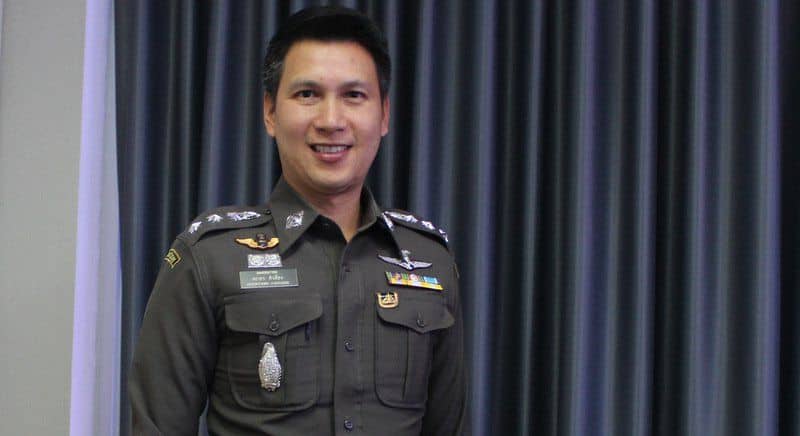
โ€˜Better if you doโ€™: Phuket Immigration chief urges foreigners to re-register addresses, even if staying off-island just one night

PHUKET: The Chief of the Phuket Immigration Office, Col Kathathorn Kumthieng, has confirmed that all foreigners registered as living in Phuket must re-report their address to immigration after being registered as staying in a hotel within Thailand, even for just one night.

The confirmation follows complaints from long-term expats that they were fined B2,000 for not re-registering their home addresses after travelling within the country.

โ€œBy law, it is a requirement to register your address within 24 hours after being registered elsewhere, such as at a hotel or a guesthouse,โ€ Col Kathathorn told The Phuket News this week.

โ€œThis is because the hotel or guest house will have to register you, also by law, as residing somewhere other than your residence. So when you return to your residence, you must inform immigration,โ€ he explained.

The same also applies for foreigners living in Phuket who leave the country and return, say for a weekend trip to Singapore.

Col Kathathorn played down concerns for honest, law-abiding expats.

โ€œAlthough it is the law, if itโ€™s a short stay, for example a day or two, and nothing happens to prompt officials to check then there usually wonโ€™t be a problem,โ€ he said, for stays away from home within the country.

โ€œHowever, if you become involved in an incident and become a suspect in a case for example, not re-registering your address will be a big problem. So itโ€™s better if you do.โ€

Regardless, although the overall effect for most foreigners caught not re-registering their address each time on returning home to Phuket might be deemed negligible, foreigners will be liable to a B2,000 fine for each infringement and the incident will remain on their immigration record.

Read more

16/02/2019No comments
This princess could be the next prime minister of Thailand

Bangkok, Thailand (CNN) A Thai political party has nominated the Kingโ€™s sister as its candidate for prime minister in March elections โ€” an unprecedented move that could upend the political landscape and give the revered monarchy an overt role in politics.

Bangkok, Thailand (CNN)ย Thailand’s king has strongly criticized his sister’s announcement she will stand in elections next month — an unprecedented move that could upend the political landscape and give the revered monarchy an overt role in politics.

“To involve a high-level member of the royal family in politics, directly or indirectly, is against royal traditions, norms and the national culture,” King Maha Vajiralongkorn said Friday night, adding that “it is deemed extremely inappropriate.”
His statement came after Princess Ubolratana Rajakanya, Vajiralongkorn’s 67-year-old older sister, said she would stand as the prime ministerial candidate for the Thai Raksa Chart Party (Thai Save The Nation, or TSN) aligned with populist former leader Thaksin Shinawatra, who was ousted by the military in a 2005 coup.
One of her leading opponents will be the military-backed current Prime Minister Prayut Chan-o-Cha, who announced his own candidacy Friday.
Thai Raksa Chart Party chief Lt. Preechapon Pongpanich confirmed the announcement in a statement Friday. “After the meeting among our executives, we have concluded to send Princess Ubolratana as our PM candidate. She is (a) knowledgeable and capable person,” he said. “After the meeting we reached out to her, and she has been gracefully kind and accepted our invitation.”
Thai Raksa Chart is an offshoot of Pheu Thai, the latest incarnation of Thaksin’s party that has won every election since 2001.
The candidacy of a close member of the royal family is unprecedented in Thailand since the era of absolute monarchy ended 86 years ago.
It is currently unclear what effect the King’s statement will have on Ubolratana’s decision or ability to run. In a statement following her brother’s, the princess thanked “all Thais for the love and moral support given to me in the past day.”
“I want to say again with sincerity that I want to see Thailand move forward,” she said. “I want to see all Thais have rights and the chance to live well and be happy.”
In a statement Saturday, TSN said it accepted Vajiralongkorn’s words “with our loyalty to the King and all royal family members.”
“TSN feels deeply touched from the kindness of Princess Ubolratana who has given her generosity to TSN,” the statement continued.
“TSN will comply with the Electoral Commission’s regulations, election laws, constitution and to royal traditions with respect, and (it stands) ready to bring prosperity to Thailand with respecting the decision of the people under democratic system with the kind as our head of state.”
Whether Ubolratana’s candidacy continues falls on the Electoral Commission, which must decide whether to keep her on the ballot, as Thai law stipulates that once a name is submitted, it cannot be withdrawn.
16/02/2019No comments
China, Thailand ink MOU for Kra Canal

GUANGZHAO: China and Thailand are reported to have inked a memorandum of understanding on the construction of a canal that would cut through peninsular Thailand, linking the South China Sea with the Andaman Sea.

Once completed, the โ€˜Kra Canalโ€™ would offer an alternative sea link between Asia with the Middle East and Europe, bypassing the Strait of Malacca, a key shipping lane for world trade.

The Straight of Malacca is one of the worldโ€™s busiest international shipping lanes with up to 40 per cent of the worldโ€™s trade passing through it.

Chinese and Thai officials are said to have signed the memorandum of understanding in Guangzhou this week. The canal is would take 10 years to complete at a cost of at least US$28 billion (934.5 billion baht), reported the Hong Kong-based Oriental Daily.

The current proposal is for a two-way 25m deep canal measuring 102km in length and 400m wide. (For comparison, the Panama Canal is 15m deep and measures 304m at its widest point).

The route would reduce shipping distances for vessels entering the Gulf Of Thailand from the west by 1,200km, bypassing Singapore entirely.

According to the Oriental Daily, Chinese officials described the project as part of the countryโ€™s proposed โ€˜Maritime Silk Roadโ€™, which aims to revive a trade route from China through Southeast Asia and the Indian Ocean to Europe.

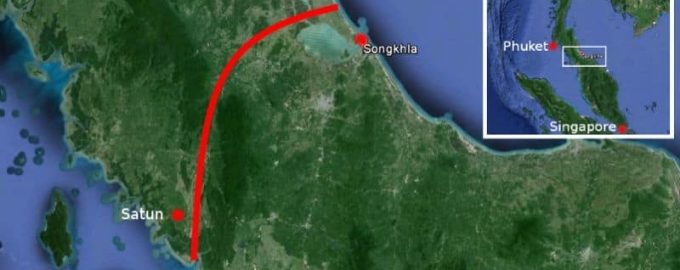
In documents sourced by The Phuket News, the most likely route proposed for the canal would be from Satun on the Andaman Coast to Songkhla in the Gulf of Thailand. It could follow the current path of Route 406, which runs through the only significant in the range of mountains that runs north-south down the peninsula.

That route is the one recommended in a report by Pakdee Tanapura, the international director and acting spokesman of the Board of Directors of the International Executive Committee for the Study of the Kra Canal Project in Bangkok.

Although it is the longest of a dozen or so possible routes, Mr Pakdee regards it as the best because there is very little development and a low population, and both ends โ€“ in Satun province and Songkhla โ€“ are most suitable for the building of ports and industrial zones.

The route is an old one. Phuket-based author Colin McKay, in his seminal book, A History of Phuket and the Surrounding Region, suggests that the route from Satun to Songkhla may date back as much as 1,100 years ago.

โ€œThere is sufficient evidence from excavations done in the region by archaeologists from Cambridge University and elsewhere, to speculate that around the 10th century [AD], an ancient waterway system may even have been dug across much of the peninsula from near Satun on the west coast to the great Thale Luang Lake and Songkhla on the east coast,โ€ he wrote.

The canal through the Kra Isthmus has been discussed since the 17th Century, when King Narai commissioned a French engineer to assess the possibility of building a waterway from Songkhla to the Andaman Sea). But the idea was dropped because there was not the technology at the time to do it.

The idea has been resurrected several times since, but the signing of the MOU this week is the furthest things have ever got.

UPDATE, May 19, 5:55pm

Since this story was first posted by The Phuket News and a number of Thai websites, debate has raged as to whether the Kra Canal project is actually likely to be realised. The debate has now been taken up in interntional forums.

For example, Singapore’s Channel News Asia reported, “… a Thai Transport Ministry official said the project is not in the pipeline. The Ministry of Foreign Affairs also stated there has been no agreement between the Thai and Chinese governments on this matter.”

It named no officials apart from Dr Panitan Wattanayagorn, “security advisor to Deputy Prime Minister Prawit Wongsuwan, [who said] the reports from China might have been a result of a misunderstanding.”

Amid all the denials, however, no one yet named has denied that an MOU was signed.

The Phuket News is rechecking with its sources and will contact other sources tomorrow to see whether the signing can be confirmed or not.

One usually reliable source told The Phuket News, “There are outside interests that will not want this project to fly and it looks like they have already started…”

Read moreย 

15/02/2019No comments, Apartment|Business Development|House for families|Houzez|Luxury|Real Estate
Thailand Elite Visa

Be a friend of Thailand be an Elite member

Since 2003 under โ€œThailand Privilege Card Company Limitedโ€ as its sole shareholder with the registered capital of THB 1 billion, Thailand Elite has become the worldโ€™s first country membership package with exclusive benefits for immigration, leisure, business, and much more. Thailand Eliteโ€™s main goal of representing a special package exclusively for honored guests.

Under the care of Tourism Authority of Thailand (TAT), every single Elite member will be offering special rights and services to Elite members such as exclusive treatment from the airport. The aims are to generate revenues from foreign visitors; and draw high-end visitors, businessmen, investors and the long stay groups.

The services provided to Thailand Eliteโ€™s members are from both public and private sectors, like Visa Privilege, Special Entry Visa, and Privilege Entry Visa, as well as high-end golf courses, spas, hotels, clubs, and medical facilities throughout Thailand. Known for world-class hospitality, we look forward to service Elite members to enjoy their time here to the fullest extent.

Apply now

15/02/2019No commentsApartment|Business Development|House for families|Houzez|Luxury|Real Estate
3 Factors That Most Foreigners Consider When Buying A Property In Phuket

More and more people are choosing to buy properties in Phuket, Thailand. Phuket is one of Asiaโ€™s most sophisticated and most established property markets. Over the past twenty years, property developments have been sprouting around the island that heightened the influx of investors. Currently, the demand for properties is high, especially in newly developed areas of Surin, Bang Tao Beach, Layan, Cherng Talay, and the coastal areas in the southern part of the island.

Compared to traditional areas, Phuket boasts an assortment of options to property investors, whether they are looking for apartments, condominiums, villas, or residential houses. Property investors will not run out of affordable options. Although most part of the development in Phuket is designed for the wealthy, there are affordable properties that stretch over the bays of the islandโ€™s west coast.

Reasons of Investing in Phuket

There are many reasons why people choose Phuket as a property investment opportunity. Whether they are looking for a permanent home, a holiday getaway, or an investment opportunity, the primary reasons in considering a property in Phuket can be classified broadly as leisure, financial, and social.

1. Leisure and Culture โ€“ย Phuket is home to some of Asiaโ€™s island resorts that boast stunning natural surroundings combined with extraordinary facilities for guests. It is home to idyllic beaches and unscathed rainforests, making it a perfect destination for pleasure seekers, extreme sports junkies, or food connoisseurs. Properties in Phuket have something unique to offer to everyone who wants to imbibe the authentic culture and experience the exceptional relaxation.

ย 2. Financial Opportunity โ€“ย Phuket is one of the premier tourist destinations in Thailand and is recognized as one of the wealthiest provinces in the kingdom. The Thai government realized the value of Phuket in the kingdomโ€™s entire economy. Phuket remains as one of the commanding presence, in terms of investment opportunities. This makes Phuket one of the leading choices of individuals who want to have a piece of property in one of the fastest-growing economies in Thailand.

ย 3.ย Social and Economic โ€“ย The islandโ€™s economy is one of the lowest costs of living cited, all over the globe. Compared to other western countries, Phuket has become one of the most attractive choice for people who want to retire because it remain to be the most comfortable and modest place to live. Phuket is the core location for many infrastructure developments in the recent years. Additionally, Phuket offers high standards of healthcare services at very reasonable price.

Read more

15/02/2019No comments, Apartment|Business Development|House for families|Houzez|Luxury|Real Estate
Prices soar for Phuketโ€™s luxury villas

The limited number of new luxury villas in Phuket has doubled the price of resale units, as demand is relatively strong in this niche market.

Aliwassa Pathnadabutr, managing director of property consultant CB Richard Ellis (Thailand), said top-end villas on the islandย were part of an exclusive market characterised by a limited number of high-value transactions.

Major players used to be small foreign developers with limited financial backing, but they have been replaced by large operators.

This is positive for the market in terms of reduced risks for buyers and an improvement in the quality of villasย and designs.

Most villa sales are in the entry-level segment with prices below 15 million baht. Despite ongoing demand in the luxury segment, buyers face a limited supply.

“In recent years, buyers’ preferences in the luxury sector have shifted towards hotel-branded products that offer quality management, five-star services and facilities as well as the ability to generate rental income,” Ms Aliwassa said.

However, the proportion of completed luxury villas priced above 35 million baht with hotel branding remains limited and accounts for less than 10% of the villa market.

“We’re now beginning to see Western expat groups working in Asia who bought prior to the 2008 financial crisis starting to re-enter the market,” Ms Aliwassa said.

With the completion of Phuket airport’s expansion next year, CBRE expects to see further growth in tourist arrivals having a positive effect on resort property sales.

Price points have clearly shifted in the past 10 years for successful developments.

In 2005, the first phase of Andara Resort & Villas was launched with units priced atย US$3-4 million.

Today, resales at Andara are fetching $6-8 million, with someย transactions achieving a 100% capital gain.

Launch prices of someย luxury projects have also hit the $10-million mark.

Andy Kunz, general manager of luxury villa and hotel project Point Yamu by Como, said 2015 was not proving a good year for Phuket, as the number of Russian and other Western tourists had decreased.

“Tourism in Phuket has been unfavourable since the coup last year, because Phuket was mentioned in negative ways,” he said.

Some four- and five-star and big-chain hoteliers late last year banded together to set up the Phuket Hotels Association.

They held meetings to try to figure out how to restore the tourism market and create a Phuket brand.

The association tried to persuade budget hoteliers to join, but that segment had no problem with their target groups.

Starting operations in late 2013, Point Yamu by Como is is located on Cape Yamu on the eastern side of the island.

The hotel comprises 79 hotel rooms and 27 villas, with rates ranging from 40,000 and 100,000 baht a night.

Of the 27 villas, 20 are offered for saleย at prices ranging from 61-175 million baht.

Total sales value of the 20 villas is 1.7 billion baht, with three units sold to Singaporeans after a soft launch early last year.

All villas for sale are required to enter a rental programme in which owners can stay 60 days a year and receive a rental yield.

More information

15/02/2019No comments, Apartment|Business Development|House for families|Houzez|Luxury|Real Estate
Amendment could boost haul from property tax

Amending the law to allow median prices based on current appraisal prices to be used for the local development tax could be an alternative to generate massive tax income instead of pushing the controversial land and buildings tax, says a source familiar with the subject.

The strategy could help revenue from the local development tax surge by 100 times to 100 billion baht, said the source.

The local development tax charges are based on land prices appraisedย between 1978 and 1981. A Fiscal Policy Office (FPO) study found a big difference between the prices of land appraised during that period and those evaluated during 2004-07, from four to more than 4,000 times.

Given that the local development tax is regressive, based on outdated appraisal prices and has many waivers, the Finance Ministry pitched the idea of the land and buildings tax bill replacing a revamped local development tax and a house and land tax in order to raise revenue for local administrators, alleviating the government’s fiscal burden in supporting them.

The local development tax charges 0.5% for median land prices worth less than 30,000 baht but only 0.2% for those worth more than 30,000. Moreover, landlords who own land plots of up to five rai, depending on the location, are tax-exempt. Some 90% of Thais hold less than one rai of land.

The house and land tax, which charges 12.5% of annual rental payments, is blamed for the tax disparity as rental appraisal depends on related state officials’ judgements. Some landlords also pass on the tax burden to tenants. The tax contributes 23 billion baht a year to the government’s revenue.

However, the bill has been shelved for months following public outcry for fear of a higher financial burden because of the new tax.

The source said the market value of land plots has soared on average over 300 times the past three decades.

One option is to exempt the value of buildings from the land and buildings tax bill toย lower the burden on home and building owners, as only land would be levied, noted the FPO study.

Earlier, former finance minister Sommai Phasee opposed the idea of taxing only the land.

The source said the land value averaged 70% of the price, so taxing it would be feasible.

Read more

15/02/2019No comments, Apartment|Business Development|House for families|Houzez|Luxury|Real Estate
Luxury real estate prospers

One thing that I love about Phuket is the ability for luxury to live side by side with abject casualness. You could be sitting next to a multi-millionaire or a packaged tourist on the bar stool, as the ties that bind are the flip-flops adorning your respective feet.

Islands tend to have little social stratification, which can probably be explained in a Robinson Crusoe round-about manner. Be it a local eatery, or stepping down the aisles of Villa Market, or indeed sitting in the crowd at a kidsโ€™ sporting event at one of Phuketโ€™s many international schools, the pecking order doesnโ€™t much matter at these venues.

All that equality of course does not necessarily apply to where the top end of the market lay down their heads on comfy pillows at night. The history of luxury pool villas has been recanted many times around the local watering holes, so thatโ€™s no place we need to go now.

One clear positive sign for Phuketโ€™s luxury real estate is the amount of impressive new product now coming into the marketplace. Just a few days ago, I had the chance to visit one of the newest launches, Avadina Hills overlooking Layan Beach, and once you catch your breath, all of Bangtao Bay and beyond.

Size does matter in what has been a hand-crafted effort of 22 ultra estate villas. One feature that I personally love is the ample plot size with an average of two rai each. With configurations mainly of four bedrooms, built up areas range from 1,700-1,800 square meters and internal built up space of over 709sqm.

Is the price tag, starting from 300 million baht, high? Certainly, but viewing the high level of quality, the artistic framework of architect Sakakura Associates and landscape planner James Hyatt, ultimately the price tag is attuned to the exclusivity, privacy and view overlooking one of the islandโ€™s most sensational vistas.

Writing this, I can almost hear the online boo-birds chirping about the demise of Phuket, being overrun by cheap travellers and with a declining trajectory. Yet, looking at the bare facts and quality of investment into the islandโ€™s luxury property sector by well-heeled groups and affiliates like Kajima (Japan), Minor (Thailand), HPL (Singapore), and New World (Hong Kong), the reality seems to suggest that, despite a world gone mad, upscale property is continuing to find a global marketplace in Phuket.

Over the next 12 to 18 months, more than US$500 million in new luxury estate villas will enter into the market, including notable projects such as Rosewood, MontAzure and others, joining Avadina Hills, Anantara Residences and Point Yamu by Como. One reality of the sector is that a fresh phase of demand will be induced by the world class product and will generate sales from both domestic and overseas buyers.

If you want a reality check about Phuketโ€™s leadership in real estate, take a drive on Kamalaโ€™s Millionaireโ€™s Mile some time, or take a look at the superyachts that canโ€™t find space at the islandโ€™s overfilled marinas.

There is little doubt that our island is transforming into an urbanized landscape, and yes โ€“ volume is inevitable in all things we do and see. Yet, putting perspective into the real estate sector, and viewing the positive investment sentiment, all indications are that we will continue to move ahead as we enter the next development cycle.

Luxury living is indeed finding more partners to sleep with, given some very spectacular new products that are gracing our shores.

Read more

15/02/2019No commentsApartment|Business Development|House for families|Houzez|Luxury|Real Estate
Builders urge tax breaks for buyers

Property developers are urging the government and its new economic cabinet to use tax incentives to help restore housing demand in the remaining months of this year.

They are concerned that already-soft demand will be weakened further by Monday night’s bomb attack.

Cutting property tax and transaction fees would help to stimulate the economy in general and the property market in particular, said Thongma Vijitpongpun, president and chief executive of Pruksa Real Estate Plc.

He proposes the property transfer fee be reduced to 0.02% from 2%, mortgage fee to 0.01%ย from 1% and special business tax to 0.01% from 3.3%.

The cuts should be applied to housing units priced 2 million baht or lower, which would help low-income earners to afford their own home, Mr Thongma said.

“If these incentives were applied to higher-priced segments, annual tax revenue could miss the target,” he said.

Atip Bijanonda, president of the Housing Business Association (HBA), said the overall economy in the remaining months and full-year GDP growth would depend largely on economic stimulus.

“We’re not worried about new-home transfers in the rest of the year, as those will keep growing,” he said. “But new-home sales are a concern due to unfavourable market sentiment in the housing sector and the weak economy, which is expected to be dampened further by the deadly bombing.”

The HBA has revised down this year’s housing market forecast to only zero to 5% growth from 5-10%.

Mr Atip suggests developers stay more focused on cash flow and be more cautious of new projects being launched between now and year-end.

Theerathat Singnarongthon, assistant chief executive ofย  Property Perfect Plc, said the company recently scaled down the number of new launches this year to 15 projects worth a combined 20 billion bahtย fromย 22ย projectsย worth 26 billion.

“Trying to generate sales amid weak market sentiment is exhausting, particularly after the bombing,” he said.

“We need to be more selective in new launches and make sure of demand.”

Read more

15/02/2019No comments, Apartment|Business Development|House for families|Houzez|Luxury|Real Estate
Phuketโ€™s JW Marriott makes Condรฉ Nast Top 25 awards
JW Marriott Phuket Resort & Spa has once again been recognized by the prestigious world-class travel magazine Condรฉ Nast Traveler in their Readerโ€™s Choice Awards.

JW Marriott Phuket Resort & Spa is only resort on Phuket that has achieved this acclaimed award and recognition for second consecutive year.

The Readerโ€™s Choice Awards are held annually by Condรฉ Nast Traveler by conducting a poll of their readers for the best in the travel industry. More than 128,000 travellers took part in this 28th annual Readerโ€™s Choice survey to choose the best from resorts, spas, cruise ships, airlines and airports.

โ€œWe are very thrilled to receive this prestigious award for second time in a row. Among the greatest of accolades a resort could be honoured with. Every single day we strive to provide the finest hospitality and epicurean experience to our guests, and to maintain to be recognized as one of the Best Resort in Asia, granted by Condรฉ Nast Travelerโ€™s readers is extremely rewarding for our associates,โ€ said Oriol Montal, JW Marriott Phuket Resort & Spaโ€™s General Manager.

Since opening in December 2001, JW Marriott Phuket Resort & Spa has clinched more than 200 awards and is highly recognized in Asia for its outstanding Family, Eco-friendly, MICE and five-star luxury resort facilities.

Being on this yearโ€™s Readerโ€™s Choice Awards complements other awards that the resort has won, such as The Certified of Excellence Hall of Fame by TripAdvisor, which is granted only to businesses that have won the Certificate of Excellence for five years in a row.

JW Marriott Phuket Resort & Spa has also listed first in the Top 25 Hotel for Families in Thailand as well as fifth in the Top 25 Hotels for Families in Asia category by TripAdvisor,a s well as Smart Travel Asia Readerโ€™s Awards (HK) Best in Travel Poll, Eat Drink Travel (EDT) Top 10 Travel Family Fun Time, by edt guide; and an Award of Excellence for Resort Hotel (80 rooms and over) in the 10th Thailand Tourism Awards by Tourism Authority of Thailand.

Find your dream home

15/02/2019No commentsApartment|Business Development|House for families|Houzez|Luxury|Real Estate
Changes to property mortgage fees demystified

The Thai Governmentโ€™s push to drive up property sales by making mortgages more accessible to millions of people through transfer and mortgage registration relief has made headlines for months.

Customers seek home loan details from officials of the Government Housing Bank. The bank has offered cheap rate loan under the governmentโ€™s property stimulus package. Photo: Bangkok Post / Phrakrit Juntawong

However, scores of people have yet to fully understand what the rule changes are, and what the changes mean to them. (See storyย here.)

The first factor to keep in mind is that the changes so far are only a temporary reduction of Thai real estate transfer and mortgage registration fees, effective October 29, 2015 to April 28, 2016.

Here, the rest of this article aims to explain in simple terms what the changes are:

The relevant details of the three regulations providing for the fee reductions are as follows:

Part 1. UNREGULATED LAND AND BUILDINGS

Law: Ministry of Interior Regulation Regarding Registration Fee under the Land Code for Housing (published in the Royal Gazette on October 28, 2015)

To boost the sale and purchase of immovable property in Thailand, the Cabinet on October 13, 2015 resolved to set the registration fee under the Land Code for the transfer and mortgage of housing property as follows:

Clause 1: Registration fee for the transfer of residential: detached house; twin house; row house, and commercial building, and any of these buildings with land where the building is located and such land is NOT under Land Allocation Act or under any development by the government, and mortgage of the said transferred property, would be at the rate of 0.01%.

Clause 2: This regulation is effective from October 29, 2015 to April 28, 2016.

Note: 0.01% applies to:

โ€“ Transfer of any of these buildings;

โ€“ Transfer of any of these buildings + land that is not under Land Allocation Act or governmentโ€™s land development;

โ€“ Mortgage of any of the above (if for example Mr A receives a house by gift or inheritance then he mortgages said house, he will not get this reduced rate);

โ€“ Not applicable to raw land (that is not in the licensed development);

โ€“ Not applicable to land that is not the location of the building even though such extra land is transferred (and mortgaged) at the same time as the house + land.

Part 2. LAND AND BUILDINGS WITHIN A LICENSED DEVELOPMENT

Law: Ministry of Interior Regulation Regarding Registration Fee under the Land Code for Immovable Property Licensed under the Land Allocation Act (published in the Royal Gazette on October 28, 2015)

To boost the sale and purchase of immovable property in Thailand, the Cabinet on October 13, 2015 resolved to set the registration fee under the Land Code for the transfer and mortgage of immovable property that is in licensed development under the Land Allocation Act as follows:

Clause 1: Registration fee for the transfer of land, land and residential building: detached house; twin house; row house, and commercial building, under Land Allocation Act or under any development by the government, and mortgage of the said transferred property, would be at the rate of 0.01%.

Clause 2: This regulation is effective from October 29, 2015 to April 28, 2016.

Note: 0.01% applies to:

โ€“ Transfer of land only, or land and any of these buildings in the licensed development project or the governmentโ€™s development project;

โ€“ Mortgage of any of the above (if for example Mr A receives a developed raw land by gift or inheritance then he mortgages the land, he will not get this reduced rate);

โ€“ both first hand and resale.

Part 3. CONDOMINIUMS

Law: Ministry of Interior Regulation Regarding Registration Fee under the Condominium Act (published in the Royal Gazette on October 28, 2015)

To boost the sale and purchase of immovable property in Thailand, the Cabinet on October 13, 2015 resolved to set the registration fee under the Land Code for the transfer and mortgage of condominium unit(s) under the Condominium Act as follows:

Clause 1: Registration fee for the transfer of the following condominium unit under the Condominium Act and mortgage of such transferred unit, would be at the rate of 0.01%:

(1) Transfer, and mortgage of all units at once in any licensed condominium under the Condominium Act;

(2) Transfer, and mortgage of any condominium unit in any licensed condominium under the Condominium Act.

Clause 2: This regulation is effective from October 29, 2015 to April 28, 2016.

Note: 0.01% applies to:

โ€“ Transfer of the whole condominium building or individual unit;

โ€“ Mortgage of the above (if for example Mr A receives a condominium unit by gift or inheritance then he mortgages the condo, he will not get this reduced rate);

โ€“ both first hand and resale.

Find your dream home

15/02/2019No comments, Apartment|Business Development|House for families|Houzez|Luxury|Real Estate
Phuket Law: Getting the right deal โ€“ State agreements and investorsโ€™ rights

For several years now, commentators โ€“ particularly in the business community โ€“ have opined that Thailand is in need of a significant infrastructure upgrade such as its mass transportation, road and railways systems.

Investment in state infrastructure projects may pay off better for some, depending on the understanding of what rights and forms of redress they may have.

The government appears to agree. Despite the differences between Thailandโ€™s two main political parties, both of them have presented proposals for large scale and comprehensive infrastructure projects. Both parties continue to agree that Thailand needs to invest significant amounts to modernize and improve its infrastructure.

In such circumstances it is not uncommon for a government to encourage private sector investment. Such private participation may have several benefits for the government. These may include technical or managerial expertise not available domestically, a larger and more competitive bidding pool for the project and, depending on the type of private participation, project financing.

Where the potential private investor is foreign, a significant consideration will be an assessment of the protections afforded to the investment. Internationally, this is usually provided by substantive rights and enforcement provisions in a public-private contract (โ€œPPCโ€) between the host State and the foreign private party or under any relevant investment treaty (โ€œITโ€) or both.

The following will briefly explain what types of rights and enforcement provisions are commonly available to foreign investors under these two options and conclude with a brief comment on the current investor-State situation in Thailand.

SUBSTANTIVE RIGHTS

The rights afforded to an investor under a PPC are for the contracting parties to determine and may vary with regard to the type of investment. However, a common concern for foreign investors is that the State may enact or change its law relevant to the investment such that it would diminish the investmentโ€™s value. Thus, an example of a substantive right commonly included in the PPC for the investor is a provision, which applies the law of the host State โ€“ at the time of the investment โ€“ to the investment throughout its duration. This is commonly known as a โ€œfreezing clauseโ€.

Whereas the investor will need to convince the host State to include investment protection provisions contractually, ITs provide such protections to the investor without such requirement.

ITs take three common but different forms:

  1. Bilateral agreements between two countries (BITs) and to which Thailand is currently a party of at least 34 such agreements;
  2. Multilateral investment agreements between more than two countries (MITs) and of which the 2009 ASEAN Comprehensive Investment Agreement (ACIA), to which Thailand is also party, is a good example; and
  3. Free-trade agreement (FTA), which although not dealing only with investment protection issues, commonly include such provisions. The 2009 ASEAN-Australia-New Zealand Free-Trade Treaty (AANZFTT) is a good example of an FTA and to which Thailand is a party.

Find your dream home

15/02/2019No comments, Apartment|Business Development|House for families|Houzez|Luxury|Real Estate
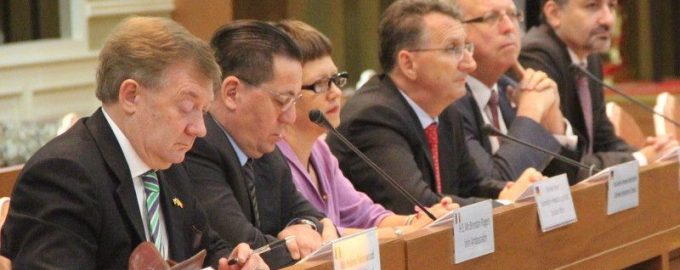
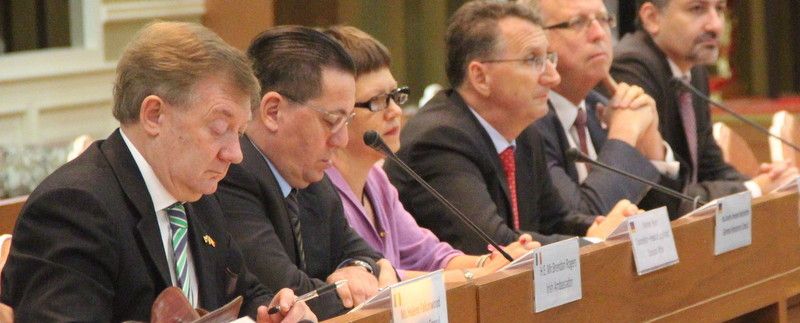
Phuket security, safety, jet-skis under fire during โ€˜Five Ambassadorsโ€™ visit

Tourists and foreign residentsโ€™ personal security, safety, beach tourism sustainability, jet-skis, taxis and tuk-tuks were all highlighted as ongoing issues of concern by five European ambassadors in talks with Phuket Governor Chamroen Tipayapongtada.

The high-powered ambassadorial delegation comprised Mark Kent of the UK; Brendan Rogers of Ireland; Philip Calvert of Canada; Karel Hartogh of the Netherlands and Peter Prugel of Germany.

Speaking after a 90-minute closed-door meeting, British Ambassador Kent told the press, โ€œWe had a good meeting today. We explained that we are ready to support the Phuket Governor in his efforts in making Phuket one of the most attractive tourism destinations in the world.

โ€œThere is still work to do but the Governor has set out his attention to work on these issues.โ€

But that requires focus on three main areas that need attention, Amb Kent noted.

โ€œOne of these is safety, whether that be people on motorbikes, jet-skis or boats; and even water quality. We want them [tourists] to be safe.

โ€œThe second area is the reputation of Phuket as a tourism destination. It still has a good image for tourists, but some of the behaviour and the prices charged by tuk-tuk and taxi drivers has led to a fall in confidence and a drop in tourists because theyโ€™re a little bit scared about what has happened, so we think this needs to be addressed,โ€ he added.

โ€œThird is the areas around the provision of government services such as visas and work permits for residents and some of the issues around property need to be tackled so there is clarity and transparency and no demand for additional fees which are not stipulated.โ€

โ€œBritish tourists to Thailand still come here a lot. It is one of our most popular tourist destinations. We have one million tourists come every year, and the number of tourists to Phuket remains high.

โ€œIt is beautiful place. Thatโ€™s why we want to work for mutual benefit with the governor and officials here to ensure that remains the case, that it remains a very good source of economic benefit for the locals who live here and a safe, enjoyable tourist destination for our tourists.โ€

Regarding jet-skis, Amb Kent noted, โ€œWe are aware that there some issues that need to be tackled.

โ€œIt is important to not just have the regulations, but to also ensure that the regulations are enforced and that the jet-ski owners act in an appropriate manner,โ€ he said.

Going Dutch

Netherlands Ambassador Hartogh rated beach safety, beach management, accommodations, competitive pricing, including that of taxis and tuk-tuks, and specifically targeted jet-skis as key areas of concern.

โ€œMost people in the Netherlands are not very fond of jet-skis. They want to know if Patong will change its policy. If it will not, then they will look for different beaches.

โ€œTourism is a very competitive industry. There are lots of other options in this part of the world to find proper beaches without jet-skis.

โ€œNot only behalf of Dutch tourists and expats am I raising these questions, but I am also asking on behalf of the local people here, as this affects the tourism industry โ€“ and all these points could be improved on.

Find your dream home

15/02/2019No commentsApartment|Business Development|House for families|Houzez|Luxury|Real Estate
China Overtakes Japan as Biggest Investor In Thailand
As Japan investment is shifting to services, information technology and trading, which require less capital, Chinese investments are targeting heavy industries, thus surpassing Japanese input in Thailand for the first time.

Chinese investments in Thailand for the past eight months have surpassed Japanese Investments for the first time in history

After the Board of Investment adjusted its foreign direct investment promotional incentivesย BoI secretary-general Mrs Hirunya Sujinai explained Chinese investments were higher than Japanese investments for the first time because several Singaporean projects were Chinese-funded.

Altogether 332 projects worth 50,267 million baht applied for promotional privileges during the first eight months of this year.

Of these, 51 projects worth 13,100 million baht came from Singaporean investors; 37 projects worth 10,000 million baht came from Chinese investors and 92 projects worth 9,900 million baht came from Japanese investors.

After investigating the sources of investment funds, the agency found that many Chinese companies invested in Thailand via Singapore, so it considered China to be the largest foreign investor for the country this year.

Of the total investments during the first eight months, 39.5 percent were investments on alternative energy development, especially solar energy.

Find your dream home

15/02/2019No comments, Apartment|Business Development|House for families|Houzez|Luxury|Real Estate
Ron Paul Warns of Dollar Collapse 100%

Over the past few years, many experts have been warning of a crisis heading our way. More specifically, the concerns have centered on the inevitable collapse of the U.S. dollar. One of these individuals is former Congressman Ron Paul, who has stated that he believes the U.S. financial system is on the road to disaster. In this article, Iโ€™ll share some of his views and discuss what could happen if such a crisis materialized.

Currency Crisis

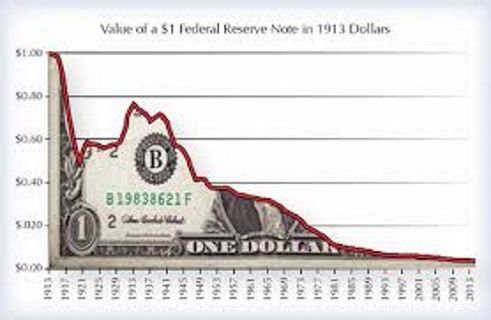
According to Congressman Paul, a U.S. currency crisis is inevitable. At one point in the 1980s, while riding on Marine One with President Reagan, the President said, โ€œNo great nation that has abandoned the gold standard has ever remained a great nation.โ€ A few decades ago, former Fed Chairman, Alan Greenspan stated, โ€œIn the absence of the gold standard there is no way to protect savings from confiscation through inflation.โ€ Without a gold standard, there is nothing to limit government spending. In short, as long as the government is able to overspend, the national debt will be the norm rather than the exception.

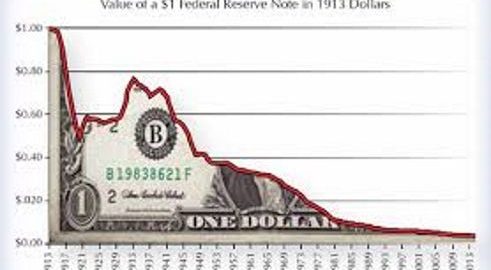
Since the gold standard was abandoned, what is backing our currency? Confidence! Without a hard asset backing up the dollar, it is supported only by the โ€œfull faith and credit of the federal government.โ€ If the world lost confidence in the greenback, its value would plummet and life as we know it would be severely and forever altered. How will we know when the next crisis is about to emerge?

The first sign of a currency crisis, according to Paul, will be a precipitous decline in the value of the dollar. A collapse in our currency would result in a spike in inflation. It would also be accompanied by an increase in U.S. interest rates. Paulโ€™s prediction, although rather dire, is for the collapse of the entire U.S. financial system. If this occurs, the systemic risk would be massive. If the U.S. financial system actually did collapse, it would take the entire global financial system with it. Why? Because there is over $18 trillion in U.S. debt outstanding, with China and Japan being the largest holders. A U.S. collapse would devastate the entire globe. Letโ€™s turn our attention to the national debt, an issue which weighs heavily on the minds of millions of Americans.

U.S. National Debt

When the government spends more than it collects, the result is additional debt. From the signing of the Declaration of Independence in 1776 until 2008, the U.S. accumulated slightly over $10 trillion in federal debt. In the past seven years, the debt has nearly doubled to more than $18 trillion. By the year 2019, it is projected to exceed $20.3 trillion. When interest rates rise, the impact will be felt by the federal government as well as everyday Americans. First, it will increase the governmentโ€™s cost of borrowing, which will cause the debt to rise even faster. Itโ€™s entirely possible that even a modest rise in interest rates could cause the debt to spiral out of control. This is because Washington is heavily dependent on borrowing to operate. Next, it will be much more difficult to expand or even maintain the welfare state. This fact alone will lead to mass riots as individuals who are dependent on a government check will take to the streets in protest. Also, the U.S. would have a more difficult time funding its presence (i.e. military bases) around the world. This would lead to a less stable socio-political environment and an uptick in radical behavior. Plus, a shortage in government revenue could result in a rather large tax increase and the eventual demise of the middle class. Finally, and as weโ€™ve already seen, the federal government may decide to target 401ks and IRAs as a source of additional revenue. This could take the form of a tax or fee of some sort. Mr. Paul also mentioned the possibility of a tax on regular savings and other assets. If the government finds itself in a tight situation, as weโ€™ve witnessed in the recent past, the potential intrusion could be severe.

Social Unrest

This discussion wouldnโ€™t be complete without mentioning social unrest. As weโ€™ve already seen, the match is lit and it wouldnโ€™t take much for anarchy to manifest. In essence, there appears to be a significant amount of pent-up frustration among the electorate. For example, who expected the reaction in Ferguson, New York, or Baltimore? And this may only be the tip of the iceberg. A temporary government shutdown is also a distinct possibility. To this author, public protests seem to be on the rise and the bar of whatโ€™s reasonable appears to be quite low. Hence, I suspect this is only the beginning of more civil unrest in America.

The Clock is Ticking

Is the problem too advanced to solve? Can a crisis be avoided? These are valid questions. I believe we can still fix this, but as Paul stated, โ€œReal monetary reform will only come after a major currency crisis hits.โ€ Why? Is he just being pessimistic? No, I donโ€™t believe so. What he is saying is that politics will get in the way andย prevent a solution until it reaches a crisis point. This is a view I have held for quite a while. Until Congress is forced to find a solution, itโ€™ll be business as usual. The former Congressman also said he believes the majority of those in government do not fully understand economics.

Is the U.S. Losing its Stature?

In the post WWII era, the U.S. dollar has been the global reserve currency. Prior to that, the British Pound filled this role. Recently, China has increased its trading with Germany, India, and others, excluding the dollar as the reserve currency. It seems the world is slowly transitioning away from the dollar. If this continues, the U.S. could lose its position as the worldโ€™s reserve currency. This would have numerous ramifications. A discussion on that is beyond the scope of this article. Mr. Paul also stated that 10 countries have already signed a document to begin phasing out the dollar as the basis of trade. Even the IMF has proposed a new world reserve currency system. The days of the U.S. dollar as the worldโ€™s reserve currency may well be numbered.

Some argue that the U.S. economy is on the mends and the stock market is near record highs. Therefore, things canโ€™t be all that bad. While there is truth in this, according to Paul, stocks have risen due to Fed policy and political leaders. He also stated that printing money has never solved this type of problemโ€ฆ.ever! He cited Germany, Russia, Argentina, Brazil, Chile, Japan, China, Ukraine, Italy, Ireland, Portugal, and Spain as examples of countries that had similar problems to the U.S. and yet none of them was able to use the printing press to escape their problem.

Will the U.S. follow the path suggested by former Congressman, Ron Paul?

Make a Right Investment

15/02/2019No comments, Apartment|Business Development|House for families|Houzez|Luxury|Real Estate
Thailandโ€™s Booming Hotel Market Continues To Whet Investors
2014 started off on a very somber note, with the Thai army seizing power over governance in a coup to right a constitution that had gone horribly wrong. The political turmoil gave rise to an economic slowdown, with the Thai Baht falling and foreign investment reaching an all time low. According to reports, Bangkok and Phuket saw a 32% and 22% rise in room numbers respectively, constituting 54% of a total 18000 rooms in 101 hotels (approx.) that had entered the market by September 2014. The capital (Bangkok) seemed to have come off worse as compared to resort destinations that have direct access to charter flights.Come 2015 and Thailandโ€™s foreign capital investments started to grow once again, with its hotel industry posting occupancy increases of +22.1% to 74.5% & RevPar (revenue per available room) increases of +18.8% to 2,767.99 THB โ€“ both were double digit increases. Showing a slight decline on the market however, was ADR (American Depositary Receipt) that had slumped by -2.7% to 715.83 THB in June, 2015 YTD (Year To Date). The city of Bangkok was a major attributer to this massive occupancy increase (+50.4% in hotel occupancies) following the military coup that had ended in May 2014.

Facts state that after the global economic crisis of 2009 and with the military coup of 2014, Thailandโ€™s hotel investments though at times dipping, have predominantly shown a gradually improvement. Thailandโ€™s current favourable hotel investment trend is a direct consequence of lesser capital worth, comparatively inflated yield coupled with the tourism industryโ€™s long term plans, each of which whet investorsโ€™ appetites from far and wide.

In 2013 and 2014, Thailandโ€™s hotel transaction volumes, when compared to all hotel transactions in Asia Pacific, amounted to around 4.1% & 5.7% (10.9 THB & 13.9 THB billion) respectively, with Samui, Phuket and Bangkok being the prime investment markets and Khai Lak, Krabi, Pattaya and Chiang Mai a close second.

According to reports, majority of investments made between the years 2012 and 2015 were home grown (58%) while foreign investment was considerably high as well (40%). Letโ€™s take a closer look at the profiles of investors pumping money into this tropical paradise. They comprise of: 1. Corporates whose sole source of income is not hotel investments, 2. Serviced apartment and hotel companies controlled by owner-operators, who claim ownership of the primary assets managed by these companies, 3. Redevelopment driven purchases made by developers, 4. International investors who invest in the country via investment funds, 5. Families and individuals having a HNW (High Net Worth).

60%, 15%, 12% and 10% (approx.) of investment activities accrue to real estate companies/developers, owner operators, corporates and a combination high net worth individuals (HNWI) and investment funds respectively. On the contrary, 10%, 11%, 26% and 35% represent the total transaction amounts that accrue to sellers of hotel assets who take the shape of HNWI, corporates, developers/real estate companies and investment funds respectively.

Bangkok trumps all Thailand destinations when it comes to hotel investments. Travelers visiting this city comprise of both, vacationers as well as business men and women. Being one of the most visited cities in the world, increase in asset demands have driven up asset prices despite the noteworthy growth in hotel room supply during 2013 and 2014. Phuket comes in second, with a strong and consistent growth shown in its hotel and resort market, as a direct consequence of charter flights arriving at its famous Phuket International Airport, thereby safeguarding the market from distractions in Bangkok. Expansion of its airport dimensions, roadway infrastructure and potential to yield greater returns in comparison to the Bangkok, makes Phuket a prime spot for investment in South East Asia. However, Samuiwhen compared to Phuket has an investment market that, though smaller in volume makes up for it with adequate pizzazz. Described by many as a โ€˜boutiqueโ€™ holiday destination, Samuiโ€™s focus on quality rather than quantity when it comes to its hotel infrastructure, as well as the arrival of the low cost Surat Thani airport, has assisted in the increase in the number of tourists to this part of Thailand.

The deciding factors when assessing opportunities to invest in Thailandโ€™s hotel market may be many, but the foremost one is comparing the purchase price with the projected cashflow generation from the hotel in questionโ€™s workings. On the flip side however, passive investors tend to attach a particular growth expectation with the stabilized cashflows generated by the property in question, be it 6-7% or higher in Bangkok or resort markets respectively.

Repositioning, renovating, incorporating additional rooms, and/or hiring of an international manager to oversee the propertiesโ€™ workings, are just some of the strategies adopted by developers/real estate companies who obtain a property to make it generate additional revenue. Once additional revenue is harnessed, passive investors or REITs (Real Estate Investment Trusts) come into play as prospective buyers once you decide to sell.

Boasting of a reputation of being one of the most sought after tourist destinations in the world, coupled with sound infrastructure and its strategic location, Thailandโ€™s tourism industry is on the ascendency, luring investors from all corners of the globe to plough their money into the areaโ€™s hotel industry.

15/02/2019No comments, Apartment|Business Development|House for families|Houzez|Luxury|Real Estate
Opinion: Why investing in Phuket makes good sense
Panupong Kritchanarat, originally from Bangkok, is currently the CEO of Boat Pattana, Phuket and has been working with its management for eight years. He also has several years of experience in real estate management. He holds a Masters of Business Administration from the Sasin Graduate Institute of Business Administration at Chulalongkorn University.

Here, he talks about business options in Phuket and why it is a good place to invest.

Prime Minister Gen Prayuth Chan-o-cha officially visited Phuket last month in order to chair the grand opening ceremony of the new airport terminal, as well as Startup Thailand and Digital Thailand 2016. His visit was interesting to both Thais and foreigners, as many wondered why he was paying this much attention to Phuket, and especially why he flew down here himself.

The answer is simple. Startup Thailand is one of the countryโ€™s most important strategic ventures. It is a mega-trend that people worldwide are interested in. The Thai government has shown great vision by investing in this field. Gen Prayuth even flew to China to meet and discuss the future prospects of Startup Thailand with Jack Ma, the Chairman of Alibaba Group.

Most people I interact with say they want a house in a tourist province such as Phuket, whether they are investors, businessmen or otherwise. While others ask me what is so special about living in Phuket or owning property for investment purposes. Here is what I have to say to them.

What makes Phuket outstanding as compared to other cities, both in Thailand and abroad, are the beautiful beaches. This is why Hollywood celebrities regularly fly to Phuket for their holidays.

In addition, local people are very kind and people in Phuket speak in English, more than most people in the rest of Thailand. Besides the beautiful beaches, Phuket has also been named as a City of Gastronomy by UNESCO. Additionally, the cost of living is not high when compared to other tourist destinations in the world. Moreover, there are two other neighboring provinces that are also beautiful, which makes it an ideal location to travel to.

Phuket is located in the hottest region at the moment. While other countries are trying to keep their economies from falling apart, Asian countries are prospering, particularly those in the Asean Economic Community. There are many foreigners living in Phuket for that very reason. Many families have settled here, or their kids study here while one or both parents work in China, Hong Kong, Singapore, Vietnam or Indonesia.

Phuket has an international airport that is able to support thousands of passengers. Because of the close proximity to Phang Nga, it is easy to deliver supplies to the island, either by land or boat. Phuket is one of the marina hubs in Asia and has caught the attention of millionaires around the world. This is our strongest selling point. We also have experts in yacht maintenance as well as luxury hotels, spas and good food.

Phuket is also on its way to becoming a medical and healthcare hub. We have affordable aesthetic and beauty treatments, and excellent service during and after treatment.

Phuket has several Thai and international schools providing a high standard of education. The culture of these schools is becoming increasingly global, which helps students think outside of the box. So it is an ideal place to start a family.

Phuket is expanding, but one of the problems we face is limited land supply. The only way to expand further is into the sea, Therefore land prices in Phuket are going up rapidly.

Phuket people are capable of moving the island forward. They donโ€™t sit around waiting for the government or anybody else to step in. There are many young and enterprising investors in Phuket, who have a great vision for improving the island and helping it keep up with the rest of the country and the world.

15/02/2019No commentsApartment|Business Development|Houzez|Luxury|Real Estate
Thailand takes steps to boost FDI

Tax exemptions and other incentives are set to spearhead Thailandโ€™s efforts to boost foreign direct investment (FDI) in targeted areas of the economy.

The initiatives form part of a broader range of incentives and reforms aimed at increasing capital inflows into Thailand, with a particular focus on tapping investment for planned industrial clusters in the eastern economic corridor (EEC) project, an initiative of the public-private Pracha Rath scheme.

However, while efforts to stabilise the Thai economy are beginning to yield results, challenges, such as lower external demand and political uncertainty, remain a concern.

Tapping key markets

Speaking during a visit to China at the end of June, Somkid Jatusripitak, Thailandโ€™s deputy prime minister, said the governmentโ€™s new incentives and support package would be implemented in the third quarter of 2016.

Somkid was in China to highlight the opportunities for investors in the special industrial zones located throughout the EEC, which encompasses the provinces of Chon Buri, Rayong and Chachoengsao.

โ€œThe government is transforming the economy to a higher level,โ€ Somkid told investors. โ€œDuring this period of change, we need more investment from outside โ€“ and China is one of the targets.โ€

Planned incentives include corporate and personal income tax privileges beyond those already provided by Thailandโ€™s Board of Investment (BoI), Somkid said. ย The raft of incentives will be bolstered by regulatory and legislative reforms aimed at improving the laws governing industrial management, financial services and investment.

The government has also said it would provide approximately 4160 ha of land as well as key infrastructure, such as the East-West ferry development project, to develop and support dedicated industrial estates โ€“ biotech, biofuel, aviation, IT and digital, medicine and medical equipment ยญโ€“ throughout the EEC, with an expected total investment of between $55bn and $58bn, according to local media reports.

Thailand is also keen to boost capital inflows from India. During a visit to the country in mid-June, Thailandโ€™s Prime Minister Prayut Chan-o-cha said the government planned to introduce measures aimed at facilitating the flow of investment from India. He also highlighted the importance of speeding up negotiations on a free trade agreement between the two countries.

Targeted investment

While Thailandโ€™s government is still finalising its incentive package, the government has already announced several measures aimed at attracting businesses.

In late June the revenue department announced plans to offer foreign experts operating in key fields tax exemptions for terms of between 10 to 15 years. The proposed waiver is scheduled to come into force in 2017, although details have yet to be made public.

The BoI, meanwhile, approved a personal income tax cut for foreign researchers and experts working in targeted industry clusters. The sectors, which are viewed by the government as key drivers of growth include: next-generation cars, smart electronics, logistics and aviation, biofuels and biochemical, and industrial robotics, among others.

In a similar move, the Cabinet signed off on a proposal at the end of May to double tax breaks for investors who launch or break ground on a new project in 2016.

Tackling shortfalls

Thailand has struggled to attract international investment in recent years, with political unrest and ensuing military intervention dampening overseas interest. Data issued by the BoI showed that applications from foreign investors for new projects fell from 3469 in 2014 to 1038 in 2015.

Local investors also appear to be adopting a cautious approach, according to a statement issued on June 30 by the Bank of Thailand (BoT). The central bank noted that although private investment had increased, the spread across the sectors of the economy was far from even.

While investment in alternative energy and telecommunications in May was up, the BoT noted that inflows โ€œin other sectors stayed at a low level in line with remaining gaps of capacity utilisation in the manufacturing sectorโ€.

โ€œThis was consistent with a slower growth in total financing of businesses for real investment,โ€ the BoT concluded.

Stability will be key

In late May, the ratings agency Moodyโ€™s noted government efforts to stabilise the economic situation and encourage growth and investment, but warned that ongoing political uncertainty remained a major concern.

โ€œSuch risk still weighs on FDI in the kingdom as well as Thai economic performance,โ€ Christian de Guzman, vice-president and senior credit officer for sovereign risk at Moodyโ€™s in Singapore, said.

Moodyโ€™s caution over the impact of Thailandโ€™s political climate on FDI was echoed in a report issued by the World Bank at the end of June.

โ€œForeign direct investments are likely to remain subdued, reflecting soft external demand and continuing political uncertainty,โ€ the report said.

The World Bank added, however, that Thailandโ€™s central location in East Asia meant it was well placed to leverage planned reforms in education, competitiveness and skills into trade and investment opportunities.

While acknowledging the concerns raised by analysts, the government remains upbeat about Thailandโ€™s prospects for boosting incoming investment levels next year.

Officials expect political tensions to ease once general elections scheduled for the middle of 2017 have taken place, while the full implementation of incentives and FDI support, which is also targeted for next year, should further enhance the investment climate.

Make a right investment

15/02/2019No comments,
Thailand seeks to boost health of medical tourism segment

An expanded product range aimed at broadening the client base alongside plans to target new markets are part of Thailandโ€™s campaign to shore up its medical tourism industry, which is coming under pressure from increased competition and weaker economic performance in key source countries.

In early September the Ministry of Public Health unveiled a new series of packages as part of the โ€œVisit Thailand Enhance Your Healthy Lifeโ€ programme aimed at increasing medical and wellness tourism arrivals.

Under the new initiative โ€“ developed in conjunction with state agencies and private health care providers โ€“ overseas visitors will be able to undergo standard health checks at up to 70 internationally certified hospitals and clinics, combining a regular medical assessment with their vacation. Additionally, the ministry is introducing a wider range of dental and reproductive health services for foreign visitors.

The government is also looking at shifting its promotional efforts towards newer markets, such as China, Myanmar, Laos, Cambodia and Vietnam, to take advantage of the growing affluence in those countries and the rising demand for professional health care.

To encourage health tourism from these nations, the government has tripled the period visitors undergoing medical treatments can stay in Thailand to 90 days. This would allow for overseas visitors to undergo extensive procedures and to potentially combine treatment with leisure travel.

Uncertain prognosis

Efforts to broaden the base of Thailandโ€™s health and wellness tourism sector are timely, as the market is coming under pressure from a range of external factors.

Last year the medical tourism segment maintained its record of strong growth, with local media reporting foreign patient numbers up 10.2% year-on-year (y-o-y) to 1.8m in in early September, representing 6% of total arrivals in 2015. It is estimated that receipts from medical tourism account for 0.4% of national GDP.

This strong performance, however, could come under threat this year. Local financial services firm Kasikorn Securities has warned that weaker economic growth in key visitor markets such as the Middle East and Russia, a result of lower energy prices, could erode the numbers of foreign visitors making use of Thailandโ€™s medical facilities.

Furthermore, improved service provision offered by clinics in the UAE, a significant market for Thailandโ€™s medical tourism segment, is also draining off client numbers, the Kasikorn report said.

This external pressure has seen a retreat of the health care services index on the Stock Exchange of Thailand (SET), with a number of primary medical services providers posting sharp falls in their share prices this year. However, despite having fallen from highs recorded in late April and still trending downwards as of mid-September, the index is performing better than other industrial groups on the SET.

Though many health services providers are coming under pressure as a result of economic downturn in key markets, most are continuing to post solid earnings results.

Of the 17 health service companies listed on the SET, only one posted a y-o-y loss in the first six months of the year, according to data issued by the market. The SETโ€™s health care service index saw listed firms report a combined 7.4% increase in sales y-o-y, though overall gross profit margins against expenses dipped marginally, down to 33.6% compared to 34.2% in the first half of last year.

While in the short term the weaker performance of Middle Eastern economies will affect the operations of those Thai health care providers that serve the medical tourism industry, the new products and the opening up of new markets should help to sustain growth.

The expansion of economies in countries such as Vietnam and Myanmar, which do not yet have health systems to match that of Thailand, should see the development of a new client base, according to Jintana Mekintharanggur, director of equity investment in Bangkok for Manulife Asset Management.
โ€œIn the short term the economic slowdown in the Middle East will weaken some investorโ€™s confidence on earnings growth for domestic hospital operators,โ€ she told international media at the end of May. However, due to Thailandโ€™s ability to compete regionally, the company is still reportedly bullish on the sector.

Health threat to medical tourism

Another challenge Thailandโ€™s medical sector and the broader tourism industry faces in attracting overseas clientele is the recent spike in cases of the Zika virus in the country and, in particular, in the capital. At least 100 cases of the mosquito-borne disease had been confirmed by mid-September.

Thai authorities have said there is no need for alarm as every measure was being taken to combat the spread of the virus. However, Anuttarasakdi Ratchatatat, epidemiologist at the Ministry of Health, acknowledged in mid-September that Zika could deter overseas visitors, when explaining why only broad information about infection rates was being released.

โ€œThe information on Zika is quite sensitive because if we say which province has infections then attention will turn on that province, and if that province is popular with tourists it will have an impact on tourism,โ€ he said.

Any downturn in medical tourism arrivals could allow rivals in the sector, such as Malaysia, Turkey and India, to increase their market share at Thailandโ€™s expense.

Find your dream home

15/02/2019No comments
Thailand bids to become regional financial hub
An initiative driven by Thailand to develop closer financial integration and cooperation among Greater Mekong Sub-region (GMS) countries could bolster Bangkokโ€™s position as a capital markets and banking centre.

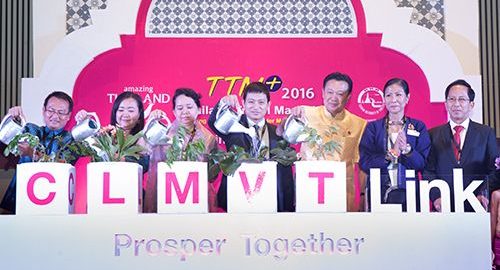
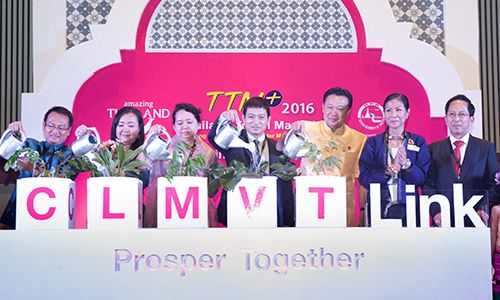
Thailandโ€™s campaign to strengthen fiscal and economic ties with its near neighbours reached a new level in June, with the hosting of a two-day summit for Cambodia, Laos, Myanmar, Vietnam and Thailand (CLMVT). Entitled โ€œCLMVT: Prosper Togetherโ€, the event focused on developing a platform to reinforce sub-regional integration and connectivity in matters of trade, investment and tourism.

While much of the media coverage of the event centred around joint tourism promotions and proposals for visa-free travel between CLMVT countries, the seminarโ€™s main focus was on financial connectivity.

Investing in infrastructure

One of the planks in this platform will be developing financial infrastructure to support the greater flow of capital and information. Veerathai Santiprabhob, governor of the Bank of Thailand (BOT) and a keynote speaker at the conference, emphasised that investing in infrastructure will be crucial to allowing CLMVT countries to work together and meet the demands of the changing financial landscape.

โ€œHaving adequate infrastructure, including a backbone payment system, a digital network and a credit bureau, will provide a sound basis to develop domestic financial systems and facilitate closer financial connectivity,โ€ he said, noting that the development of regional ties will help reduce costs within the sector and across CLMVT economies, boosting cross-border trade and the broader use of e-payment systems.

Financial integration to mobilise funds

Another key message to come out of the conference was that further integration of CLMVT financial markets would support growth in each of the five countries, as well as cross-border expansion.

Speaking during a session on the roles of banking and finance in regional development, Chartsiri Sophonpanich, president of Bangkok Bank, stressed that while growth in the CLMVT region is set to remain strong in the coming years, in line with the 6.5-8.5% range posted in 2015, this could be increased further through tighter financial cooperation, thereby boosting the appeal of CLMVT countries to foreign investors.

Such a move, Sophonpanich said, would mobilise funding and put in place mutually agreed-upon mechanisms to minimise and more evenly distribute risk.

Strengthening the bond market

As the largest economy among the CLMVT bloc, and with the most developed capital markets and banking system, Thailand is well placed to take the lead on the financial connectivity initiative.

Thailandโ€™s bond market is already gaining traction among CLMVT countries, bringing the region closer to financial integration.

In 2013 Laos issued the first in a series of baht-denominated bonds, with the latest coming out last year. At a total face value of BT28bn ($804m), the funds helped finance the Laotian governmentโ€™s infrastructure development programme.

At the corporate level, Laotian utilities firm EDL Generation has also tapped the Thai capital markets, raising BT6.5bn ($187.8m) in late 2014 to fund the acquisition of power stations from its parent company, Electricitรฉ du Laos.

While Laos has been Thailandโ€™s main customer for bond sales, there is strong interest from other countries launching offerings in Thailand.

In 2014 the Cambodian government indicated it could follow the Laotian example by issuing a baht-denominated sovereign bond in 2018. Consultants advising the Cambodian government said at the time that Thailand represented the best opportunity for a sovereign bond launch, as Thai authorities had put in place mechanisms to support such cross-border issues.

More recently, however, Cambodian officials indicated that any baht-denominated bond would require regulatory reforms, similar to what has been suggested by Thailand in its call to lower financial barriers and boost connectivity.

Thailandโ€™s bond market is also attracting interest from further afield. Year-to-date, four foreign lenders โ€“ ANZ Bank of Australia, Central American Bank for Economic Integration, National Bank of Abu Dhabi and Malaysia-based Maybank โ€“ were given regulatory approval to tap Thai markets through a baht bond issue.

The Ministry of Finance has also taken steps to boost the bond marketโ€™s appeal, announcing that, as of January, it would review applications to issue bonds by foreign issuers on a monthly basis, rather than every quarter, citing increased appetite for baht-denominated issues.

BOT opening doors

The BOT is similarly working to boost CLMVT financial connectivity, including by easing regulations to allow firms operating in the GMS to obtain loans from Thai banks for direct sub-regional investment, without setting a lending cap.

According to Santiprabhob, the BOT is encouraging Thai banks to extend their operations into the GMS to promote trade and investment. As of May, Thailand had at least 30 branches and subsidiaries open in the region. Cross-border money transfers have also been facilitated through the establishing of ATM connectivity between Thailand and both Myanmar and Laos, expanding the reach of Thai banks.

15/02/2019No comments,
Thai economy looks to strong first quarter results
A stronger-than-expected performance in the first quarter has prompted analysts to revise their year-end growth forecasts for the Thai economy, though some remained cautious in the face of ongoing challenges both at home and abroad.

Data issued in May by Thailandโ€™s National Economic and Social Development Board (NESDB) put year-on-year (y-o-y) growth for the first quarter of 2016 at 3.2%, the countryโ€™s highest in three years.

The positive results were attributed to high levels of state spending and a strong showing in Thailandโ€™s tourism industry; however, weak export figures have sounded a note of concern.

State spending proves pivotal

Thailandโ€™s economy expanded by 0.9% during the first three months of 2016, up from 0.8% in the previous quarter.

The results prompted the NESDB to revise its year-end forecast to between 3% and 3.5%, up from its previous estimate of between 2.8% and 3.8% in February. The Bank of Thailand (BoT), the countryโ€™s central bank, meanwhile, said it expects the Thai economy to expand by 3.1% in 2016. This comes on 2.5% growth in 2015.

Although the countryโ€™s economy has outperformed initial forecasts, growth remained uneven across sectors.

The government pumped BT654bn ($18.5bn) into the economy through direct expenditure and soft loans in a bid to stimulate growth and aid recovery.

Thailand recorded an 8% y-o-y increase in public consumption in the first quarter, while public investment was up 12.4%. ย The injection of capital helped boost activity and offset more sluggish growth in the private sector, where consumption rose by just 2.3%. Private investment, meanwhile, inched up a more muted 2.1%, according to the NESDB.
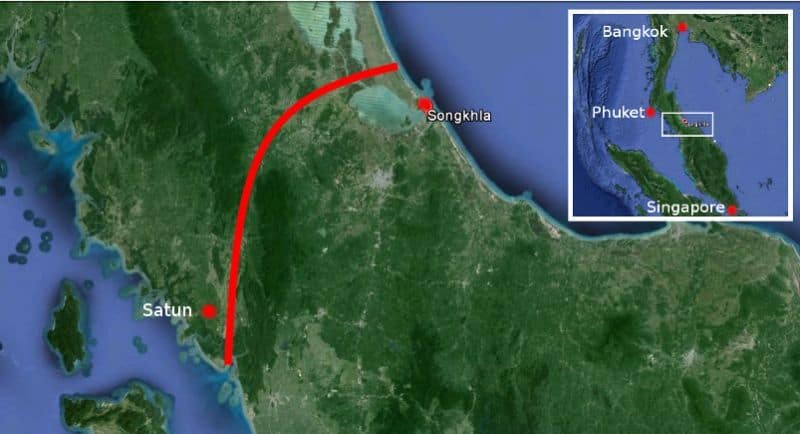
Double-digit growth in the construction and tourism sectors contributed significantly to the first-quarter results.

Thailandโ€™s construction sector was up 11.2% y-o-y, supported by strong public investment flows. Increased spending on infrastructure and project development is likely to continue, pointing to a bright outlook for the construction sector and its related industries through 2016 and beyond.

The number of incoming tourists, meanwhile, surged by 15.5% to reach 9m, putting Thailand on track to meet its target of 33m arrivals for the year. The NESDB expects the tourism industry to generate revenues of BT1.68trn ($47.6bn) this year, accounting for 12% of GDP, up from 10% last year.

Hotels and the hospitality industry also benefitted from higher tourist volumes, with the broader services sector recording 15.8% growth.

Setbacks and slowdowns

The first quarter results were more muted for other industries, including manufacturing, agriculture and exports.

Thailandโ€™s manufacturing industry, which accounts for around 30% of GDP, contracted by 0.3% y-o-y, weighed down by declining vehicle output and a slower growth in related industries.

Capacity utilisation in the manufacturing sector remained stagnant at 64% in May, below the historical average of 68%, and could remain at this level due to weak export growth.

Agricultural output, meanwhile, was down for a sixth consecutive quarter, slipping by 1.5% y-o-y on lower demand and adverse weather conditions caused by the El Niรฑo climate pattern, which brought drought to much of Thailand in early 2016.

According to the BoT, exports contracted 1.4% in the first quarter, with the government citing lower commodity and oil prices as well as weak global demand. Among the key segments in decline were industrial goods (7.8%), electronics (5.3%) and agricultural products (2.8%).
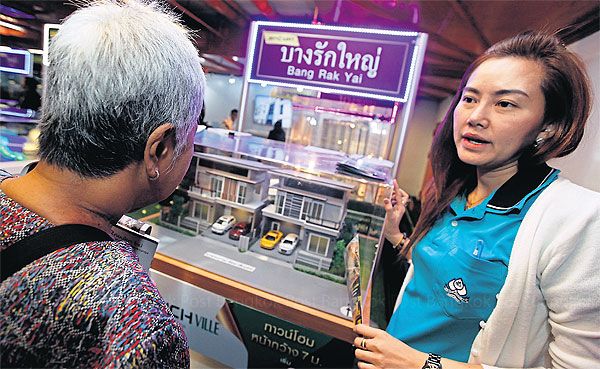
A stronger Thai baht, which is up by nearly 2% against the dollar year-to-date, is also expected to curb demand for Thai exports, according to the BoT, which expects exports to decline by 2% over the year โ€“ย a downward revision from the previous forecast of zero growth.

Fluctuating forecasts

Despite broadly positive early indicators for the year, some experts remain cautious. DBS Bank, for example, warned that weak private sector demand, combined with poor showings in manufacturing and agriculture, could weigh on the countryโ€™s full-year growth prospects.

Commenting in a report issued in May, the bank cautioned that ongoing sluggish growth in Thailandโ€™s manufacturing sector could put jobs at risk. The industry currently provides employment for around 16% of Thailandโ€™s workforce.
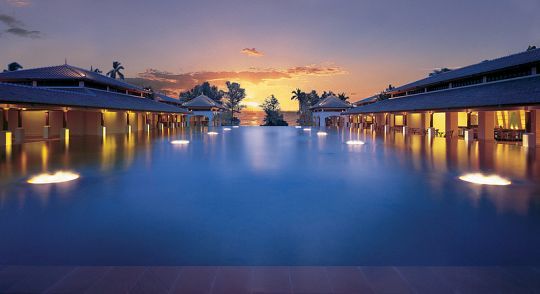
DBS Bank said full-year growth looked likely to fall short of 3.5%, while also noting that first-quarter growth would have eased to 1.5% if not been for the public sectorโ€™s contributions.

The bankโ€™s prediction followed a move in March by the Asian Development Bank to lower its forecast for Thailandโ€™s GDP growth this year from 3.5% to 3%, citing slower growth in key global economies.

Amid continued economic uncertainty, the BoT chose to hold its key one-day repo rate at 1.5% in May. Senior officials at the BoT cited concerns over financial stability, along with the weakened debt service ability of agricultural households and small businesses.

15/02/2019No comments,