Listing ID: 67720
In the world of fashion, it can be difficult to find a quiet moment. For Italian luxury menswear designer Stefano Ricci, his sprawling estate in the Tuscan hills of Mugello provides a welcome escape.
At Poggio ai Segugi, built on land once owned by the Medici family, Ricci finds the inspiration for many of his designs. His bespoke suits and shirts have been worn by the likes of Nelson Mandela, opera singer Andrea Bocelli, and Hollywood star Tom Cruise.
“In my line of work—luxury menswear—it’s the details that make the difference,” Ricci says. “The skilled craftsmanship, the absolute quality, the workmanship only expert hands can achieve, yielding little masterpieces no machine can ever produce.”

Nature features significantly in his work—the 1,650 acres of virtually unspoiled countryside surrounding his estate is teeming with wild animals, including different breeds of deer, Tuscan wild boars, and falcons. Ricci says it’s like a paradise where he can unwind and concentrate on new projects.
That explains why Ricci’s eponymous brand’s eagle logo can be found on everything from handmade silk shirts, which start at US$1,400, to crocodile belts at US$2,800. Ricci’s two-piece suits start at US$6,000.
Ricci, who turns 70 this year, painstakingly renovated the house over four years and spent weeks searching for local building materials. “I’m proud to have had several pietra serena quarries reopened; it’s the same stone the Medici family used to build palaces and squares in Florence,” Ricci says.

The estate has become a family retreat where he spends time with his grandchildren, Stefano, 7, and Aurora, 4. Although the hideaway provides much needed solitude, it is still less than an hour away from the sartorial splendor that Florence offers.
“I wanted a place that would allow me to cut myself off from the world whilst remaining less than an hour’s drive from the company,” Ricci says.
The house’s eight bedroom suites are adorned with cloths woven by Florentine artisans at L’Antico Setificio Fiorentino, one of the oldest silk workshops in Europe, whose looms date to the 18th century. A warping—or weaving—machine designed by Leonardo da Vinci creates threads used to make silk fabrics, tassels, and trimmings.

The workshop, which Ricci bought from the Emilio Pucci family in 2010, still produces Renaissance-style fabrics, including the Damaschi collection, composed of single-color damask fabrics with stylized or floral designs created in a shiny and low-luster finish. This fabric was first made in Florence on mechanical looms from before the early 1800s and is sold for between €280 and €1,300 per meter. In 2016, Ricci presented Pope Francis with a silk damask chasuble—the outermost liturgical vestment worn by clergy—that was woven at the mill.
Ricci’s own property, with its starkly modern and opulent decor, couldn’t be more different in style from the old-world romance of the workshop. At the center of the main house is the Great Hall, featuring a 7.5-meter crystal table and china from his porcelain homeware collection, all of which are made in Italy.
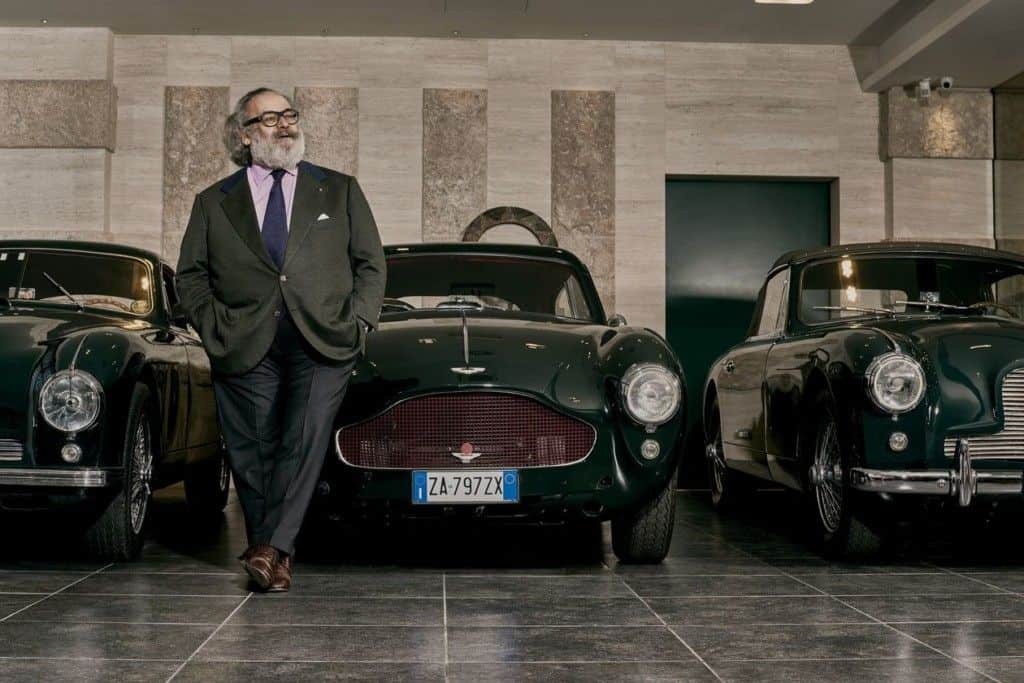
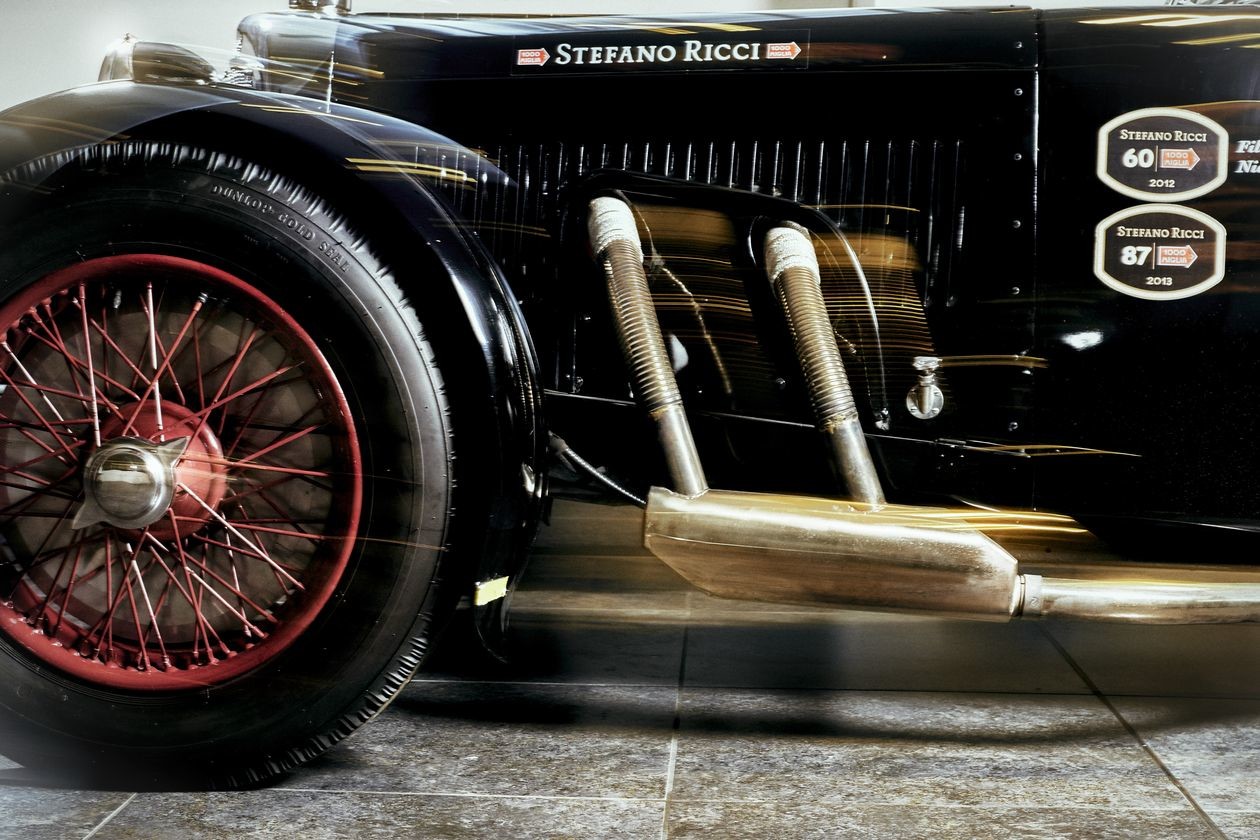
The estate’s cavernous basement houses 15 classic and vintage cars. He has a soft spot for Aston Martins—especially in British racing green, calling the classic car “an expression of things that are handmade, of style and elegance.” Ricci has five prized Aston Martins and a Lancia in the garage, protected behind glass. One stands out as his personal favorite: a 1933 Aston Martin Le Mans.
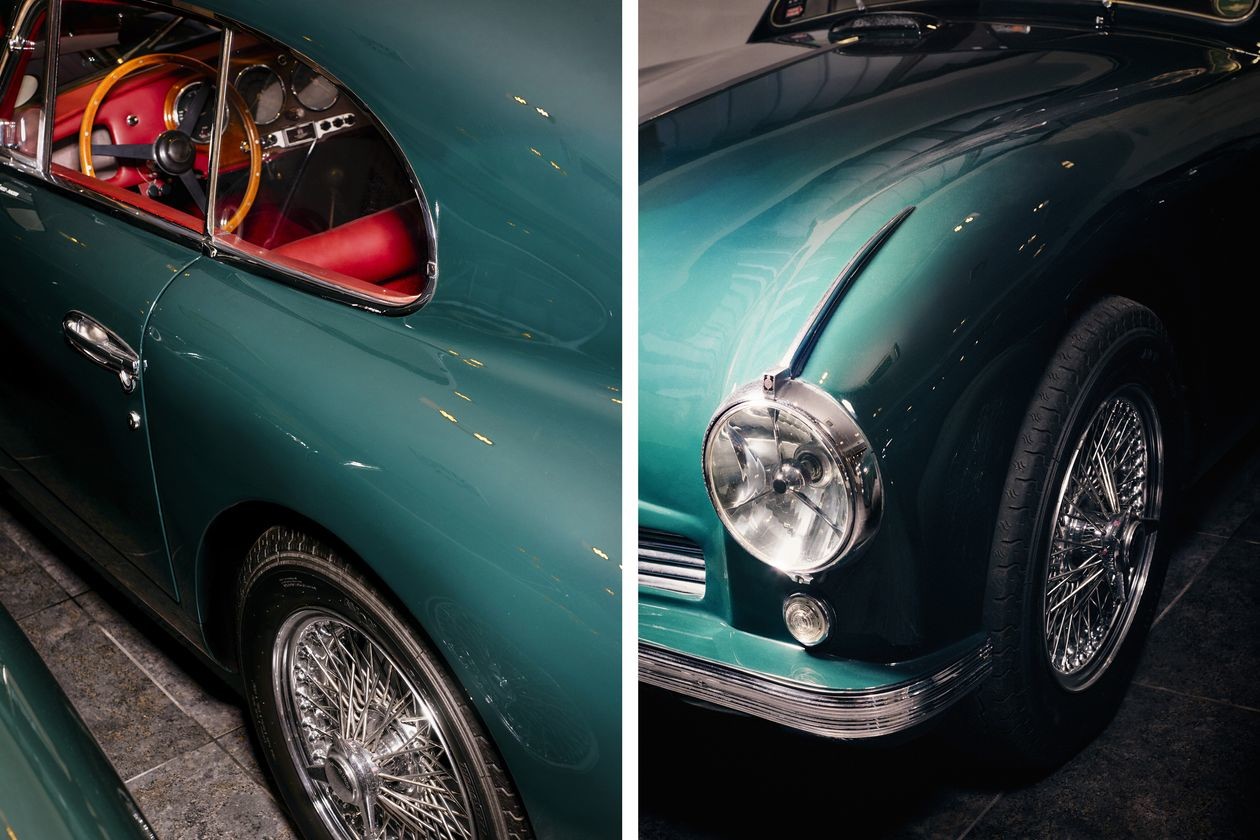
Ricci prefers to hit the track in his 1953 Lancia Aurelia Series III. The Ricci family has previously sponsored historic events, such as the Mille Miglia race in Italy, founded in 1927, a motorsport endurance race with 400 classic cars competing across 1,000 miles from Brescia to Rome and back. His wife, Claudia, has also participated, in a Jaguar XK140.
Ricci is also the organizer of the 10-year-old Stefano Ricci Heritage Trophy concours, held in Florence.
Despite their increasing in value, he hasn’t sold any of the cars in his collection. Except for one: Ricci started his business by selling the Porsche 914/6 that his father gave him when he was 21.
That company—launched from his kitchen table—has evolved into a business empire with more than 68 boutiques around the world, from London to Milan and Shanghai to Cambodia.
Many Ricci suits are made from limited-edition fabrics and the company provides customers with a master tailor who regularly flies around the world for fittings. “Nowadays, contemporary designers often come out of the finest schools and define styles without actually knowing how to sew,” Ricci says.
The business generated €148 million in sales in 2018, up from €144 million in 2017. Ricci was one of the first luxury brands to move into China in 1993. There are 14 boutiques in the country, including a 22,000-square-foot mansion in Shanghai with a private club available for high-spending clients.
This year will also see Ricci open more boutiques in Seoul and Taipei. But when he wants to retreat from the noise of his growing empire, he can always return to his home in the Tuscan hills, where the “silence is only broken by the sounds of nature.”

Photograph by Paolo Prendin




Comments are closed here.