The Silent Electric and Hybrid Revolution Taking Over Luxury Seas
The global yacht industry in 2026 is experiencing a major technological shift that is raising one central question among designers, shipbuilders, and high-end buyers: is this the beginning of the end for traditional diesel-powered yachts?
While diesel engines still dominate long-range marine travel, the rapid rise of electric propulsion, hybrid systems, and renewable energy integration is changing how luxury vessels are designed, operated, and experienced. The transformation is not abrupt, but gradual and structural, affecting everything from small cruising yachts to large superyachts.
Electric yachts are already on the market, but their limitations remain clear. Most fully electric models today operate within a range of approximately 20 to 40 nautical miles per charge, making them best suited for short coastal journeys and controlled environments. Charging infrastructure remains limited in many regions, and battery weight continues to restrict long-range performance.
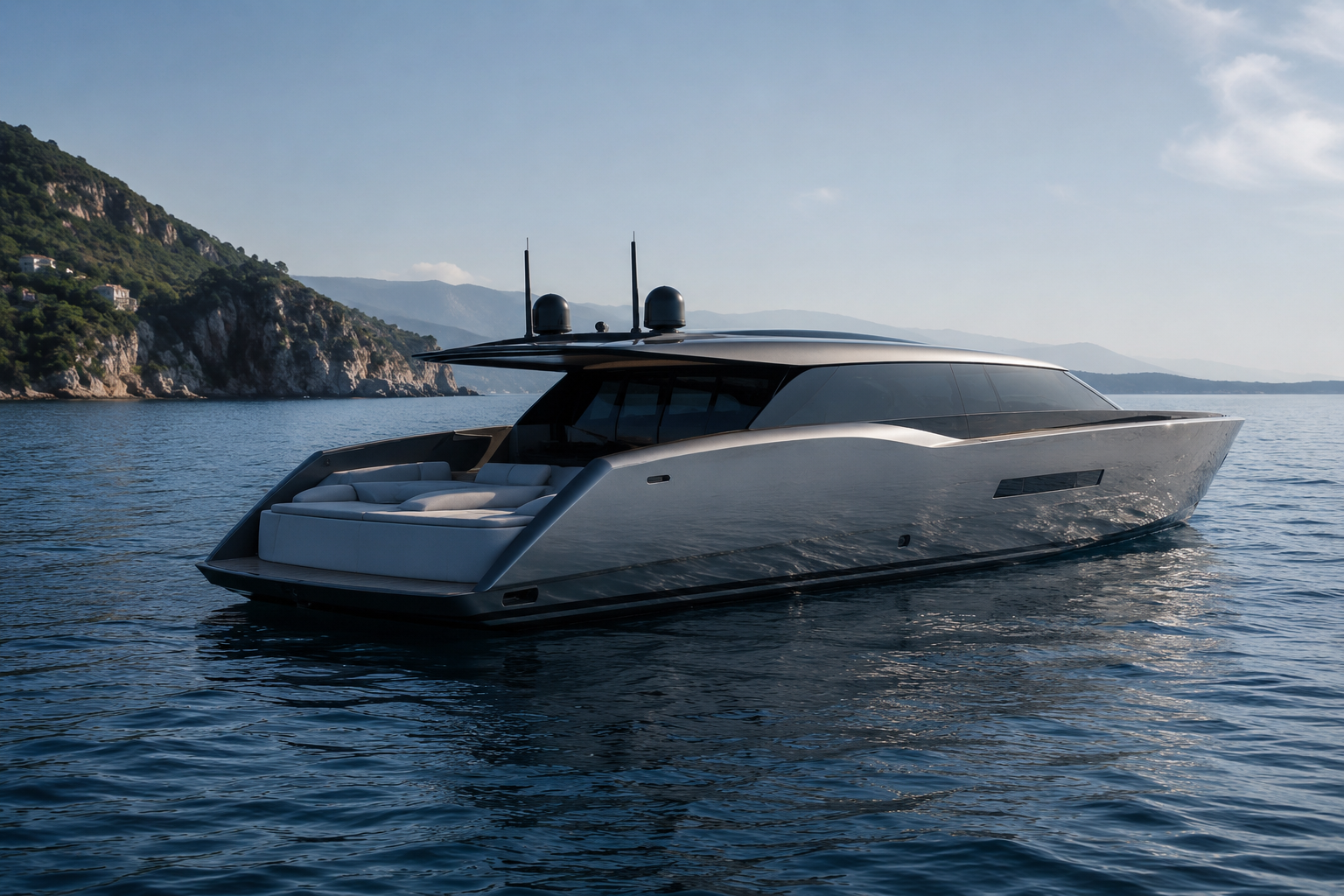
One of the most recognized companies in this space is Silent-Yachts, which has developed solar-electric catamarans designed for quiet, emission-free cruising under optimal conditions. Their approach combines large solar panel surfaces with battery storage systems to extend operational range and reduce reliance on fuel-based generators.
Despite these advancements, fully electric yachts are not replacing diesel vessels at scale. Instead, the industry is converging on hybrid propulsion systems as the most practical solution for the foreseeable future.
Hybrid yachts combine diesel engines with electric motors and battery systems, allowing vessels to switch between different modes depending on speed, distance, and environmental requirements. This flexibility has made hybrid technology the most widely adopted innovation in new yacht design.
A key example of this direction is Volvo Penta’s hybrid propulsion development, which integrates diesel efficiency with electric maneuvering capability and onboard energy management systems. These systems are designed to reduce noise, improve fuel efficiency, and enable silent operation in ports and protected marine areas.
____________________________________________________________________________________
Volvo Penta

At the same time, solar integration is expanding the definition of marine energy systems. Rather than powering full propulsion, solar technology is increasingly used to support onboard systems such as lighting, air conditioning, and hotel loads. This reduces generator usage and enhances energy efficiency during anchoring periods.
Some manufacturers, including Silent-Yachts, are already integrating large-scale solar arrays directly into yacht structures, allowing partial energy independence under ideal conditions.
Another major player in the hybrid luxury segment is Sunreef Yachts, which has introduced catamarans combining advanced hybrid propulsion with integrated solar systems and high-end luxury design. Their focus reflects a growing demand for vessels that balance environmental considerations with traditional luxury expectations.
____________________________________________________________________________________
Sunreef Yachts
Click here
https://www.sunreef-yachts.com/
The most significant change in the industry is not simply the adoption of electric propulsion, but the shift toward what experts describe as energy ecosystems. Modern yachts are no longer defined by a single propulsion source. Instead, they integrate diesel engines, electric motors, battery banks, solar input, and intelligent energy management systems into one coordinated platform.
This allows vessels to adapt dynamically to different operating conditions, including long-range travel, silent cruising, and low-emission zones. It also reflects a broader change in buyer expectations, where efficiency, silence, and technological sophistication are becoming as important as size and appearance.
Industry forecasts suggest that full electrification of large yachts remains years away due to current battery limitations and infrastructure gaps. However, hybrid systems are expected to dominate the market for at least the next decade, gradually reshaping how yachts are built and operated.
The direction of change is clear even if the timeline is not. Diesel engines are not disappearing immediately, but they are no longer the sole defining standard of luxury marine propulsion. Instead, they are becoming part of a larger, more complex energy system that is quietly redefining the future of yachting.
____________________________________________________________________________________