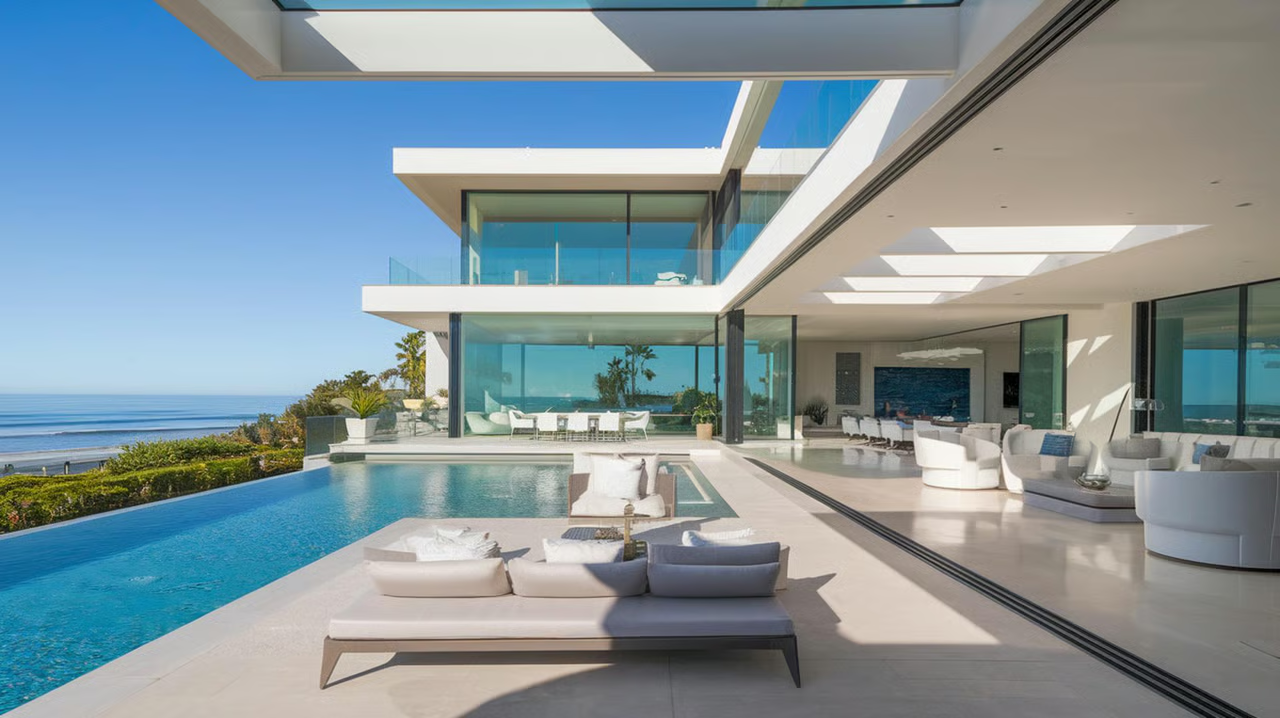
In the world of prime real estate, price alone does not define luxury. Nor do imported marble finishes, designer kitchens, or infinity pools overlooking the ocean. What truly defines a premium property over time is something far more powerful: its ability to appreciate.
For high-net-worth individuals, global investors, and family offices, luxury real estate is no longer viewed simply as a lifestyle purchase. It has become a strategic asset class capable of preserving wealth, generating rental income, and delivering long-term capital growth. Yet not all luxury homes perform the same. Some properties quietly double in value over a decade, while others struggle to outperform inflation despite their impressive price tags. The difference usually comes down to a few critical factors.
The first, and perhaps most obvious, is location. But in luxury real estate, location goes far beyond city or country. It is about being in the most desirable micro-location within that market. An oceanfront estate in Phuket, a penthouse overlooking Palm Jumeirah, or a historic residence in central London will often appreciate faster because these locations offer what affluent buyers value most: exclusivity, prestige, privacy, and limited supply. In prime markets, buyers are not simply purchasing square meters. They are purchasing position.
Closely tied to location is scarcity. Luxury properties appreciate faster when they occupy land, views, or positions that cannot easily be replicated. Waterfront homes, cliffside villas, branded residences, and trophy penthouses often command stronger appreciation because there is only a finite number of them. When supply is permanently limited, demand from wealthy buyers tends to push values higher over time. In luxury real estate, rarity often creates premium pricing.
Another major factor is architecture and design quality. Not all luxury homes age well. Some properties follow design trends that feel outdated after a few years, while others remain timeless and desirable across generations. Homes designed by respected architects, built with exceptional materials, and planned with intelligent layouts often retain stronger market appeal. Clean lines, natural light, seamless indoor-outdoor living, and thoughtful proportions continue to attract buyers long after temporary design trends fade. Exceptional design does not simply create visual appeal. It protects value.
Today’s luxury buyers are also placing greater emphasis on privacy and security. As wealth becomes more visible and lifestyles become increasingly public, privacy has become one of the most valuable features in high-end real estate. Gated communities, private driveways, secure access, mature landscaping, and homes without overlooking neighbors all contribute to stronger long-term desirability. For many affluent buyers, privacy is no longer considered a bonus. It is an expectation.
A luxury property’s surrounding ecosystem also plays a major role in appreciation. Homes located near championship golf courses, private marinas, international schools, wellness resorts, fine dining, and luxury shopping districts often outperform comparable properties in less developed areas. Buyers today are investing not only in the home itself, but in the lifestyle infrastructure around it. The easier it is to access world-class amenities, the stronger the long-term buyer demand.
Sophisticated investors also look carefully at ownership structure and legal security. Clear title deeds, secure freehold ownership, transparent legal frameworks, and easy transferability all increase buyer confidence. Even a spectacular property can struggle if the ownership structure is unclear or complicated. In global real estate markets, legal certainty often becomes just as valuable as location.
Another powerful driver is rental performance. Luxury properties that generate strong short-term or executive rental income tend to attract both lifestyle buyers and investors. A villa that can produce meaningful cash flow while appreciating in value becomes far more attractive in the eyes of global buyers. This combination of emotional appeal and financial performance often accelerates price growth.
Infrastructure development can also dramatically impact appreciation. New marinas, airport expansions, luxury retail districts, international schools, and improved road access can transform an area over time. Some of the best-performing luxury investments are made before a location reaches global recognition. Early investors who identify future growth corridors often benefit the most.
Finally, there is something less tangible but equally powerful: prestige. In luxury real estate, emotion matters. Buyers often pay premiums for iconic addresses, architectural landmarks, celebrity-owned homes, or residences with unforgettable views. Prestige creates desire, and desire often drives appreciation beyond traditional valuation models.
The fastest-appreciating luxury properties usually share the same DNA: exceptional location, true scarcity, timeless design, privacy, strong infrastructure, legal security, and global buyer appeal. When these elements come together, a property becomes more than a home. It becomes a long-term wealth asset, a lifestyle statement, and a piece of real estate that the market continues to value more highly with time.
At ZONEZI, brokers gain access to a curated portfolio of premium listings, while private owners enjoy unparalleled visibility within a global network of discerning buyers. We are committed to facilitating successful transactions in the world of luxury, driving growth, and creating valuable opportunities in the marketplace.