Acquisition of Land in Thailand by a Foreign Government

Acquisition of Land in Thailand by a Foreign Government

The acquisition of land or a condominium unit in Thailand by a foreign government for official use, such as for use as an embassy or consulate, is not covered by any specific legislation. Therefore, assuming that a foreign government intended to acquire land or other immovable property in Thailand for official use, such an acquisition must be done by reciprocal agreement between nations, although not falling under the terms of Section 86 of the Land Code (as stated in Land Department Announcement No. 0610.4/893 issued on 2 August 1994). Furthermore, the Thai Cabinet has issued a number of resolutions on this matter which can be summarized as follows:

19 February 1958: According to this resolution where a foreign government wishes to purchase land for official use or for the use as a residence for their officials in an area not exceeding 15 rai, regardless of whether it is one plot or several, then the Land Department may proceed to allow the acquisition. If the amount to be purchased is more than the amount specified, then permission may sought from the Cabinet on a case by case basis.
1 April 1997: This resolution addressed the acquisition of land by social countires. Since the acquisition of land in Thailand by foreign governments had to follow the principle of reciprocity and since socialist governments do not allow foreign governments to acquire land in their countries, then accordingly Thailand could not allow socialist countries to purchase land in Thailand, but could only allow them to lease the land. However, due to the interest of maintaining stable relations with foreign countries, the Thai government would have to purchase the land from the private owner first and then enter into the lease agreement with the foreign socialist government.
An interesting issue arose when the Taiwan Economic and Trade Office in Thailand wished to purchase a land and building for official purposes. The Land Department considered the matter and concluded that the acquisition of land in Thailand by foreign government had to be done on the basis of reciprocity. However, since the Thai government had not recognized the sovereignty of Taiwan, the Thai government could not enter into any such reciprocal agreement with the Taiwanese government. Therefore, on 5 February 2000, the Cabinet allowed the Thai Economic and Trade Office to enter into an agreement with the Taiwan Economic and Trade Office regarding reciprocity in the purchase and acquisition of land for both parties.

The acquisition of land by foreigners is a complex legal subject in Thailand. Foreigners seeking to acquire land in Thailand are advised to consult with competent Thai legal counsel before proceeding.


Read more

16/02/2019No comments,
We make 40,000 cold calls every week – this is what we’ve learned

Cold Calling is, by some distance, the most controversial topic in the sales community right now.

There’s been a lot of articles written about it and everyone has strong opinions. Most people are talking from personal experience and some with the benefit of having run a team.

I work for a company that makes more than 40,000 cold calls per week, to all parts of the globe. Does that give me more insight than most? I’m not sure, but here’s my tuppence worth to add to the debate, tell me what you think once you’ve read about what we’ve learned.

First the good news – it does still work – no matter what anyone tries to tell you.

Now the bad; cold calling isn’t easy and never will be…period. But the worst thing about it? The time it takes.

Does that time make it a viable way for an expensive BDM to spend their time? Again, things aren’t as black and white as most arguments I’ve seen and read. The genuine answer is; it depends.

On what?

Geography is, perhaps surprisingly, one of the biggest variables. Both where you are calling to and from. Brand recognition is huge. Having an engaging story is way more important than your product. Saturation plays a part – we know this more than most as a telemarketing agency – I’m not sure there’s a marketing or sales director (our usual KDM’s) who hasn’t been called a thousand times by telemarketing agencies. Timing is more important than people give it credit for. Data is the essential fuel required for cold calling. Ability is important, experience less so. What you say isn’t nearly as important as how you say it (despite the endless articles about what words to use). But attitude is, by some distance, the biggest single determinant of a successful outcome.

Before I go any further – we need to define what I’m talking about when I say cold call.

I went to see Joanne Black give a talk this morning (thanks John Smibert and Tony Hughes for inviting her Down Under) and I agree with Joanne’s definition as; someone who I have never spoken to, who doesn’t know me and whom I’m now calling out of the blue.

Everything else has caveats.

Talking of caveats or perhaps disclaimers – I had better cover some of those before I go any further. These are my personal observations made from watching, hearing and getting results on the more than 40,000 cold calls we, as in the company I work for, make every week to various parts of the world. What I’m sharing are generalisations. But I won’t share data, as my boss wouldn’t dream of letting me, and I doubt our clients would be very happy if I did. I see exceptions to everything I’m about to say… every single day.

Read more

16/02/2019No comments,
Revenue strategies for boutique hotels

It’s no surprise that millennials now make up the largest share of traveler demographics and are the biggest factor in why independent hoteliers will work to perform better than in previous years. Having a full grasp where and who your business comes from is the first step in building proper revenue management.

Millennials, in general, have remained neutral with their opinions on branded hotels, and prefer seeking out a unique experience to staying loyal to one particular chain. Factors that attract a millennial traveler include urban renewals and adaptive reuse for that one-of-a-kind stay.

Remember that technology also plays an important role in their day-to-day lives, so ensure your Wi-Fi systems have enough bandwidth to meet their demands. This technology is not only required in each guestroom, but also in any large social gathering area that promotes a work/play environment.

Here are some other factors to consider in revenue managing for boutique hotels.

Distribution of rooms
With an established buyer persona, we can now look at your ideal revenue mix.

Direct bookings are by far the most cost-effective business for boutique hotels so it is always the goal to drive business to our own booking channels. Identifying what percent of business you need from group sales, global distribution systems and online travel agencies is important to a successful revenue strategy. Understanding the cost of all of your booking channels allows for you to properly layer in business by evaluating the effective average daily rate and adjusting your available rates accordingly.

Set occupancy thresholds for your hotel as key indicators of when to increase your rates. The further out a guest books a stay, the better deal they should obtain—in most cases. The worst thing you can do is to train your guests to book last minute by reducing rates or making last-minute deals available.

Without the power of a brand sales team and the tools that they provide, your independent hotel’s sales efforts need to ensure that they are utilizing the right channels to be effective.

Identify your hotel’s ideal rooms-to-space ratio to maximize profits on any piece of group business and to ensure your revenue manager and sales team are on the same page.

Read more

16/02/2019No comments,
It might surprise you, but Bill Gates believes the world is getting better

Bill Gates makes a point of talking about how optimistic he is, which can seem like madness when you look at the massive and complex problems he and wife Melinda have set out to solve. Through the work of their Gates Foundation, they want to cut carbon emissions to zero, drop childhood deaths in half from their 2015 levels (already sliced in half from 1990 levels), quadruple the access to contraception in the developing world (from 30 million today to 120 million by 2020), bring down the number of women who die in childbirth by 75% and wipe out entire diseases: TB, HIV, Guinea worm, polio, malaria. And while they’re at it, they intend to end malnutrition.

You could forgive them for tempering that optimism a bit lately. Governments at home and abroad have started looking inward, skeptical about the value of the kind of foreign aid that developing countries rely on for those health gains. In the U.S., the Trump administration has committed to cutting environmental protections, cast doubts about vaccines and reinstated Reagan-era “gag” rules that caused contraception availability in Africa to drop.

Read more

16/02/2019No comments,
Chinese demand “fills gaps” in seasonal Samui

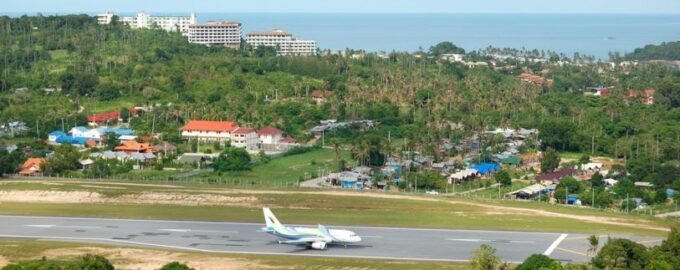
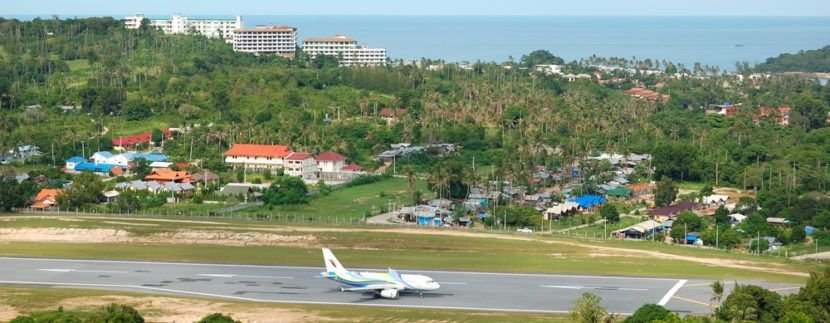
A rising number of direct flights from mainland China is helping the Thai island of Koh Samui fill the gaps in its traditionally seasonal tourism sector, a new report has found.

According to the latest Samui Hotel Market Update from C9 Hotelworks, both direct flights to the island and new services to Surat Thani Airport, the closest secondary gateway, have led to a sharp rise in Chinese visitors to Samui. This, according to the report, means that mainland Chinese travellers are now “filling in the gaps of a once highly seasonal destination”.

As a result, island-wide hotel occupancy hit 72% in 2016 and airport arrivals pushed over the 1.2 million threshold.

Much of the momentum can be attributed to Bangkok Airways’ international expansion, which has shifted in focus from Southeast Asia to North Asia. In the second quarter of this year the carrier will increase flights to Samui to Chengdu to a daily service, and it is expected to add Chongqing at a later date. A THB1 billion (US$28 million) upgrade of Samui International Airport is also expected to commence this year.

“Samui’s airlift is no longer a one trick pony with the emergence of nearby Surat Thani as a secondary gateway. Flight arrivals last year to the latter spiked up by 30% and are forecasted to grow further in 2017,” said Bill Barnett of C9 Hotelworks.

“Just as we have seen the twin airport story in Bangkok play out with Suvarnabhumi and Don Mueang, the “plug and play” model for the resort-led market of Samui is benefitting from both strong domestic and international trajectory from Bangkok Airways, but also the low-cost carrier rapid fire expansion in Surat Thani,” he added.

The report added that while the rise of low-cost arrivals has not reduced average hotel rates, there are signs of a shift in the demand. “With the steady growth of airlift to Surat Thani Airport, Samui is expected to attract a broader market of midscale and upscale segments with pipeline hotels weighted toward these types of products,” it stated.

Read more

16/02/2019No comments,
Hotel Brand Standards: How to Pick the Right Amenities for Your Property

Abstract: Amenities specified by hotel companies’ brand standards can become a point of contention between hotel owners and brand managers. At issue for the owner is whether offering a particular amenity justifies the expense, while brand managers are typically more concerned with maintaining consistent brand standards systemwide. This report provides another perspective, by analyzing the short-term return on investment for six upscale and luxury brands offering three popular complimentary amenities—bottled water, internet access, and fitness center use—both in terms of their effects on first-time visits and on repeat business. While internet access held the greatest attraction for first-time guests, complimentary bottled water offered the highest ROI for returning guests. Analyzed over a twelve-month period, the fitness center had a negative ROI for both groups. Of particular interest, the study also found that guests greatly overestimated the likelihood that they would use the hotels’ amenities.

Read more

16/02/2019No comments
Using Land Trusts in Real Estate Investing

A land trust is a pass-through entity that becomes the owner of a specific property. For this exercise we will only discuss the ownership of real property, specifically real estate. These documents are much hated by Realtors, lawyers, lenders and municipal governments to mention a few, but loved by real estate investors who understand them.

A land trust is a simple document which becomes the controlling or holding vehicle of a specific property. Its life span is limited to the term imposed in its internal clauses and extinguishes itself if the property is sold. Essentially, one property in, same property out and poof, the trust no longer exists!

The trustee of the trust administers the day-to-day financial dealings of the trust, but the owners are called the Beneficiaries. The trustee may or may not be the trustee. The trustee must be an individual; the beneficiaries can be individuals, partnerships, corporations, LLCs or other different type entities.

Trusts are hated by lawyers because they don’t make as much money on them as they do with LLCs or corporations and they are most commonly used to convey property by transfer of the beneficial interest without doing a formal closing.

Realtors don’t understand land trusts and because of that, they tend to believe they are illegal. Because they are not taught about them in real estate schools and various state regulations can vary about the actual administration and legalities of them.

If a buyer of a property is a land trust, Realtors care less because a sale is a sale. If the seller of a property is a land trust, the closing agent must understand how they work or these deals can be harder to close.

Read more

16/02/2019No comments,
Tax structuring for BOI promoted companies

BOI-efficient tax structuring

The Thailand Board of Investment is the governmental agency to promote foreign direct investments in Thailand. Key benefits of a BOI promotion are (i) the Foreign Business License to do business in Thailand with up to 100% foreign shareholders, (ii) the right to acquire legal ownership in real estate and (iii) tax holidays.

Tax holidays give a BOI promoted project a tax exempted period of up to eight years, followed, as the case may be, by a 50% tax reduction for an additional period of time. Terms and conditions apply.

The foreign investor enjoys tax holidays with a corporate income tax rate of 0%, withholding taxes of 0% and Thai income taxes of 0%. The 50% tax reduction will result in a 10% Thai corporate income taxation – if tax rates remain unchanged in the future. In addition the investor ha his specific tax burden in his country of residence and, if he is part of an international group of companies, certain other tax rates. These different tax rates apparently create the perfect storm for a highly efficient tax structuring.

Tools and modules of the BOI tax planning

Experience shows that many foreign investors are happy enough to successfully apply for a BOI promotion certificate which gives some sort of tax holidays. From the tax advisors point of view it is sad to see that possible tax advantages are generously wasted by ignorance and lack of knowledge. These are the tools and modules of efficient tax planning under a BOI promotion scenario:

The Board of Investment does not promote companies, but projects. Therefore, the project has to be carefully defined taking into consideration the cross-border tax value chain. Profitable elements have to be included, loss-maker have to be carved out. The contractual arrangements have to assure that the benefits of a tax holiday are utilized at the best possible.
It has to be evaluated whether it is possible to split one project into pieces to optimize the structure. Not each BOI promoted project gets tax holidays, and it would be preferable to have the successful projects with and the less profitable projects without tax holiday status.
The methods and modalities to offset losses between BOI promoted projects within the same legal entities had been subject to discussions during the last years. While the BOI traditionally had an investor friendly “each tax exempted project is promoted separately” approach, under the 2017 amendment of the BOI Act, the “one entity taxation” concept has been introduced. This might require the separation of each BOI-projet in a separate corporate entity for an efficient tax structuring.

Read more

16/02/2019No comments,
Industries And Manufacturing In Thailand

INDUSTRIES AND MANUFACTURING IN THAILAND

Manufacturing and industry have played a significant role in Thailand’s economic growth. Since most manufactured products are export items they bring tremendous amount of income to the country each year. Major Industries include: tourism, textiles and garments, agricultural processing, beverages, tobacco, cement, light manufacturing such as jewelry and electric appliances, computers and parts, integrated circuits, furniture, plastics, automobiles and automotive parts.

Thailand is presently also a major center of the auto assembling industry in Southeast Asia. The industry creates employment and income for Thailand and the Thai people, and enables further development of the steel production industry. In addition, world’s second-largest tungsten producer and third-largest tin producer

Thailand is Asia’s most developed auto parts market and a hub for the likes of Toyota, Honda and Mercedes-Benz, making cars and car parts the country’s No. 1 export in 2012. The floods in 2011 disrupted more than 100 components makers.

Thailand is the second-largest exporter of computer hard drives and makers other components used in personal computers. Thailand’s electronics industry faces competition from China, Malaysia and Singapore. Important and fast-growing production industries are machinery and electric tools, furniture and wood products, canned food, and plastic products, while production industries that account for major export items are high-technology products such as integrated circuits and parts, hard disc drives, electrical appliances, vehicles, and vehicle parts. [Source: Thailand Foreign Office, The Government Public Relations Department]

In 2006 industry contributed 44.9 percent of gross domestic product (GDP) but employed only 23 percent of the workforce. This relationship is the opposite of the one applying to agriculture. Industry expanded at an average annual rate of 3.4 percent during the 1995–2004 period. The most important subsector of industry is manufacturing, which accounted for 34.5 percent of GDP in 2004. The industrial production growth rate in 2011 was -9.3 percent (2011 est.). country comparison to the world: 165. [Source: Library of Congress, CIA World Factbook]

Over the years Thai manufacturing has been plagued by low production and sloppy work; the manufacturing base was weak; and the component base of industry was foreign owned. Traditional village-level industries: sewing machine operation, blacksmithing, boat building. Brass, pottery and charcoal manufacturing. In Chiang Mai, hundred of highly-skilled women make fishing lures. Most are exported to the United States, which boats a $1-billion-a-year fly-fishing market.
Some companies that had factories in Thailand have switched their operations to China. Thailand and Malaysia took 10 years building their expertise, production base and infrastructure for a precision metalworks that could sell components to Swiss watchmakers. The Chinese took over the business in only a year. China is also creating a market for Thai goods.

In the 1980s, South Korea was leading manufacture of sports shoes and cheap textiles. These products are now made in China, Thailand and Indonesia while South Korea now manufactures semi-conductors and other high tech products. Thailand has hoped to follow a similar model.

Nike and Poor Working Conditions

Nikes are manufactured in Vietnam, China, Indonesia and Thailand. It has been criticized for hiring underage workers, paying subsistence wages, hiring abusive managed and exposing employees to dangerously high levels of toxic chemicals. Some Nike factories have been described as “little more than prison labor camps.” Employees work 72 hour weeks and can be fired for refusing over time. One study found that workers at factories that make Nikes and Reeboks, monitored in 1995 and 1997, earned as little as 10 cents an hour and toiled for up to 17 hours a day. In response to criticisms, Nike asserts it doesn’t make shoes, it subcontract the work.

Responding the criticism Nike promised to raise the age of employment to 18, improve safety use water-based rather solvent-based glues and use machines that do cause serious injuries. Some factories offer free day car and health checks and provide continuing education for their employees.

In 1998, Tim Larimer of Time wrote: “Nike’s factories in the region are above average…[We] found them to be clean, brightly lit and well-ventilated. Where the employees have to use foul-smelling glues, there are plenty of fans to carry the fumes.”

Mattel has a factory in Thailand See China

Read more

16/02/2019No comments,
Thailand GDP From Construction

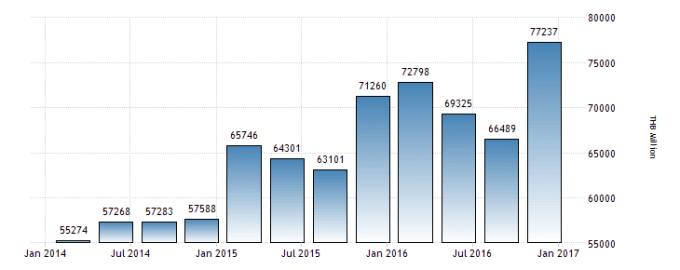
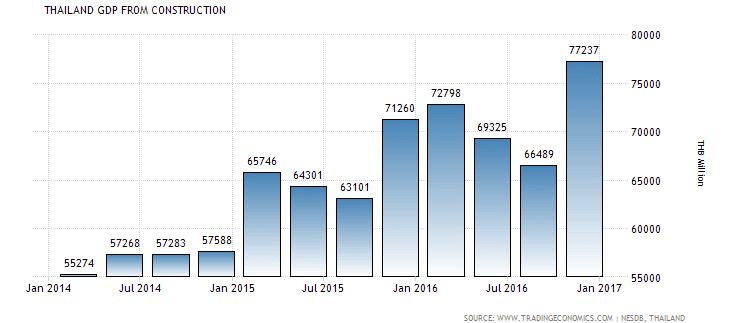
GDP From Construction in Thailand increased to 77237 THB Million in the fourth quarter of 2016 from 66489 THB Million in the third quarter of 2016. GDP From Construction in Thailand averaged 58891.02 THB Million from 1993 until 2016, reaching an all time high of 103692 THB Million in the first quarter of 1996 and a record low of 36619 THB Million in the fourth quarter of 2000.

Read more

16/02/2019No comments,
Investing in Thailand Property: The Ultimate Guide

Located in the heart of Southeast Asia, Thailand has served as a trade and business hub for centuries. It was a buffer zone between colonial powers because of its strategic location. As a result, it was the region’s only nation that wasn’t colonized.

Thailand (and its property market) is still able to reap the rewards from its strategic placement on the map today, yet in different ways.

Its capital of Bangkok is just an hour-long flight from four rapidly growing frontier markets. Namely Vietnam, Cambodia, Laos, and Myanmar.

These countries are among the world’s fastest growing and give Thailand easy access to cheap labor along with almost 200 million consumers – not to even mention its own decent-sized population of 67 million.

Of course, the Thai economy isn’t just dependent on its neighbors for growth.

You’ll find Thai exports in any supermarket in any Southeast Asian country. While stores in Thailand stock themselves with products from Japan and the US, stores in Asia’s frontier markets fill their shelves with Thai exports.

Brands such as Red Bull (which as a little-known fact originates in Thailand) are sold globally as well.

If you open up your computer and read the label on your hard drive, it’ll probably have a sticker which says “Made in Thailand” on it. This is because Thailand is one of the world’s top makers of hard drives and memory.

Not only is Bangkok the most heavily tourist city on the planet (beating out Paris and London in Mastercard’s latest survey), but also one of the world’s largest exporters of automobiles, electronics, and hardware.

Besides manufacturing and exports, Thailand has a large services sector considering it’s an emerging market. The Thai startup community is also seeing rapid growth and great success.

These factors led to steady growth which has continued for about 30 years, transforming Thailand into one of Asia’s most dynamic countries.

Naturally, this extends to the Thailand property market as well. A middle class which barely existed a few decades ago is now much more prominent. They’re capable of buying into the countless new condos and housing projects being built.

Read more

16/02/2019No comments,
Chinese are becoming investors first, tourists second in Thailand

Chinese demand for real estate in Thailand is at an apogee, but the Beijing government’s drive to control capital flight could hinder such demand, according to a new report by Financial Times Confidential Research (FTCR).

Surveying 108 investors, FTCR found that Chinese buyers, mostly only “moderately wealthy” and put off by skyrocketing values in the mainland, are scouring the kingdom for residential properties. Buyers from China now account for 10 to 20 percent of total sales in the tourist hubs of Chiang Mai, Pattaya, and Phuket, and 5 percent of those in Bangkok.

However, such foreign demand is likely to recede soon. “The immediate outlook for Chinese investment flows into Thailand is negative,” FTCR stated in its report.

“In this new climate, we expect investors to delay plans to purchase more Thai real estate, at least until the dust settles, if not until the Chinese government loosens up again.”

Thailand is now the fifth most popular destination for real estate investment by the Chinese, FTCR pointed out. In 2010, almost no Chinese were buying homes in Thailand.

That year, Chinese tourist arrivals in the country topped 1.22 million, according to the Thai Immigration Bureau.

Read more

16/02/2019No comments,
5 ways a property investment can benefit your wellbeing

There’s more to life than money, and the same goes for buying real estate.

In an increasingly unstable and uncertain world of shifting political regimes, climate patterns and economic powers, many investors are finding themselves asking what constitutes real value.

Most societies have historically measured worth in concrete financial statistics: in GDPs, stock indices, and all sorts of monetary projections. Yet the more these figures fluctuate, the more individuals seek to ground their portfolios in items of perceived long-term value, tangible or otherwise.
The Kingdom of Bhutan was the first country to attempt to measure its prosperity by the general wellbeing of its inhabitants rather than economic prowess when it introduced Gross National Happiness (GNH), a rough measure of the quality of life of its citizens.
More objective and more exhaustively researched is the World Happiness Report, a survey launched in 2012 that ranks satisfaction in 155 countries based on factors such as life expectancy and quality. Although nations that ranked high on the survey such as Norway, Iceland, and Denmark certainly had high GDP rates, the fact that they offer inhabitants a sense of security and comfort earned them the top slots. If a stable, prosperous future in a desirable setting is key to determining happiness, then surely investing in property is one of the best paths to achieving that aim.
Although any form of investment has the potential to rise or fall, property has long been considered one of the most surefire paths to financial returns. In a region as fast-changing as Asia, where individual currencies and even governments are liable to change at a moment’s notice, a physical piece of property in a prime location such as Hong Kong, Singapore, or Bangkok has the potential for high gains with minimal risk.
“It won’t be enough simply to have a ‘build it and they will come strategy,’” says Mark Clifford, executive director of the Asia Business Council. “We’re moving from a supply-constrained seller’s market to one where buyers have more choice, and more power. Good-value, well-designed and livable buildings are likely to command a premium.”
Assessing the true value of property remains more art than science, but by taking some of these lifestyle benefits into account when making a purchase, it is possible to reap long-term rewards.
16/02/2019No comments,
Thai property market steady but concerns about high end speculation in Bangkok

Changes to deposit protection limits on bank accounts in Thailand may give a boost to property investments even as there are warnings of speculation at the high end of the market for condominiums.

In early April the Governor of the Bank of Thailand issued a warning about the potential of bubbles developing in some parts of the Thai economy and referred to the property market. Some observers within the industry believe that worries over this are confined to the premium end of the property market particularly high end condominiums in Bangkok.

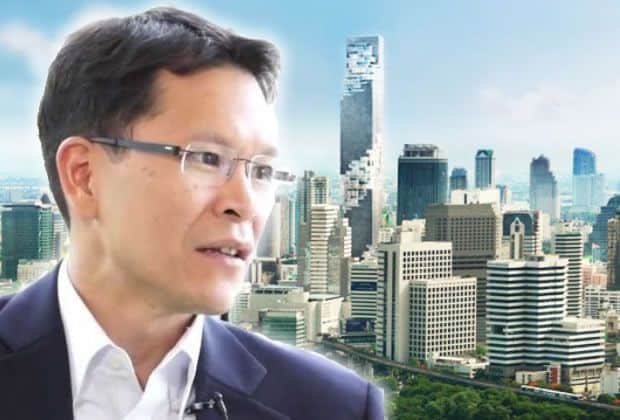
The comments come as it was revealed by the Bank of Thailand Governor Veerathai Santiprabhob that the bank is closely watching the flow of deposits from bank accounts to instruments offering a higher return or high risk funds. He said some of these funds were being invested in certain real estate sectors. The bank governor indicated that there was a concern that bubbles may form in some parts of the Thai economy.

Read more

16/02/2019No comments,
High Demand For Phuket Low Income Housing

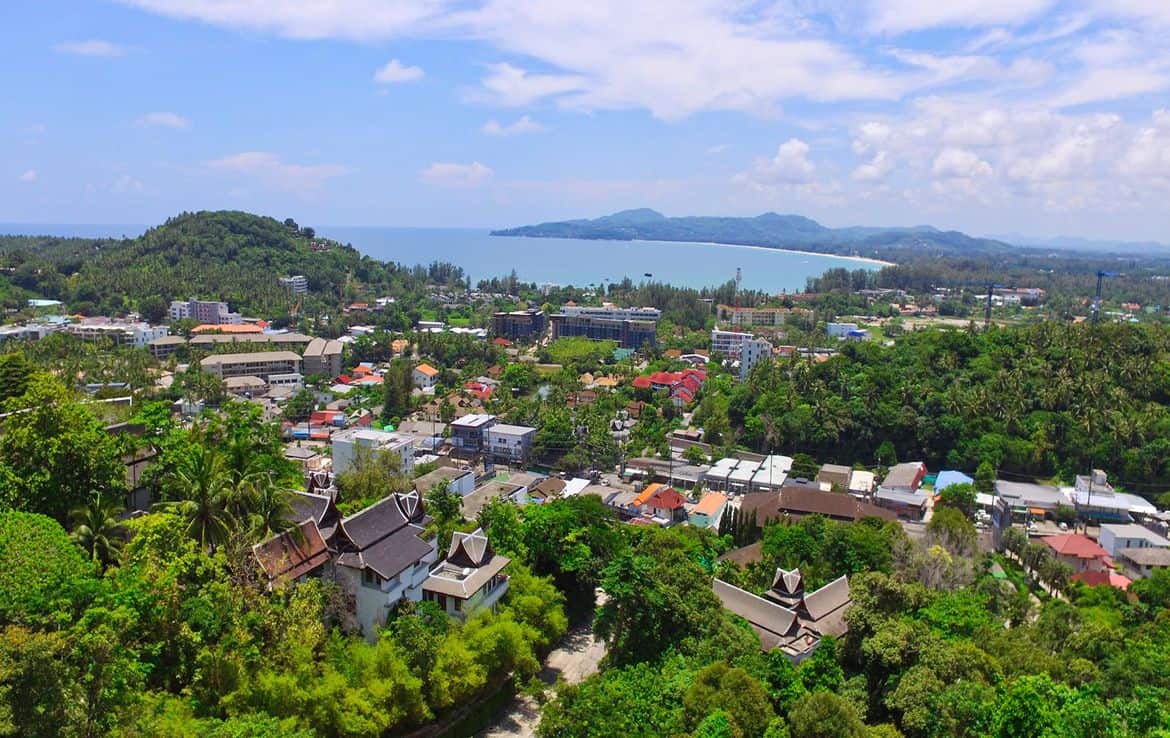
There are 3 new Phuket housing projects designed for low income earners and those on financial assistance and reservations for units in these developments have been brisk, according to local media. Prices at the projects start at THB3.79 million and some of the homes will be completed and ready to move into by the end of 2018.

“The National Housing Authority (NHA) is creating 8 residential projects in 3 provinces, including Buriram, Phuket and Samut Prakan. In Phuket, there are 3 new projects. Firstly, ‘Phuket Thepkrasattri’, which is a 3-storey community housing project located near Laem Hin seafood in Koh Kaew. Each house is about 20 square meters,” says NHA Head of the Projects Pakum Noimanee to The Phuket News.

The Phuket Thepkrasattri project will have a total of 66 homes all but 9 of which have been reserved by buyers who qualified for the programme. The development will be finished sometime next year.

“The Phuket Thalang project, which consists of 19 3-storey townhouses, is divided into apartments and located in Srisoonthorn, beside the Phuket Community Housing Office. It is an extension of a pre-existing low income housing project,” says Pakum.

The apartments are 33  square meters in size and all units come with 1 bedroom and 1 bathroom. Prices start at THB620,000 and there are less than 50 units available for booking. The project will also be finished next year.
“The 3rd project in Phuket is the ‘Garden Ville Phuket By NHA’ comprising 2-storey townhomes. Each house is about 18.5  square meters and prices start from THB1.59 million. There are 354 total town homes in Garden Ville and about 200 have already been booked,” says Pakum.

The idea behind the programme is to help low-income Thais or those who are receiving financial assistance from the government afford housing. The NHA has developed similar projects in Phuket in the past, all of which have been successful with buyers.

Read more

16/02/2019No comments,
How difficult is the property purchase process in Thailand?

Foreigners cannot buy land in Thailand, only condominium units and apartments. Foreigners cannot make up more than 40% of the condominium’s unit-owners. However, a foreigner can buy a whole building, minus the land on which it is built.

In recent years, minor changes in Thai law have allowed nonresidents to explore the Thai real estate market. A foreigner can have a 30-year renewable lease, under which the buyer registers at the Land Office an option to renew the lease contract indefinitely, for further 30-year periods.

There are serious drawbacks, however. Lease renewals cannot be registered, and are not effective against a purchaser of the property. And the lessee cannot (without the lessor’s consent) sublease, sell or transfer his or her interest.

Another option is to set up a private limited company with mixed Thai and foreign ownership, the foreign ownership being 49% or less. Companies are allowed to own land. The foreign national can control the company by using a legal power of attorney from the Thai shareholders, handing control to the foreign directors, or through assigning greater voting rights to the foreigner partner/s. This is an effective and time-tested route, most commonly taken by foreigners. The help of a lawyer is very important.

Foreigners can also invest at least THB40 million (US$1,142,857) in a Board of Investment approved project. They will then be allowed to purchase up to 1 Rai (1,600 square meters) of land.

Read more

16/02/2019No comments,
Hong Kong investors to stay a force in Thai property market

IN THE PAST DECADE, Thai properties marketed overseas were either projects in prime downtown Bangkok or properties in top resort destinations such as Phuket.

Nowadays, visitors and investors are becoming more familiar with other non-prime locations in Bangkok through information from social media and digital communications.

New condominium property prices in downtown Bangkok have increased to an average of over Bt260,000 per square metre, with starting prices of over Bt10 million. The high Central Business District (CBD) prices combined with marketing efforts of non-prime locations by Thai developers, over the last two years, has increased awareness and interest from overseas investors in non-CBD Bangkok locations who are keen to invest in the fringe of the downtown areas or in midtown locations, especially along the extended mass transit lines where prices are more affordable than downtown areas.

The popular prices for these locations range between Bt3 to 10 million per unit.

Read more

16/02/2019No comments,
Gains made in transparency for Thai property market

THAILAND has been ranked 34th in the Global Real Estate Transparency Index (GRETI) 2018 put out by property consultancy firm JLL.

The result in the newly released biannual represents a marked improvement from the 2016 edition of the index, when the country was ranked 38th.

Compared with the other six countries from Southeast Asia covered by the index, Thailand is ranked the third most transparent real estate market in the sub-region, followed by Indonesia, the Philippines, Vietnam and Myanmar, which were ranked globally 42nd, 48th, 61st and 73rd, respectively.

JLL said the 10th edition of the GRETI contains the most comprehensive country comparisons of data availability, governance, transaction processes, property rights and the regulatory/legal environment around the world. The 2018 Index covers 100 countries and 158 city markets, and the number of individual factors covered has increased by 36 per cent to 186 factors.

Read more

16/02/2019No comments,
What to expect from Thailand’s employment market in 2018
With the Thailand 4.0 blueprint becoming a key driver of evolution towards a value economy, Thailand is set to become a centre of innovation and technology in South East Asia.

Alibaba has recently announced their strategic partnership with the Thai government in support of Thailand 4.0, which will bolster developments in e-commerce and digital talent. A “Smart Digital Hub” aimed at boosting regional and global trade will also allow the kingdom to access China’s large consumer base. All these point to a strong outlook for professional recruitment services in Thailand as the need for a more sophisticated workforce increases. Here are some of the key employment trends to look out for this year:

Read more

16/02/2019No comments,
Good fortunes forecast for 2018

The EEC, mass transit projects and a brighter economy bring good tidings for the real estate market.

Thailand’s property market prospects are expected to be bright next year based on the country’s economic expansion, government spending on big-ticket infrastructure projects and the rise of the Eastern Economic Corridor (EEC).

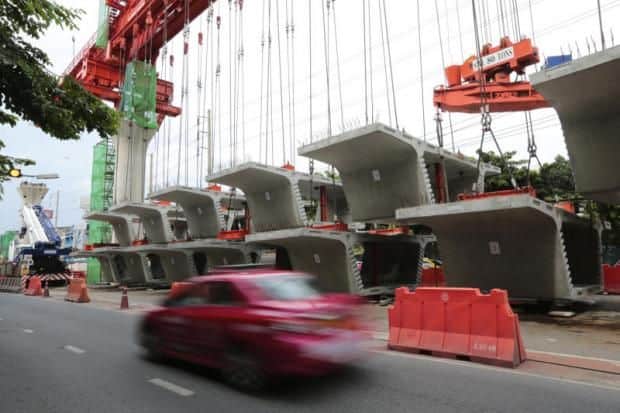
Surachet Kongcheep, a property analyst, says market growth will mirror the country’s positive economic trajectory. Key factors boosting the economy are spending on the EEC and mass transit line expansion.

SET-listed contractor Ch.Karnchang Plc said new infrastructure projects that the government plans to open for bidding next year include the southern Purple Line from Tao Poon to Rat Burana — the largest one at 130 billion baht.

Read more

16/02/2019No comments,
Shaky law on Airbnb rentals

A court ruling on Airbnb in Hua Hin was meant to weaken sentiment among condo buyers who buy units to rent out on a daily basis. Yet the data shows the number of daily-leasing units continues to rise.

Apichart Chutrakul, chief executive of SET-listed Sansiri Plc which has developed a large number of condo projects in Bangkok and the provinces said developers cannot stop condo buyers who want to rent out their unit on a daily basis.

“We cannot control it and it’s not our duty to do,” he said. “After we develop a condo project and transfer units to buyers, it is the juristic person’s duty to manage the property.”

Sansiri has a subsidiary, Plus Property Co, which is a property consultant and property management firm. It manages Sansiri’s projects once completed and delivers units to buyers.

“If the majority of co-owners at a condo project agree to allow daily leasing, we as a property management firm need to follow their resolution,” he said.

He said the daily leasing of residential units is a world trend of the sharing economy. Like Uber, those who benefit are consumers, while the taxi drivers lose out.

However, government agencies cannot prove whether a car with passengers is an Uber or not.

Many cities in the world have tried to ban Airbnb but the number of units available on the platform has not declined.

“If non-Airbnb unit owners say that Airbnb infringes upon their ownership rights, they must realise that they [non-Airbnb unit owners] cannot infringe upon other owners’ right [to rent out on a daily basis],” he argued.

Mr Apichart does not believe that laws can enforce a ban on the daily renting of condo units, just like laws can’t guarantee people don’t cross the street in non-designated areas.

“In Thailand, daily and weekly rentals are already difficult to do as hotel rates are cheap,” he added.

Tritecha Tangmatitham, managing director of SET-listed developer Supalai Plc, said the company has a policy to prevent buyers who purchase condo units for daily renting by limiting customers to one unit per project.

“Investors who aim to buy for daily renting usually buy many units at a project as the management cost will be lower than having only one unit at a site,” he said.

Chanin Vanijwongse, chief executive of developer Habitat Group, which offers a rental yield guarantee at its projects in Pattaya, all of which have a hotel licence, said a court ruling on Airbnb in Hua Hin will have an impact on developers and buyers renting out on a daily basis, particularly in resort destinations.

“This ruling will not affect a condo if it has a hotel licence,” he said. “Any condo which is under construction and wants to offer daily rent can adjust the specifications to bring them in line with hotel regulations and apply for a hotel licence.”

Read more

16/02/2019No comments,
The world’s most affordable and expensive cities are both in Asia

Asian cities lorded over the Economist Intelligence Unit’s Worldwide Cost of Living report, out last week.

Names from the continent dominated both lists of the costliest and most affordable places to live in the world, per the report’s Cost of Living Index. Five of the world’s top six expensive cities are all in Asia, while cities in the Indian subcontinent make up half of the 10 least costly cities on earth.

Some traditionally expensive alpha cities have become more affordable of late. Due to the post-Brexit depreciation of the sterling, London is now only the 24th most expensive city in the world, while Manchester registered the biggest fall, from number 26 previously to a distant 51, making it cheaper than Beijing and tying it with Bangkok.

London is now a far greater lifestyle bargain than New York City, at ninth place, for the first time in 15 years, and Paris, at eighth place.

To arrive at the results, EIU tracked 400 individual prices across 160 products and services, including clothing, food, transport, home rents, utility bills, private schools, and recreation, in 133 cities around the world.

Read more

16/02/2019No comments
What will this Thai leasehold law mean for foreign tenants?

A raft of unprecedented benefits in store for lessees

Thailand is bracing for the passage of the leasehold draft bill that is expected to entice more foreign lessees to the property market, according to the Bangkok Post.

The Council of State is due to vet the leasehold bill after public hearings ended on 16 June. The bill has already received cabinet approval.

Under prevailing laws, foreigners can own condominium units but are prohibited from acquiring land, except in special arrangements with the Board of Investment and the Industrial Estate Authority of Thailand.

Lease rights are also not transferable and cease automatically at the time of the lessee’s death.

Read more

16/02/2019No comments,
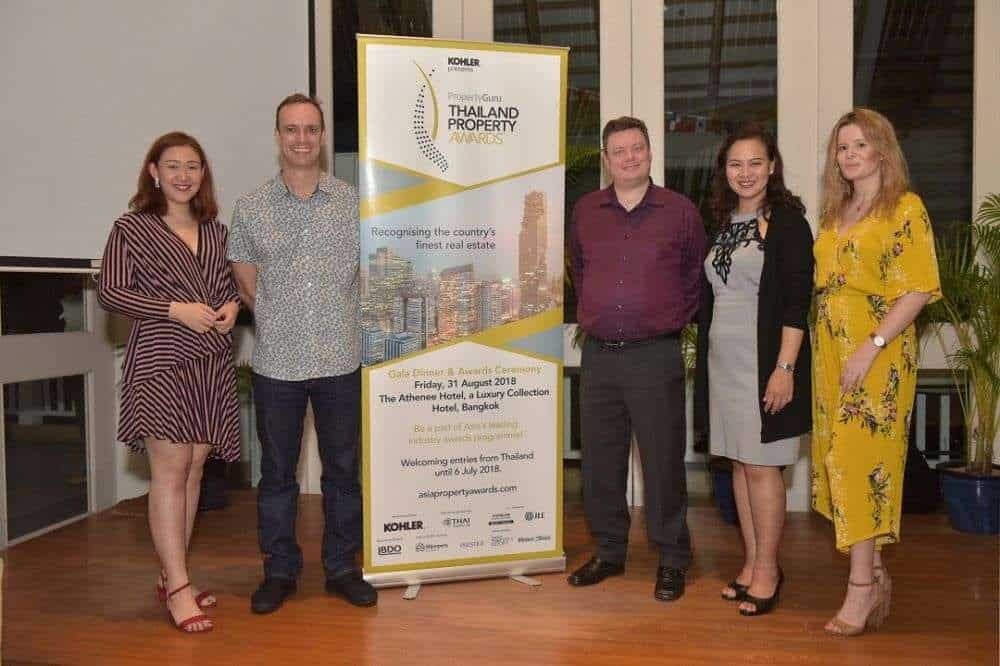
Phuket readies itself for another triumphant year at PropertyGuru Thailand Property Awards 2018

Developers from across the island hope to achieve both local and national recognition as the finest in their categories

Key members of the Phuket press gathered last night at the Angsara Laguna Phuket for an exclusive media briefing in advance of the 13th annual PropertyGuru Thailand Property Awards 2018.

Addressing the room was Terry Blackburn, founder of the Asia Property Awards, regional awards judge Robert Krupica of Hughes Krupica law firm and Kamolpat Swaengkit, country manager of DD Property.

“In a fast expanding property market like Phuket, developers and investors understand the benefits of quality endorsement by a prestigious awards programme,” said Terry Blackburn, “The PropertyGuru Thailand Property Awards encourage excellence across all aspects of the real estate industry, which is why the number and quality of entries from Phuket and around the country increases every year,” he added.

Robert Krupica described the Phuket market as “vibrant as ever” and gave some insights into how the market has evolved in his nine-year tenure as a Thailand Property Awards judge. “One of the more interesting developments that I’ve seen in the last few years has been the increase from domestic Thai buyers, showing a strong interest in investing in a second home or rental income property in Phuket. This is something we didn’t see 10 years ago as much,” he said.

The Thailand Property Awards, founded in 2006 has grown exponentially in the last 13 years. The first gala dinner hosted 200 guests, while 2018’s event, which will be held in Bangkok on 31 August, is expected to attract upwards of 600 of Thailand’s leading property developers, VIP’s and leading industry figures.

Read more

16/02/2019No comments,